Why The Web Is Such A Mess
TL;DR
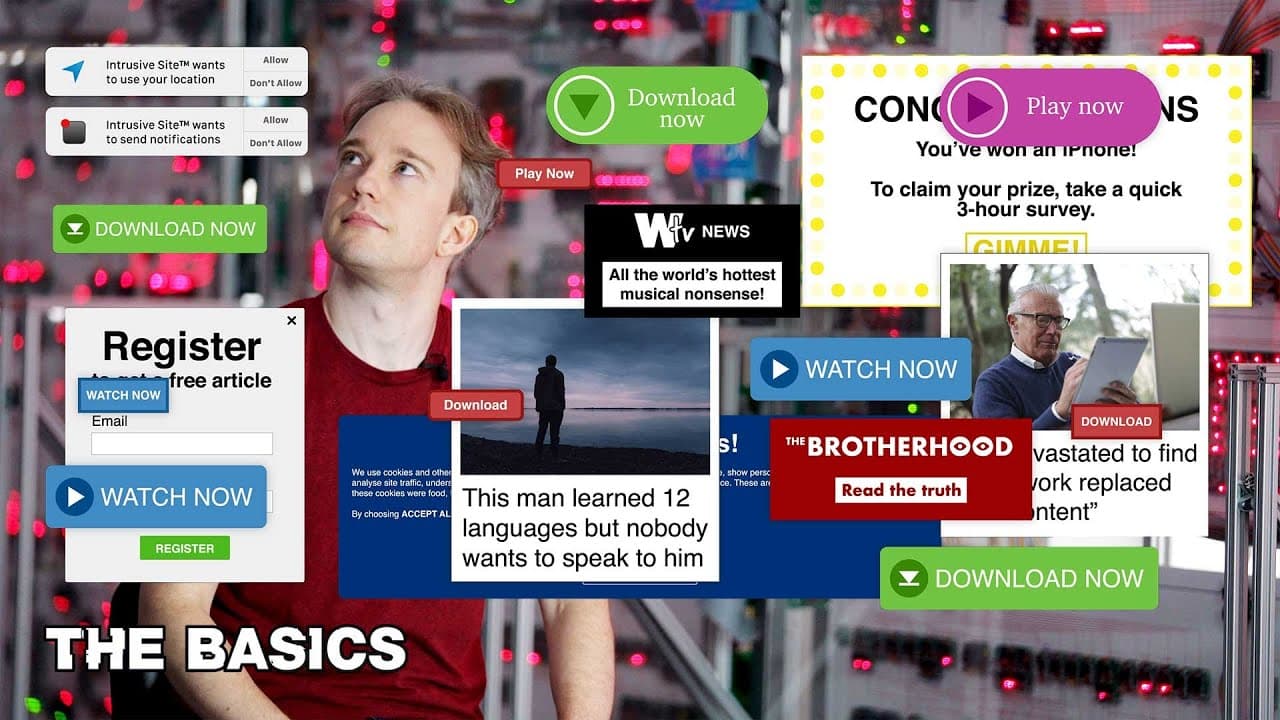
The web has deviated from its original purpose of being a universal information system due to the influence of advertisers and privacy concerns.
Transcript
When Tim Berners-Lee pr… When Tim Berners-Lee prop… When T… When Tim Bern… oh come on! When Tim Berners-Lee proposed the idea for the World Wide Web back in 1989, he wrote about a “universal linked information system”. His exact words: “a place to be found for any information or reference which one felt was important, and a way of finding... Read More
Key Insights
- 🕸️ The web has deviated from its original purpose due to the influence of advertisers and privacy concerns.
- 🍪 Cookies revolutionized web browsing by enabling personalization but also led to privacy issues.
- 👤 The EU implemented regulations to protect user privacy, but advertisers found alternative methods like fingerprinting.
- 🗳️ Advertisers have a choice between stopping tracking or adding consent pop-up boxes, both of which have their drawbacks.
- 🎨 The web's design freedom allows for creativity and innovation, but it also opens the door for abuse.
- 🎨 "Reader view" or "article mode" provides a closer experience to the original web design but compromises some creative aspects.
- 💠 The battle between privacy concerns and advertising interests continues to shape the web's evolution.
Install to Summarize YouTube Videos and Get Transcripts
Explore YouTube Video Summarizer or Get YouTube Transcript Extractor
Questions & Answers
Q: What are cookies and how do they work?
Cookies are small text files that web servers send to browsers, which are then saved by the browser. These cookies are sent back to the server with subsequent requests and can contain preferences or authentication information.
Q: Why do advertisers use cookies?
Advertisers use cookies to track users' browsing behavior and build detailed profiles. This allows them to display personalized advertisements based on the user's interests and activities.
Q: What were the consequences of third-party cookies?
Third-party cookies allowed advertisers to track users across different websites, enabling them to gather more information and create comprehensive profiles. This raised concerns about user privacy and data security.
Q: How did regulations like the GDPR impact advertisers?
The GDPR introduced stricter requirements for obtaining user consent for tracking and storing data. Advertisers now need to inform users about data collection and offer simple opt-out options. Non-compliance can result in significant fines.
Key Insights:
- The web has deviated from its original purpose due to the influence of advertisers and privacy concerns.
- Cookies revolutionized web browsing by enabling personalization but also led to privacy issues.
- The EU implemented regulations to protect user privacy, but advertisers found alternative methods like fingerprinting.
- Advertisers have a choice between stopping tracking or adding consent pop-up boxes, both of which have their drawbacks.
- The web's design freedom allows for creativity and innovation, but it also opens the door for abuse.
- "Reader view" or "article mode" provides a closer experience to the original web design but compromises some creative aspects.
- The battle between privacy concerns and advertising interests continues to shape the web's evolution.
- User awareness and educated decision-making are crucial in addressing privacy concerns and achieving a more balanced web experience.
Summary & Key Takeaways
-
Tim Berners-Lee proposed the idea of a universal linked information system, but the web has become cluttered and disorganized.
-
Cookies were introduced in 1994 to personalize web browsing experiences, but they also allowed advertisers to track users across different websites.
-
The European Union implemented the "Cookie Law" to regulate the use of cookies, and later the General Data Protection Regulation (GDPR) provided stronger privacy requirements.
-
Advertisers have responded by either stopping tracking or adding consent pop-up boxes, resulting in user frustrations.
Read in Other Languages (beta)
Share This Summary 📚
Summarize YouTube Videos and Get Video Transcripts with 1-Click
Try YouTube Summary with ChatGPT & Claude or YouTube Transcript Generator
Explore More Summaries from Tom Scott 📚



Summarize YouTube Videos and Get Video Transcripts with 1-Click
Try YouTube Summary with ChatGPT & Claude or YouTube Transcript Generator