How Do Heat Engines Work and What Is Their Efficiency?
TL;DR
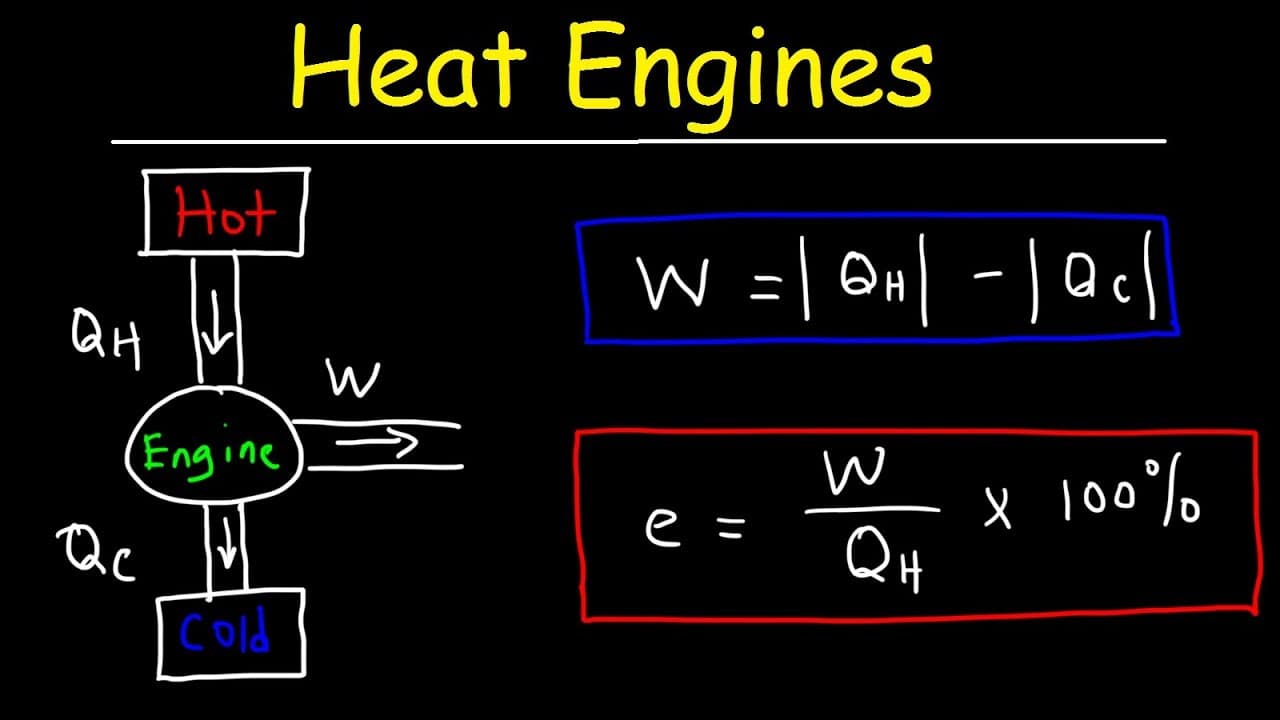
Heat engines convert heat energy into mechanical work by absorbing heat from a hot source and releasing some to a cold sink. The work done by the engine equals the absorbed heat minus the released heat. Thermal efficiency is calculated as the work output divided by the absorbed heat, multiplied by 100%, and typically remains below 100% due to energy losses.
Transcript
in this video we're going to focus on heat engines so what exactly is a heat engine a heat engine is a device that converts heat energy into mechanical energy now heat naturally flows from a high temperature to a cold temperature and as it flows down some of that energy can be used to perform mechanical work so let's work on this problem we have a ... Read More
Key Insights
- 🥵 Heat engines convert heat energy into mechanical work by absorbing heat from a hot reservoir and releasing it into a cold reservoir.
- 🎭 The work performed by a heat engine can be calculated by taking the difference between the heat energy absorbed and the heat energy released.
- 🥵 The thermal efficiency of a heat engine is a measure of how efficiently it converts heat energy into mechanical work and can be calculated using the formula Efficiency = (Work / Heat Energy Absorbed) * 100%.
- 💦 The power rating of an engine is a measure of how much work it can perform in a given amount of time and can be calculated by dividing the work performed by the time taken to complete one cycle.
- 🚒 Heat engines follow the principle of energy conservation, meaning that the total amount of energy absorbed must equal the total amount of energy released in order to maintain the engine's original state.
- 🎭 In a heat engine, the efficiency is always less than 100% due to energy losses in the form of heat released to the environment.
- 🥵 The thermal efficiency of a heat engine can be improved by reducing energy losses through insulation and using more efficient components.
Install to Summarize YouTube Videos and Get Transcripts
Explore YouTube Video Summarizer or Get YouTube Transcript Extractor
Questions & Answers
Q: What is a heat engine?
A heat engine is a device that converts heat energy into mechanical energy by absorbing heat from a hot reservoir and releasing it into a cold reservoir.
Q: How is the work performed by a heat engine calculated?
The work performed by a heat engine is calculated by taking the difference between the heat energy absorbed and the heat energy released during a cycle.
Q: How is the thermal efficiency of a heat engine calculated?
The thermal efficiency of a heat engine is calculated by dividing the work performed by the heat energy absorbed, and then multiplying the result by 100%.
Q: What is the power rating of an engine?
The power rating of an engine is a measure of how much work it can perform in a given amount of time, typically expressed in watts or horsepower. It can be calculated by dividing the work performed by the time taken to complete one cycle.
Summary & Key Takeaways
-
Heat engines convert heat energy into mechanical work by absorbing heat from a hot reservoir and releasing it into a cold reservoir.
-
The amount of work performed by a heat engine can be calculated by taking the difference between the heat energy absorbed and the heat energy released.
-
The thermal efficiency of a heat engine is calculated by dividing the work performed by the heat energy absorbed, multiplied by 100%.
Read in Other Languages (beta)
Share This Summary 📚
Summarize YouTube Videos and Get Video Transcripts with 1-Click
Try YouTube Summary with ChatGPT & Claude or YouTube Transcript Generator
Explore More Summaries from The Organic Chemistry Tutor 📚

Summarize YouTube Videos and Get Video Transcripts with 1-Click
Try YouTube Summary with ChatGPT & Claude or YouTube Transcript Generator