How to Understand Industrial and Biomedical Engineering
TL;DR
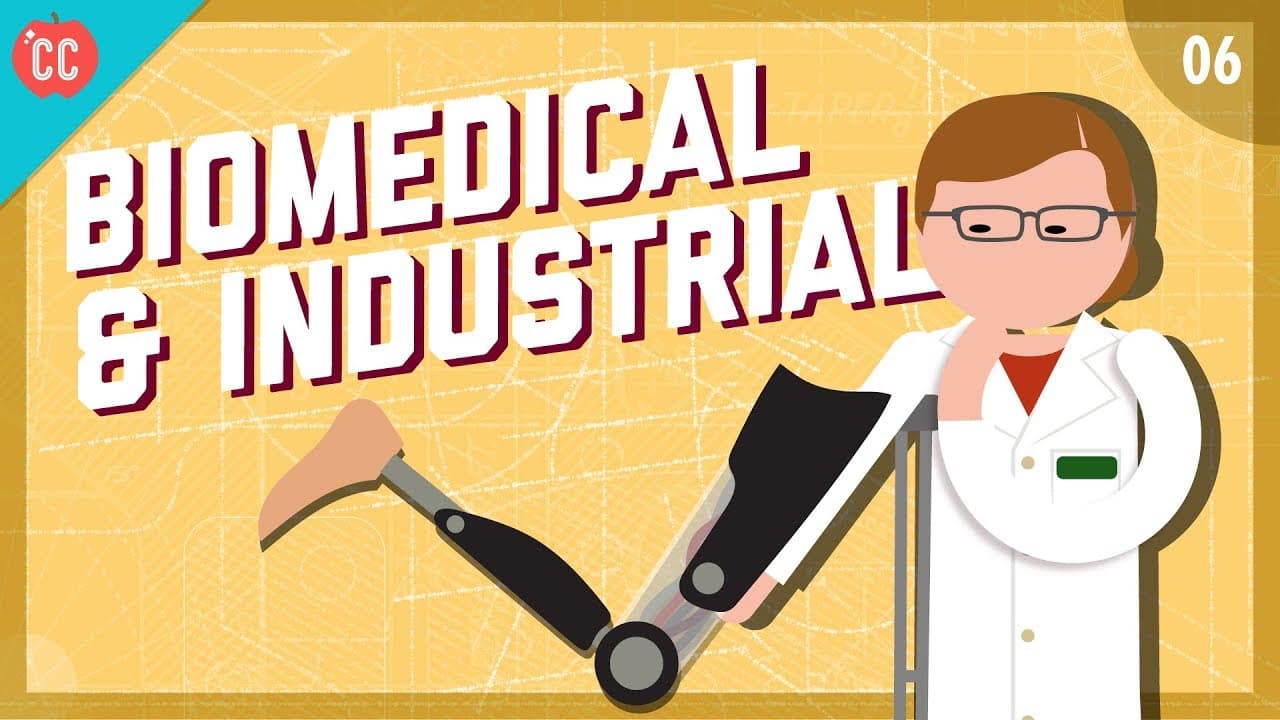
Industrial engineering focuses on optimizing systems like assembly lines for efficiency, while biomedical engineering applies engineering principles to healthcare, developing technologies such as artificial limbs and imaging devices. Both fields are integral to modern advancements, with industrial engineering enhancing production systems and biomedical engineering advancing medical technology and treatment methods.
Transcript
From imagining what it might be like to create our own city, to learning about the chemicals that go into our food, we’ve already covered a good amount of engineering history. Civil, mechanical, electrical, and chemical are the four main branches of engineering. But there are many others! Some have been around for centuries, while others have devel... Read More
Key Insights
- Industrial engineering optimizes systems by considering all elements, including workers, materials, and energy flow.
- Frederick Winslow Taylor introduced time study, improving factory efficiency by minimizing wasted time.
- Biomedical engineering applies engineering principles to biology and medicine, focusing on healthcare advancements.
- Biomedical engineering emerged post-World War II, with significant growth due to computer technology.
- Key biomedical technologies include artificial limbs, defibrillators, MRI and CT scans, and insulin pumps.
- Challenges in biomedical engineering include biological modeling and efficient drug delivery.
- Cell encapsulation involves protecting transplanted cells with biomaterials to prevent immune system attacks.
- Developing prosthetics involves addressing material durability, infection prevention, and replicating biological functions.
Install to Summarize YouTube Videos and Get Transcripts
Explore YouTube Video Summarizer or Get YouTube Transcript Extractor
Questions & Answers
Q: How does industrial engineering optimize production systems?
Industrial engineering optimizes production systems by analyzing and improving the efficiency of various elements, including workers, materials, and energy flow. It focuses on creating the most efficient system, often starting with a holistic view before addressing specific components, leading to improvements in quality, delivery time, and cost.
Q: What contributions did Frederick Winslow Taylor make to industrial engineering?
Frederick Winslow Taylor, known as the father of industrial engineering, introduced the concept of time study around 1881. His work focused on improving factory efficiency by minimizing wasted time, emphasizing the role of human factors in production. Taylor's principles of scientific management significantly influenced modern industrial practices.
Q: What is the focus of biomedical engineering?
Biomedical engineering focuses on applying engineering principles to biology and medicine, primarily for healthcare advancements. It involves the development of medical technologies such as artificial limbs, imaging devices, and treatment methods, aiming to improve diagnosis, treatment, and recovery of medical conditions.
Q: When did biomedical engineering begin to significantly grow?
Biomedical engineering began to significantly grow after World War II, particularly with the advent of computer technology. The introduction of computers enabled faster data analysis and new medical imaging techniques, such as MRI and CT scans, which played a crucial role in advancing the field and modern medicine.
Q: What are some key technologies developed by biomedical engineers?
Key technologies developed by biomedical engineers include artificial limbs, defibrillators, MRI and CT scans, and insulin pumps. These innovations have greatly improved healthcare by enhancing diagnostic capabilities, treatment options, and patient outcomes, highlighting the impact of engineering on medical advancements.
Q: What challenges do biomedical engineers face?
Biomedical engineers face challenges such as developing accurate biological models for safe experimentation and improving drug delivery systems. Ensuring that medicines reach their intended targets effectively and understanding how the body reacts to implanted biomachines are critical areas of ongoing research and development.
Q: What is cell encapsulation in biomedical engineering?
Cell encapsulation is a technique in biomedical engineering where cells are surrounded by biomaterials to protect them within the body. This method prevents the host's immune system from attacking transplanted cells, offering potential advancements in cell-based therapies and improving the success of medical treatments involving cell transplantation.
Q: What considerations are important in developing prosthetics?
Developing prosthetics involves considerations such as material durability, infection prevention, and replicating the functions of natural body parts. Engineers must ensure that prosthetics can withstand physical stresses, prevent bacterial growth, and mimic the movement and function of biological counterparts, often requiring interdisciplinary knowledge in materials science and engineering.
Summary & Key Takeaways
-
Industrial engineering is crucial for optimizing production systems, focusing on the efficient integration of workers, materials, and machines. Frederick Winslow Taylor's time study revolutionized factory efficiency by reducing wasted time, highlighting the importance of human factors in production.
-
Biomedical engineering bridges engineering and healthcare, developing technologies like artificial limbs and imaging devices. Its growth accelerated post-World War II with computer advancements, enabling faster data analysis and new medical imaging techniques, significantly impacting modern medicine.
-
Biomedical engineering faces challenges like biological modeling for safe experimentation and efficient drug delivery systems. Innovations like cell encapsulation protect transplanted cells, and prosthetic development requires durable materials and infection prevention while mimicking natural body functions.
Read in Other Languages (beta)
Share This Summary 📚
Summarize YouTube Videos and Get Video Transcripts with 1-Click
Try YouTube Summary with ChatGPT & Claude or YouTube Transcript Generator
Explore More Summaries from CrashCourse 📚





Summarize YouTube Videos and Get Video Transcripts with 1-Click
Try YouTube Summary with ChatGPT & Claude or YouTube Transcript Generator