Astronomy Cast 315 - Particle Accelerators
TL;DR
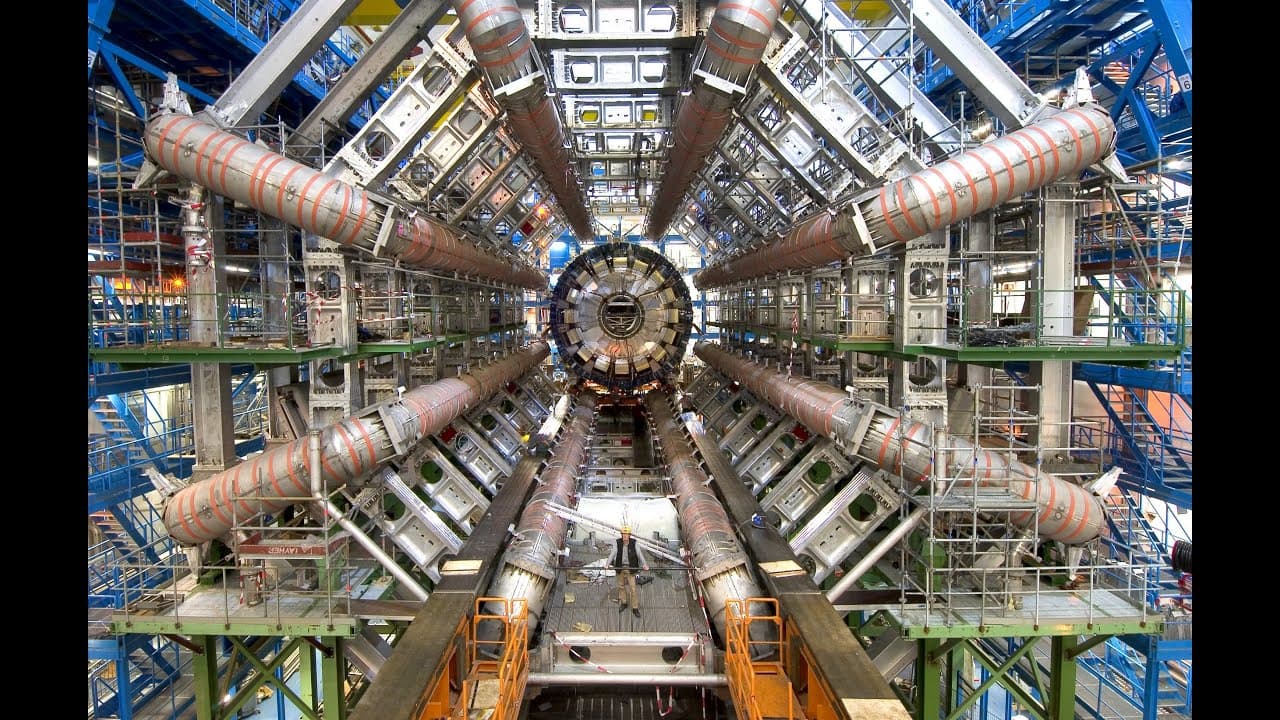
Particle accelerators replicate dense conditions to study fundamental forces in nuclear interactions and astronomy.
Transcript
I still know how to do all this are you are the techn I was going to if the technical Gremlins all worked out um I still have one monitor that is displaying everything rotated at a right angle and I see your face being sort of uh delayed in strange ways so so I think we've we've got enough of the technical Gremlin worked out that we can proceed wit... Read More
Key Insights
- ❓ Particle accelerators replicate cosmic phenomena to study fundamental forces.
- 😷 Various types of accelerators exist for medical, research, and celestial studies.
- 🕶️ Particle accelerators help uncover secrets of dark matter, dark energy, and particle physics.
- ❓ Accelerators enable creating rare isotopes, astrophysical conditions, and studying particle interactions.
Install to Summarize YouTube Videos and Get Transcripts
Explore YouTube Video Summarizer or Get YouTube Transcript Extractor
Questions & Answers
Q: How do particle accelerators work in replicating natural cosmic phenomena?
Particle accelerators use magnetic fields to accelerate and collide particles, releasing energy to replicate supernovae, the Big Bang, and other dense cosmic events.
Q: How do scientists study dark matter and dark energy with particle accelerators?
Scientists generate particle beams to search for dark matter particles, investigate neutrinos, and measure particle interactions to understand dark matter and dark energy.
Q: Can particle accelerators create microscopic black holes?
Particle accelerators like the LHC aim to create dense particles that can mimic black hole conditions, potentially leading to the creation and evaporation of microscopic black holes.
Q: What happens to the excess particles generated in accelerators?
Excess particles in accelerators quickly self-annihilate into energy, leaving no leftover debris due to their instability and rapid decay.
Summary & Key Takeaways
-
Particle accelerators use magnetic fields to accelerate particles and collide them, releasing energy and replicating intense natural phenomena.
-
Various accelerators exist for medical, research, and astronomical purposes, creating neuclei, antiparticles, and studying cosmic events.
-
These accelerators help answer scientific questions about dark matter, dark energy, particle physics, and cosmic evolution.
Read in Other Languages (beta)
Share This Summary 📚
Summarize YouTube Videos and Get Video Transcripts with 1-Click
Try YouTube Summary with ChatGPT & Claude or YouTube Transcript Generator
Explore More Summaries from Fraser Cain 📚



Summarize YouTube Videos and Get Video Transcripts with 1-Click
Try YouTube Summary with ChatGPT & Claude or YouTube Transcript Generator