Teaching the Stay Command: Tips, Techniques, and Troubleshooting for Dog Owners
TL;DR
Learn effective techniques for teaching dogs the stay command.
Transcript
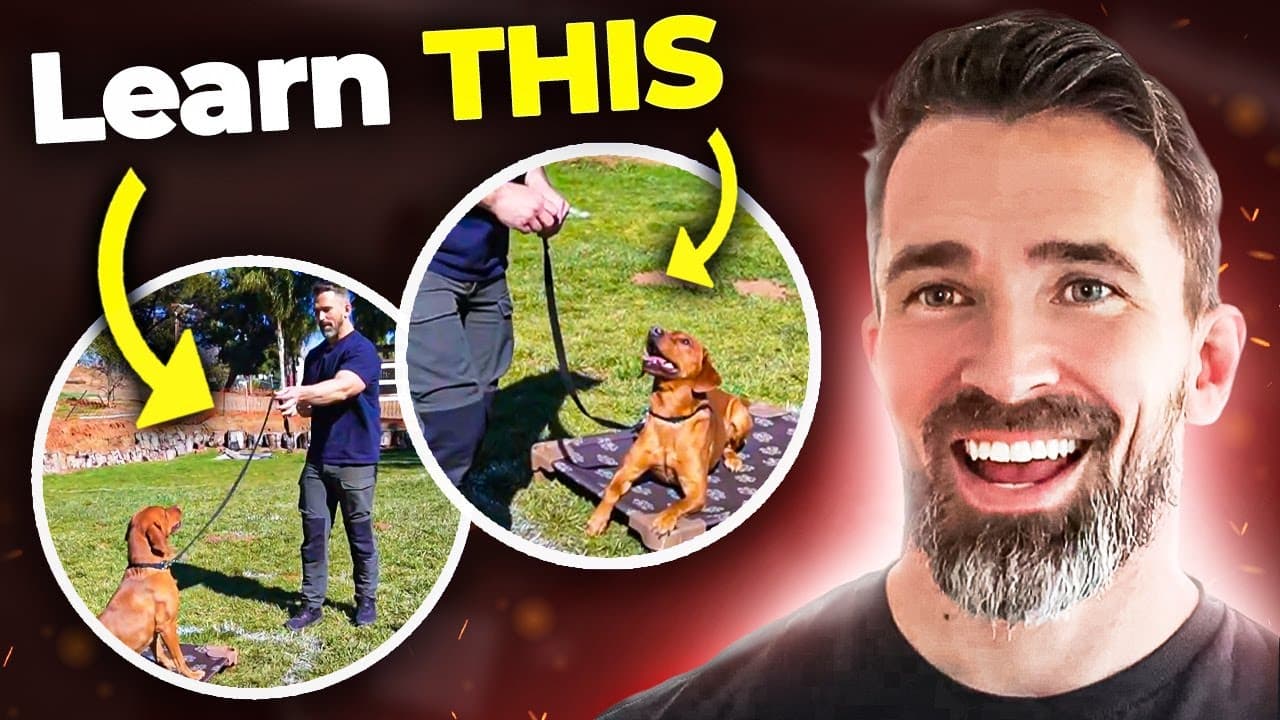
once the dog is on the platform reinforcement event is over enter the reward event or don't say anything at all or Just Praise it's up to you once the dog's on we're going to get the dog to break and then it's your responsibility whoever the Handler is to properly reinforce the rules climb for Charlie wrong for Charlie so climate is his command wro... Read More
Key Insights
- The stay command is crucial for impulse control and requires clear communication between handler and dog.
- Using markers like 'wrong' helps guide the dog back to the desired behavior without punishment.
- Reinforcement should be given when the dog maintains the position, not after breaking it.
- Handlers should gradually increase distance and distractions to strengthen the dog's ability to stay.
- Leash pressure can be used to guide dogs back to position, especially when teaching young or new dogs.
- Rewards should be given when the dog successfully stays despite new distractions or commands.
- Training should progress from easy to challenging, introducing new motivating factors over time.
- Handlers should practice releasing the dog from close proximity to prevent self-releasing habits.
Install to Summarize YouTube Videos and Get Transcripts
Explore YouTube Video Summarizer or Get YouTube Transcript Extractor
Questions & Answers
Q: What is the main focus of the video?
The main focus of the video is to teach dog trainers and owners how to effectively train dogs to follow the stay command. It emphasizes the importance of clear communication, the use of markers such as 'wrong' for corrections, and positive reinforcement to encourage the desired behavior.
Q: How does the video suggest handling a dog that breaks the stay command?
The video suggests using the marker 'wrong' to indicate that the dog should return to the desired position. It emphasizes not punishing the dog but guiding them back with leash pressure if necessary. Once the dog returns, handlers should reinforce the correct behavior with praise or treats.
Q: What role do distractions play in training the stay command?
Distractions are gradually introduced to challenge the dog's ability to maintain the stay command. By increasing the complexity of the environment, handlers can strengthen the dog's impulse control and ensure they maintain the position despite external stimuli. The video advises starting with minimal distractions and gradually increasing them.
Q: Why is leash pressure used in training?
Leash pressure is used as a gentle guide to help dogs return to the desired position when they break the stay command. It provides a physical cue that complements verbal markers, especially useful for young or inexperienced dogs who are still learning the command. The pressure should be minimal, just enough for the dog to feel it.
Q: What is the significance of the 'wrong' marker?
The 'wrong' marker is significant because it serves as a corrective cue without being punitive. It informs the dog that they need to return to the desired position and is part of a positive reinforcement strategy. This approach helps build trust and understanding between the handler and the dog.
Q: How should handlers approach increasing the difficulty of training?
Handlers should approach increasing difficulty by gradually introducing new elements, such as greater distances, more distractions, or different environments. The video advises reinforcing successful attempts and ensuring the dog understands the command before moving to more challenging scenarios. This method helps build the dog's confidence and ability.
Q: What advice does the video give regarding rewards?
The video advises that rewards should be given immediately after the dog successfully maintains the stay command, not after breaking it. This ensures the dog associates the reward with the correct behavior. Handlers are encouraged to use a combination of treats, praise, and toys as motivators, depending on the dog's preferences.
Q: Why should dogs be released from close proximity?
Dogs should be released from close proximity to prevent them from anticipating a release and breaking the stay command on their own. By consistently releasing the dog when the handler is nearby, it reinforces the expectation that the release command only comes when the handler is close, reducing the likelihood of self-releasing.
Summary & Key Takeaways
-
This video provides comprehensive training on teaching the stay command to dogs, emphasizing clear communication and reinforcement. It covers techniques like using markers and leash pressure to guide dogs back to position. The training progresses from basic to advanced, introducing distractions and increasing difficulty.
-
Handlers are advised to use positive reinforcement and gradually increase the complexity of training scenarios. The video highlights the importance of maintaining clear communication and ensuring that dogs associate rewards with the correct behavior.
-
The tutorial also includes practical advice on managing leash pressure, using toys as motivators, and preventing common mistakes. Viewers are encouraged to practice regularly and adapt techniques to suit their dog's individual needs and learning pace.
Read in Other Languages (beta)
Share This Summary 📚
Summarize YouTube Videos and Get Video Transcripts with 1-Click
Try YouTube Summary with ChatGPT & Claude or YouTube Transcript Generator
Explore More Summaries from Nate Schoemer 📚


Summarize YouTube Videos and Get Video Transcripts with 1-Click
Try YouTube Summary with ChatGPT & Claude or YouTube Transcript Generator