Transform Your 🐶 Dog's Behavior with These 6 Essential Training Exercises 🐕
TL;DR
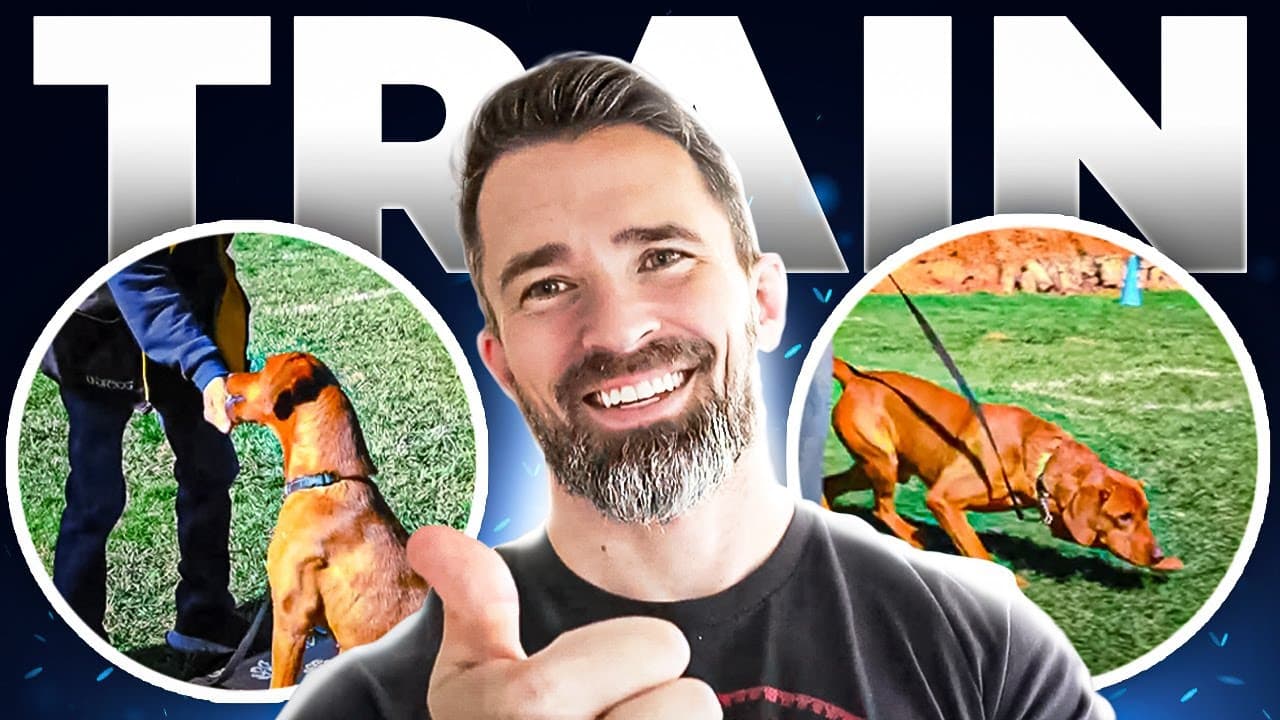
Learn six key exercises to improve your dog's behavior.
Transcript
today we're going to be working on the change of position exercise place bolt pivoting walking backwards send out and figure eights go ahead and get your dogs let's get started now we're gonna start doing some training first thing we're gonna do is simple change of position exercises so we're gonna take Charlie Charlie come here buddy with the chan... Read More
Key Insights
- The video introduces six essential dog training exercises: change of position, place bowl, pivot, walk backwards, send outs, and figure eights, aimed at improving dog behavior efficiently.
- Change of position helps dogs transition smoothly between sitting, standing, and lying down, fostering better obedience and understanding of commands.
- The place bowl and pivot exercises focus on improving a dog's spatial awareness and ability to follow cues, enhancing their responsiveness to commands.
- Walking backwards and send outs are designed to increase a dog's confidence and ability to follow directional commands, crucial for advanced training.
- The figure eight exercise helps in teaching dogs to adjust their speed and maintain focus while maneuvering around obstacles, improving their agility.
- The importance of food handling and rewards is emphasized, with guidance on using them effectively to reinforce positive behavior during training.
- Building a strong food drive in dogs is crucial for effective training, as it motivates them to perform tasks and learn new commands.
- The video highlights the interconnectedness of various training techniques, showing how mastering basic exercises can lead to more advanced skills.
Install to Summarize YouTube Videos and Get Transcripts
Explore YouTube Video Summarizer or Get YouTube Transcript Extractor
Questions & Answers
Q: What is the purpose of the change of position exercise?
The change of position exercise is designed to help dogs transition smoothly between sitting, standing, and lying down. This exercise enhances a dog's ability to understand and respond to basic commands, improving obedience and communication between the dog and its owner.
Q: How does the place bowl exercise benefit dogs?
The place bowl exercise benefits dogs by improving their spatial awareness and ability to follow cues. It teaches dogs to focus on specific tasks, such as placing a paw on a bowl and pivoting, which enhances their responsiveness to commands and overall training effectiveness.
Q: What skills does the pivot exercise develop in dogs?
The pivot exercise develops a dog's ability to follow directional cues and improves their spatial awareness. By learning to pivot around a stationary point, dogs become more agile and responsive to commands, which is crucial for advanced training and obedience tasks.
Q: Why is building a strong food drive important in dog training?
Building a strong food drive is important because it motivates dogs to perform tasks and learn new commands. A dog with a high food drive is more likely to engage in training sessions with enthusiasm, making it easier for trainers to reinforce positive behaviors and achieve desired outcomes.
Q: How do the walk backwards and send out exercises improve a dog's training?
The walk backwards and send out exercises improve a dog's training by increasing their confidence and ability to follow directional commands. These exercises challenge dogs to move in specific directions, which enhances their obedience and prepares them for more complex training tasks.
Q: What is the significance of the figure eight exercise?
The figure eight exercise is significant because it teaches dogs to adjust their speed and maintain focus while maneuvering around obstacles. This exercise improves a dog's agility and responsiveness, making it an essential component of comprehensive training programs aimed at enhancing a dog's overall performance.
Q: How does the video emphasize the interconnectedness of training techniques?
The video emphasizes the interconnectedness of training techniques by showing how mastering basic exercises, like change of position and pivoting, can lead to more advanced skills. It highlights that each exercise builds upon the others, creating a cohesive training experience that enhances a dog's overall behavior and obedience.
Q: What role do food rewards play in the training exercises?
Food rewards play a crucial role in the training exercises by serving as a motivator and positive reinforcement tool. They encourage dogs to perform desired behaviors and help trainers effectively communicate commands. Proper use of food rewards enhances the training experience and strengthens the bond between the dog and its owner.
Summary & Key Takeaways
-
This video outlines six essential dog training exercises aimed at transforming your dog's behavior. It covers change of position, place bowl, pivot, walk backwards, send outs, and figure eights, providing a comprehensive guide for dog owners.
-
The exercises focus on improving obedience, spatial awareness, and agility in dogs. Emphasis is placed on using food rewards effectively to motivate and reinforce positive behavior during training sessions.
-
Viewers are encouraged to practice these exercises regularly, as they are interconnected and build upon each other, ultimately enhancing the overall training experience and strengthening the bond between owner and dog.
Read in Other Languages (beta)
Share This Summary 📚
Summarize YouTube Videos and Get Video Transcripts with 1-Click
Try YouTube Summary with ChatGPT & Claude or YouTube Transcript Generator
Explore More Summaries from Nate Schoemer 📚

Summarize YouTube Videos and Get Video Transcripts with 1-Click
Try YouTube Summary with ChatGPT & Claude or YouTube Transcript Generator