What Are Metals and Ceramics in Engineering?
TL;DR
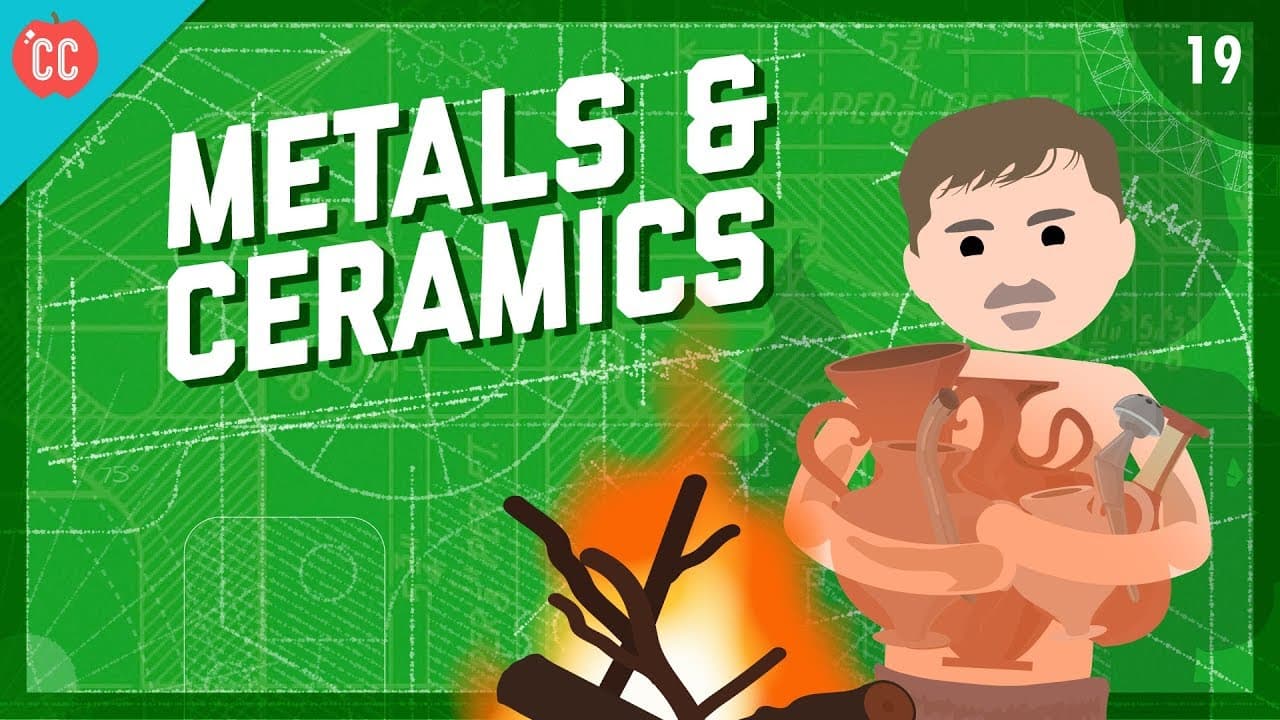
Metals and ceramics are two primary materials used in engineering, each with unique properties. Metals are conductive, malleable, and often used in alloys for enhanced properties, while ceramics are strong, brittle, and resistant to heat and corrosion. Choosing the right material involves understanding these properties and their applications, such as in microelectromechanical systems.
Transcript
Materials matter. You wouldn’t want to make a stop sign out of candle wax or a bench out of chocolate. Neither would be able to hold up to the weather outside, and things would get quite sticky rather fast. So if you’re going to create things and solve problems, you’re going to need the right supplies. The right materials. And two of the three mai... Read More
Key Insights
- Metals conduct heat and electricity well and are malleable and ductile, making them ideal for structures.
- Alloys, like steel, are made by combining metals with other elements to enhance properties like impact resistance and corrosion resistance.
- Ceramics are stiff, strong, and often brittle, making them suitable for applications requiring resistance to high temperatures.
- Glass-ceramics are strong, biologically compatible, and good insulators, used in electronic packaging.
- Clay is a versatile and inexpensive ceramic material, easily shaped and used in pottery and construction.
- Cement is a crucial ceramic material used as a binder in concrete, setting at room temperature.
- Microelectromechanical systems (MEMS) utilize metals and ceramics for sensors and actuators in devices like accelerometers.
- The choice between metal and ceramic braces involves considering durability, visibility, and personal preferences.
Install to Summarize YouTube Videos and Get Transcripts
Explore YouTube Video Summarizer or Get YouTube Transcript Extractor
Questions & Answers
Q: What are the key properties of metals used in engineering?
Metals in engineering are valued for their ability to conduct heat and electricity efficiently. They are malleable, allowing them to be shaped without breaking, and ductile, meaning they can be stretched and deformed. These properties make them ideal for use in structures and devices that require strength and durability.
Q: Why are alloys used instead of pure metals?
Alloys are used instead of pure metals because they offer enhanced properties. By combining a metal with other elements, alloys can gain improved strength, durability, and resistance to corrosion. For example, steel, an alloy of iron and carbon, is more impact-resistant and less prone to rust than pure iron.
Q: What distinguishes ceramics from metals in terms of properties?
Ceramics differ from metals in that they are generally stiff and strong but also brittle, making them prone to fracture. They are excellent insulators, resisting heat and electricity, and are more resistant to extreme temperatures and harsh environments than metals. These properties make ceramics suitable for applications requiring heat resistance.
Q: How are glass-ceramic materials used in engineering?
Glass-ceramic materials are used in engineering for their strength and insulating properties. They are commonly used in electronic packaging due to their ability to withstand high temperatures and their biological compatibility. Their transparency and ease of fabrication make them versatile for various applications, including optical and structural uses.
Q: What are the benefits of using clay in ceramics?
Clay is beneficial in ceramics due to its abundance, low cost, and ease of use. It can be shaped easily when mixed with water, making it ideal for pottery and construction applications. After firing in a kiln, clay becomes a durable material suitable for making dishes, bricks, and other structural components.
Q: Why is cement important in construction?
Cement is important in construction as it acts as a binder in concrete, providing structural integrity to buildings, roads, and other infrastructures. It sets at room temperature, eliminating the need for high-temperature processing, and is used in a wide range of applications from large-scale structures to decorative elements.
Q: How do microelectromechanical systems (MEMS) utilize metals and ceramics?
MEMS utilize metals and ceramics in their sensors and actuators to perform precise measurements and actions. Metals provide conductive pathways and structural components, while ceramics offer insulating properties and resistance to environmental factors. MEMS are found in devices like accelerometers, used in smartphones and automotive safety systems.
Q: What factors influence the choice between metal and ceramic braces?
The choice between metal and ceramic braces involves considering durability, visibility, and comfort. Metal braces are more durable and effective for severe misalignments, while ceramic braces are less visible and cause less irritation. Personal preferences, treatment goals, and cost also play significant roles in the decision-making process.
Summary & Key Takeaways
-
Metals are crucial in engineering due to their conductive and malleable properties. They are often combined into alloys to improve characteristics such as strength and resistance to corrosion. Steel is a common alloy made primarily of iron and carbon, providing better impact resistance and rust prevention.
-
Ceramics are known for their strength and heat resistance but are brittle and poor conductors. They include materials like clay, cement, and glass-ceramics, used in various applications from construction to electronics. Glass-ceramics are particularly valued for their strength, transparency, and insulation properties.
-
Choosing between metals and ceramics in engineering involves assessing their properties and application requirements. Metals are preferred for structural applications, while ceramics are used where heat resistance and insulation are critical. The decision also considers factors like cost, availability, and specific use-case needs.
Read in Other Languages (beta)
Share This Summary 📚
Summarize YouTube Videos and Get Video Transcripts with 1-Click
Try YouTube Summary with ChatGPT & Claude or YouTube Transcript Generator
Explore More Summaries from CrashCourse 📚





Summarize YouTube Videos and Get Video Transcripts with 1-Click
Try YouTube Summary with ChatGPT & Claude or YouTube Transcript Generator