Q&A 88: How Could We Cool Down Venus? And More...
TL;DR
Fraser answers viewer questions on various space-related topics.
Transcript
all right it's question show time your questions my answers as always wherever you are anywhere across my channel of a question pops in your brain just write down on any video I will gather them up and I will answer them here apologize in advance for all the noise that's going on behind me it's springtime in Canada and all that means lawnmowers and... Read More
Key Insights
- 😋 Gas giants like Saturn, Jupiter, Neptune, and Uranus have rings with different compositions.
- 😎 Cooling down Venus could lead to carbon dioxide snow, but handling excess CO2 is crucial.
- 🤖 Building an interstellar spacecraft involves using asteroids and developing self-replicating robots.
- 😒 Hubble Space Telescope is free to use, with researchers applying for telescope time based on their proposals.
- 🧑🚀 Evacuating the International Space Station involves astronauts boarding the Soyuz spacecraft for immediate departure.
- 😘 Utilizing weights in lower gravity environments may not address the physiological challenges faced by humans.
- ❓ Weaponizing asteroids poses ethical dilemmas and practical challenges, given current technological capabilities.
Install to Summarize YouTube Videos and Get Transcripts
Explore YouTube Video Summarizer or Get YouTube Transcript Extractor
Questions & Answers
Q: Could Earth have had rings in the ancient past like other gas giants?
Earth might have had rings if an event caused a moon to disintegrate, indicating a potential disaster if rings appear again.
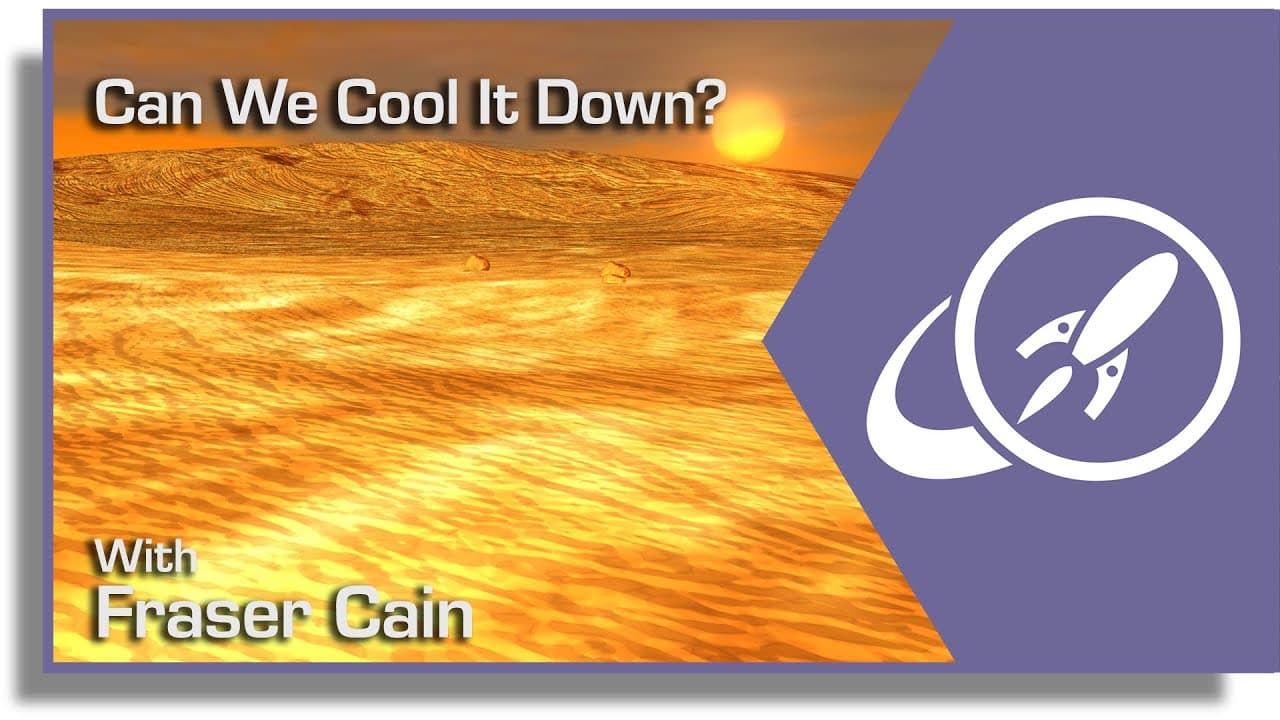
Q: Can we cool down Venus's atmosphere to cause carbon dioxide to snow?
Blocking sunlight from Venus could cool it, leading to the solidification of excess CO2, although handling the carbon is a challenge.
Q: How feasible is it to build an interstellar spacecraft using AI and resources like an asteroid?
Constructing a spacecraft from an asteroid over time is plausible, but developing self-replicating robots and problem-solving are crucial.
Q: How quickly can the International Space Station be evacuated in case of an emergency?
Astronauts can evacuate the ISS within minutes using the Soyuz spacecraft, which is always available for immediate evacuation.
Q: Is it possible to wear weights to compensate for lower gravity on the Moon or Mars?
Although weighted spacesuits help, they do not solve issues with organ redistribution in low gravity, requiring further research.
Q: How much research has been done on weaponizing asteroids for potential destruction?
While moving asteroids for protection is feasible, using them as weapons poses ethical challenges and may lead to disastrous outcomes.
Q: Can underground caverns on the Moon or Mars sustain plant life and create an underground atmosphere?
Building closed environments with plants for oxygen production is feasible in theory, but replicating Earth's ecosystem requires careful planning and understanding.
Summary & Key Takeaways
-
Planets like Saturn, Jupiter, Neptune, and Uranus have rings with different compositions and origins.
-
Cooling down Venus's atmosphere could turn carbon dioxide into snow, but managing the excess CO2 is crucial.
-
Building an interstellar spacecraft involves using resources like an asteroid and developing self-replicating robots.
Read in Other Languages (beta)
Share This Summary 📚
Summarize YouTube Videos and Get Video Transcripts with 1-Click
Try YouTube Summary with ChatGPT & Claude or YouTube Transcript Generator
Explore More Summaries from Fraser Cain 📚

Summarize YouTube Videos and Get Video Transcripts with 1-Click
Try YouTube Summary with ChatGPT & Claude or YouTube Transcript Generator