First Artificial Gravity Test in 2025 // Uranus Moons' Oceans // Webb's Eye of Sauron
TL;DR
Moons of Uranus may have liquid oceans, Saturn gains 62 moons, Webb telescope reveals planet-forming rings.
Transcript
there could be liquid oceans in the moons of Uranus Saturn takes the lead for the most moons in the solar system and Webb gazes into the eye of Sauron all this and more in this week's space bites the search for life in the solar system is now really centering on the moons with liquid water under a thick shell of ice think about Europa and Enceladus... Read More
Key Insights
- 🥮 The potential presence of liquid oceans under Uranus's moons indicates the need for future missions to explore further.
- 🥮 Saturn's newfound 62 moons shed light on the dynamic processes of moon formation and unique orbits.
- 💁 The James Webb Space Telescope's observation of planet-forming rings provides crucial insights into the early stages of planetary formation.
- 💦 Solar-powered water propulsion systems like Vigoride offer a sustainable and safe method for spacecraft orbit maintenance.
- 👾 Private space station plans, like Haven One, aim to offer extended stays in space and further advance human space exploration.
- 👾 China's secretive space plane return highlights the growing competition and advancements in space technology, challenging the X-37B.
- 🚀 Drone footage of Rocket Lab's Electron rocket launch and Falcon Heavy's unique launch provide captivating glimpses of current space endeavors.
Install to Summarize YouTube Videos and Get Transcripts
Explore YouTube Video Summarizer or Get YouTube Transcript Extractor
Questions & Answers
Q: How did astronomers determine the potential presence of liquid oceans under Uranus's moons?
By comparing Voyager 2 data with observations from various spacecraft and using simulations, astronomers inferred liquid oceans under four of Uranus's moons.
Q: What led to Saturn gaining an additional 62 moons, surpassing Jupiter in moon count?
Researchers at the University of British Columbia discovered these moons, likely resulting from collisions and unique orbits around Saturn.
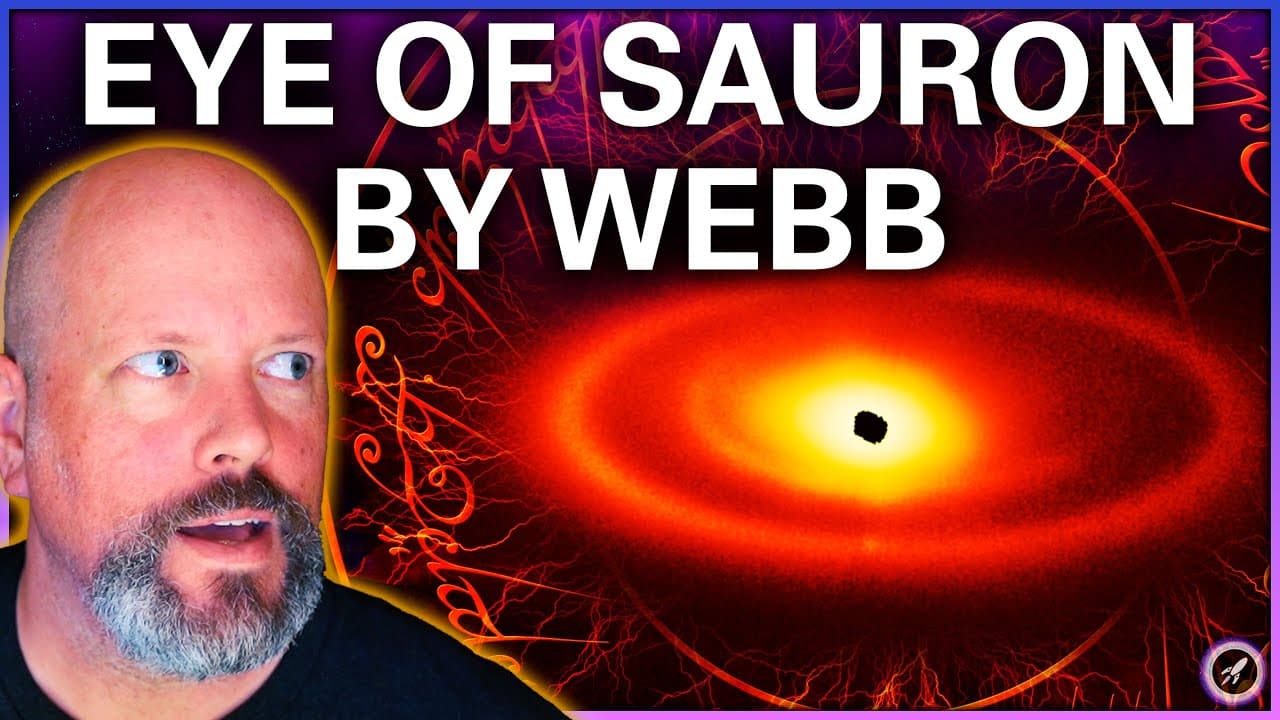
Q: What did the James Webb Space Telescope observe around the star Fomalhaut?
High-resolution images revealed concentric rings of dust, indicating regions of planet formation, akin to the Eye of Sauron from "The Lord of the Rings."
Q: How did astronomers confirm the Big Bang and the Lambda CDM model of the universe with the James Webb Space Telescope?
By utilizing simulations like Renaissance on supercomputers and comparing observations to predicted models, astronomers confirmed the accuracy of the Big Bang theory.
Summary & Key Takeaways
-
Moons of Uranus potentially harbor liquid oceans under icy shells, based on Voyager 2 data and simulations.
-
Saturn gains 62 moons, leading in the solar system, believed to result from collisions and varied orbits.
-
James Webb Space Telescope observes planet-forming rings around the star Fomalhaut, resembling the eye of Sauron.
Read in Other Languages (beta)
Share This Summary 📚
Summarize YouTube Videos and Get Video Transcripts with 1-Click
Try YouTube Summary with ChatGPT & Claude or YouTube Transcript Generator
Explore More Summaries from Fraser Cain / Universe Today Podcast 📚



Summarize YouTube Videos and Get Video Transcripts with 1-Click
Try YouTube Summary with ChatGPT & Claude or YouTube Transcript Generator