How Does Icelandic Language Stay Unchanged?
TL;DR
Icelandic is a North Germanic language that has remained relatively unchanged for 1,000 years due to Iceland's isolation. It retains much of the inflection from Old Norse, making it unique among Germanic languages. Icelandic nationalism has also contributed to linguistic purism, preserving the language's ancient roots.
Transcript
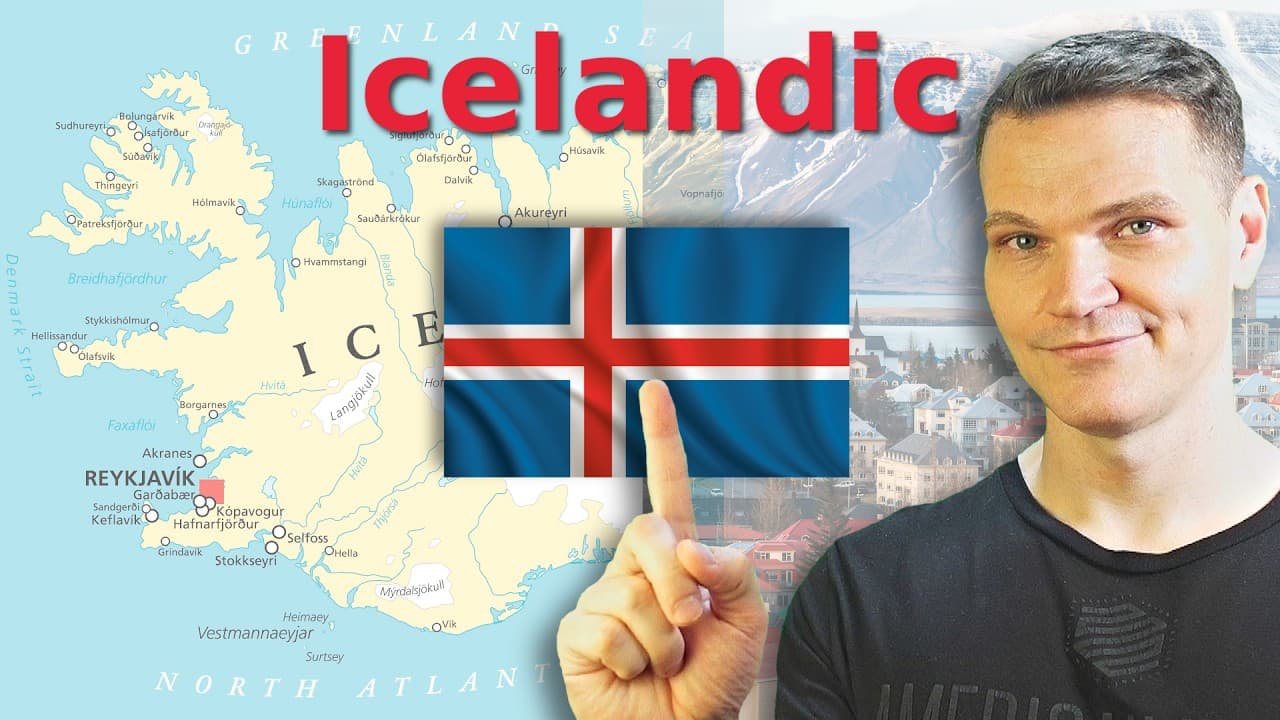
Iceland is an isolated country way out here by itself in the North Atlantic Ocean Greenland is only 280 km away but hardly anyone lives there the Pharaoh Islands are 400 km away but they have a small population as well the rest of Europe is way over there this isolation is one of the factors that makes the Icelandic language what it is today a cons... Read More
Key Insights
- Icelandic is a conservative North Germanic language with little change over a millennium.
- The language remains relatively unchanged due to Iceland's geographical isolation.
- Icelandic is closely related to Old Norse, especially in writing.
- Linguistic purism in Iceland has led to the creation of new words from existing roots.
- Icelandic retains much of the inflection lost in other Germanic languages.
- The pronunciation of Icelandic has evolved, although the writing remains similar to Old Norse.
- Icelandic uses unique letters like Thorn and Eth, which represent specific sounds.
- Icelandic nationalism fueled the removal of Danish loanwords during the 19th century.
Install to Summarize YouTube Videos and Get Transcripts
Explore YouTube Video Summarizer or Get YouTube Transcript Extractor
Questions & Answers
Q: How has Icelandic remained unchanged over the years?
Icelandic has remained relatively unchanged due to Iceland's geographical isolation and the cultural emphasis on preserving its linguistic heritage. The language's conservative nature is supported by a strong sense of nationalism and linguistic purism, where new words are created from existing Icelandic roots rather than borrowed from other languages.
Q: What are the unique features of the Icelandic language?
Icelandic retains much of the inflection and grammatical complexity of Old Norse, distinguishing it from other modern Germanic languages. It uses unique letters like Thorn and Eth to represent specific sounds and maintains a complex system of noun cases and verb conjugations. This linguistic structure is a direct link to its ancient roots.
Q: Why is Icelandic considered close to Old Norse?
Icelandic is considered close to Old Norse because it has preserved much of the inflection and vocabulary from the ancient language. Its writing system remains similar to Old Norse, allowing Icelandic speakers to read historical texts like the Icelandic sagas with relative ease, although pronunciation has evolved over time.
Q: What role did nationalism play in the development of Icelandic?
Nationalism played a significant role in the development of Icelandic by fostering a movement of linguistic purism. During the 19th century, as Icelanders sought independence, they removed Danish loanwords from the language and coined new terms from Icelandic roots. This helped preserve the language's unique characteristics and reinforced cultural identity.
Q: How did Iceland's isolation affect its language?
Iceland's isolation in the North Atlantic has been a crucial factor in preserving the Icelandic language. The geographic separation from mainland Europe limited external linguistic influences, allowing Icelandic to develop independently and maintain its conservative nature, closely resembling Old Norse in its structure and vocabulary.
Q: What linguistic features set Icelandic apart from other Germanic languages?
Icelandic is set apart by its retention of Old Norse inflection and grammatical complexity. It features unique letters and sounds, such as Thorn and Eth, and uses a complex system of noun cases and verb conjugations. Unlike many Germanic languages, Icelandic has resisted borrowing foreign words, opting instead for coining new terms from its roots.
Q: Can Icelandic speakers understand Old Icelandic texts?
Yes, Icelandic speakers can understand Old Icelandic texts like the Icelandic sagas, thanks to the language's close resemblance to Old Norse in writing. Although pronunciation has evolved, the grammatical structure and vocabulary remain similar enough for modern speakers to read historical texts with relative ease, akin to English speakers reading Shakespeare.
Q: What impact did Danish rule have on the Icelandic language?
While Danish rule introduced some linguistic influences, Icelandic nationalism and linguistic purism mitigated its impact. During the 19th century, Icelanders removed many Danish loanwords and focused on preserving their language's purity by coining new terms from Icelandic roots. This effort helped maintain Icelandic's distinct characteristics and cultural identity.
Summary & Key Takeaways
-
Icelandic is a North Germanic language that has stayed relatively unchanged for a thousand years due to Iceland's isolation. Its roots in Old Norse are evident, particularly in writing, and it retains much of the inflection lost in other Germanic languages. Icelandic nationalism has driven a movement of linguistic purism, leading to the creation of new words from existing Icelandic roots.
-
The Icelandic language's conservative nature is attributed to its geographical isolation and cultural factors. Despite historical influences from Norway and Denmark, Icelandic has maintained its distinct characteristics through a strong sense of nationalism and linguistic purism. This has involved coining new terms from Icelandic roots instead of adopting foreign words.
-
Icelandic speakers can read old Icelandic sagas with ease due to the language's closeness to Old Norse. However, the pronunciation has diverged over time. The language uses unique letters and sounds, such as Thorn and Eth, and maintains a complex system of inflection, setting it apart from other modern Germanic languages.
Read in Other Languages (beta)
Share This Summary 📚
Summarize YouTube Videos and Get Video Transcripts with 1-Click
Try YouTube Summary with ChatGPT & Claude or YouTube Transcript Generator
Explore More Summaries from Langfocus 📚

Summarize YouTube Videos and Get Video Transcripts with 1-Click
Try YouTube Summary with ChatGPT & Claude or YouTube Transcript Generator