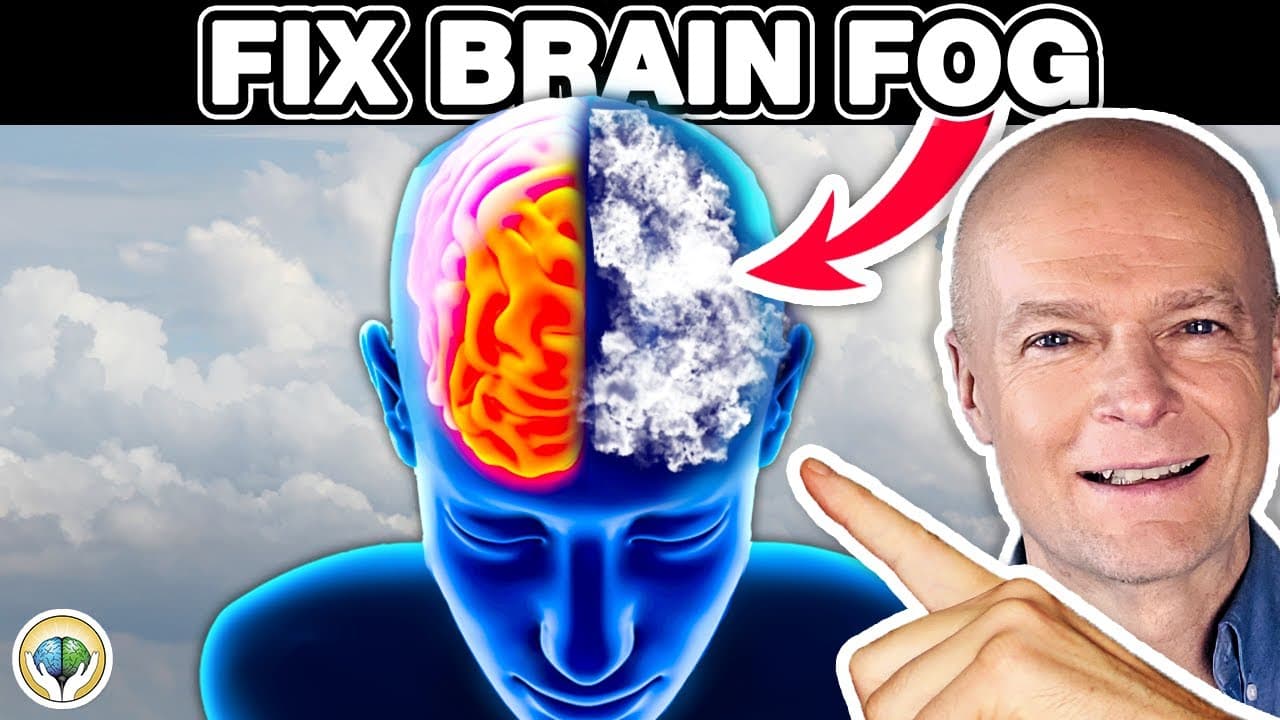
#1 Absolute Best Way to Improve Energy & Brain Fog
TL;DR
Learn how to clear up brain fog and regain mental clarity through understanding the brain's needs and providing appropriate support.
Transcript
Hello Health Champions. When your brain doesn't work - you don't work. You feel miserable. You can't get anything done and all the things that you want out of life go missing. Brain fog affects everybody some of the time but it affects some people almost all of the time so today we're going to talk about how to clear up brain fog so you ca... Read More
Key Insights
- 🧠 The brain processes vast amounts of information and relies on various modalities such as electrical current, chemicals (neurotransmitters and hormones), electromagnetic fields, and biophotons.
- 🧠 Energy, in the form of stable fuel, oxygenation, and enzyme support, is crucial for brain function and ATP production.
- 🐦⬛ Stimulation through exercise and mental activity promotes cell regeneration and prevents disuse. Lack of stimulation can lead to a loss of motivation and focus.
- 🐦⬛ Factors such as lack of sleep, stress, inflammation, and signal disruption through electromagnetic fields can contribute to brain fog.
- 🧠 Inflammation, including infections and leaky gut/brain, can also lead to brain fog.
- 🥫 Antioxidants should be consumed through natural food sources rather than concentrated supplements.
Install to Summarize YouTube Videos and Get Transcripts
Explore YouTube Video Summarizer or Get YouTube Transcript Extractor
Questions & Answers
Q: What is brain fog, and why does it occur?
Brain fog is a term used to describe symptoms such as low energy, poor focus, lethargy, and fatigue. It can occur due to factors like lack of energy, inflammation, signal disruption, and more.
Q: How can I clear up brain fog naturally?
Clearing up brain fog naturally involves understanding and providing what the brain needs. This includes stable energy through fuel, proper oxygenation through exercise and proper sleep, reducing inflammation through a healthy diet, and minimizing exposure to electromagnetic fields.
Q: Can lack of sleep contribute to brain fog?
Yes, lack of sleep can contribute to brain fog. Sleep is essential for the regeneration and recharging of the body and brain. Without sufficient quantity and quality of sleep, cognitive function and focus can be affected.
Q: How does stress impact brain function and contribute to brain fog?
Chronic stress can lead to constricted blood flow in the brain, particularly in the cortex responsible for conscious thought and focus. This can result in fatigue, reduced creativity, and difficulty balancing emotions, contributing to brain fog.
Key Insights:
- The brain processes vast amounts of information and relies on various modalities such as electrical current, chemicals (neurotransmitters and hormones), electromagnetic fields, and biophotons.
- Energy, in the form of stable fuel, oxygenation, and enzyme support, is crucial for brain function and ATP production.
- Stimulation through exercise and mental activity promotes cell regeneration and prevents disuse. Lack of stimulation can lead to a loss of motivation and focus.
- Factors such as lack of sleep, stress, inflammation, and signal disruption through electromagnetic fields can contribute to brain fog.
- Inflammation, including infections and leaky gut/brain, can also lead to brain fog.
- Antioxidants should be consumed through natural food sources rather than concentrated supplements.
- Understanding the impacts of EMF exposure and taking steps to minimize it can help reduce brain fog.
Summary & Key Takeaways
-
Brain fog is a general term used to describe symptoms of low energy, poor focus, lethargy, and fatigue. It can be caused by various factors, including lack of energy, inflammation, signal disruption, and more.
-
The brain needs stable energy in the form of fuel (calories, fat, carbohydrate) that can be oxidized with the help of oxygen and enzymes. This energy is essential for brain function and ATP production.
-
Stimulation is crucial for brain health, as it promotes the breakdown and regeneration of cells. Lack of stimulation can lead to a loss of motivation and focus.
-
Factors such as lack of sleep, stress, inflammation, and signal disruption through electromagnetic fields can contribute to brain fog.
Read in Other Languages (beta)
Share This Summary 📚
Summarize YouTube Videos and Get Video Transcripts with 1-Click
Try YouTube Summary with ChatGPT & Claude or YouTube Transcript Generator
Explore More Summaries from Dr. Sten Ekberg 📚






Summarize YouTube Videos and Get Video Transcripts with 1-Click
Try YouTube Summary with ChatGPT & Claude or YouTube Transcript Generator