I Ate 100 TBSP Of BUTTER In 10 Days: Here Is What Happened To My BLOOD
TL;DR
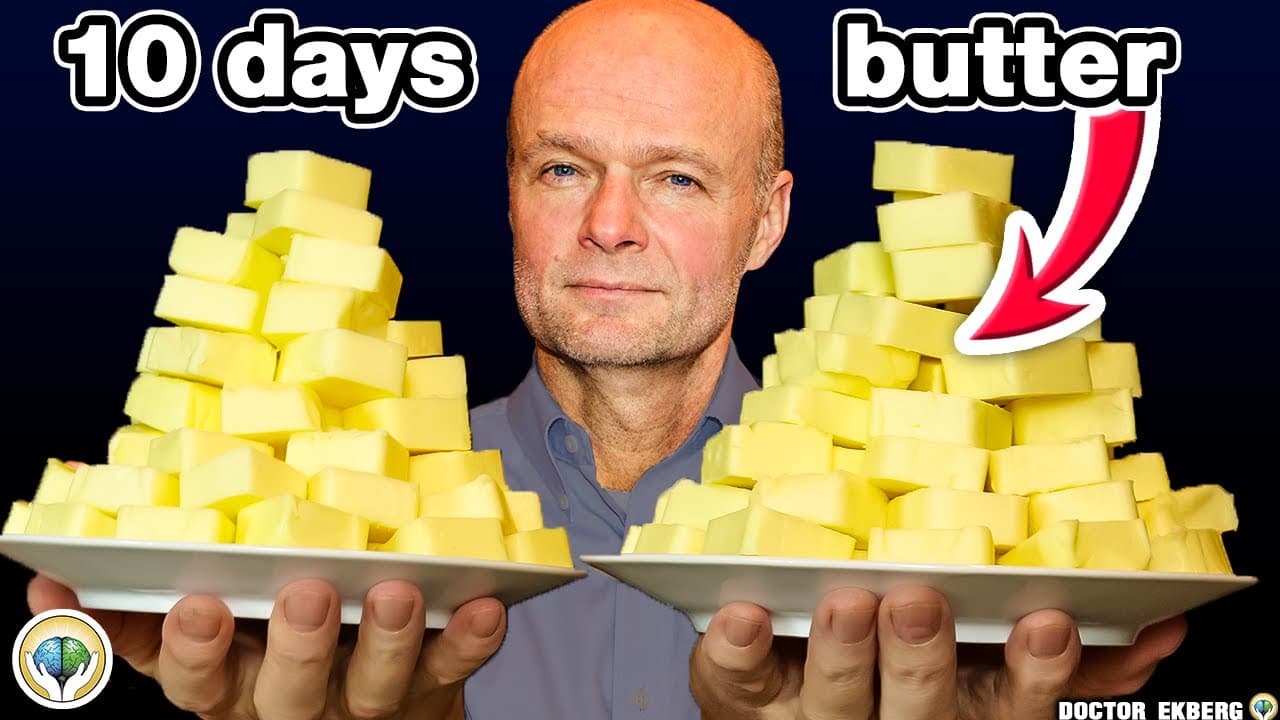
The narrator eats 100 tablespoons of butter in 10 days to test the effects on blood fat levels and insulin resistance, but finds that the standard model may not be entirely accurate.
Transcript
This is me loading up on butter at the grocery store because in the next 10 days I'm gonna eat 100 tablespoons of butter to see what all the saturated fat will do to my blood. Hello Health Champions. Today we're going to talk about fat In the blood also known as triglycerides and about the blood work that I did before and after eating 100... Read More
Key Insights
- 🥦 High blood fats, also known as triglycerides, are commonly caused by consuming foods high in fat. The best way to treat high levels of blood fats is to eat less fat.
- ♀️ In a 10-day experiment, the speaker consumed 1,420 grams of butter, resulting in a high intake of saturated fat, which made up 42% of their total calories.
- ❌ High blood fats can lead to health problems like heart disease, pancreatitis, diabetes, strokes, and obesity. However, it is unclear whether high blood fats are solely caused by eating too much fat.
- ⚖️ Eating a large amount of saturated fat did not increase the speaker's insulin resistance or cause weight gain.
- 💉 Triglycerides are primarily carried in the bloodstream by VLDL (very low-density lipoprotein) particles. High levels of triglycerides in the blood can indicate insulin resistance and metabolic issues.
- 🍳 Food choices that lower triglycerides should not significantly raise glucose or insulin levels. A low-carbohydrate, high-fat diet can be effective in reducing triglyceride levels.
- ⚙️ The body uses fat and carbohydrates for fuel, but carbohydrates are prioritized because high blood glucose can be harmful. Eating excessive carbohydrates can impede the use of fats for energy.
- 🩺 Monitoring blood work and understanding its markers can provide insight into individual health. Regular blood tests can help identify imbalances and take appropriate actions.
Install to Summarize YouTube Videos and Get Transcripts
Explore YouTube Video Summarizer or Get YouTube Transcript Extractor
Questions & Answers
Q: How did the narrator's blood fat levels and insulin resistance change after consuming 100 tablespoons of butter?
After consuming 100 tablespoons of butter in 10 days, the narrator's blood fat levels remained the same and their insulin resistance improved. This contradicted the standard model's predictions.
Q: Is eating a high-fat diet always detrimental to blood fat levels?
No, the narrator's experiment showed that consuming a high-fat diet did not result in an increase in blood fat levels. Each individual's response to a high-fat diet may vary based on factors such as insulin resistance and overall metabolic health.
Q: What are lipoproteins and what role do they play in transporting fat in the body?
Lipoproteins are proteins that carry lipids in the bloodstream. They consist of a water-soluble outer membrane and a fat-soluble inner core. Lipoproteins, such as VLDL, LDL, and HDL, distribute and regulate fat and cholesterol in the body.
Q: What is the relationship between triglycerides, insulin resistance, and the consumption of carbohydrates and fat?
High levels of triglycerides and insulin resistance are often associated with consuming high-carbohydrate diets. When carbohydrates are consumed, they are used as the body's preferred source of fuel, while fat remains unused. This can lead to elevated triglyceride levels. However, consuming a high-fat, low-carbohydrate diet may improve insulin resistance and prevent triglyceride elevation.
Q: How can individuals determine their optimal fat and carbohydrate intake for maintaining healthy blood fat levels?
It is important for individuals to understand their own metabolic health and keep track of their blood work. Consulting with a healthcare professional and conducting regular blood tests can help determine the ideal balance of fat and carbohydrate intake for maintaining healthy blood fat levels.
Summary & Key Takeaways
-
The narrator consumes 100 tablespoons of butter in 10 days to test the effects on blood fat levels and insulin resistance.
-
Contrary to the standard model, their blood fat levels remained the same and their insulin resistance improved.
-
The narrator emphasizes the importance of understanding individual mechanisms and blood work in determining the effects of fat in the blood.
Read in Other Languages (beta)
Share This Summary 📚
Summarize YouTube Videos and Get Video Transcripts with 1-Click
Try YouTube Summary with ChatGPT & Claude or YouTube Transcript Generator
Explore More Summaries from Dr. Sten Ekberg 📚




Summarize YouTube Videos and Get Video Transcripts with 1-Click
Try YouTube Summary with ChatGPT & Claude or YouTube Transcript Generator