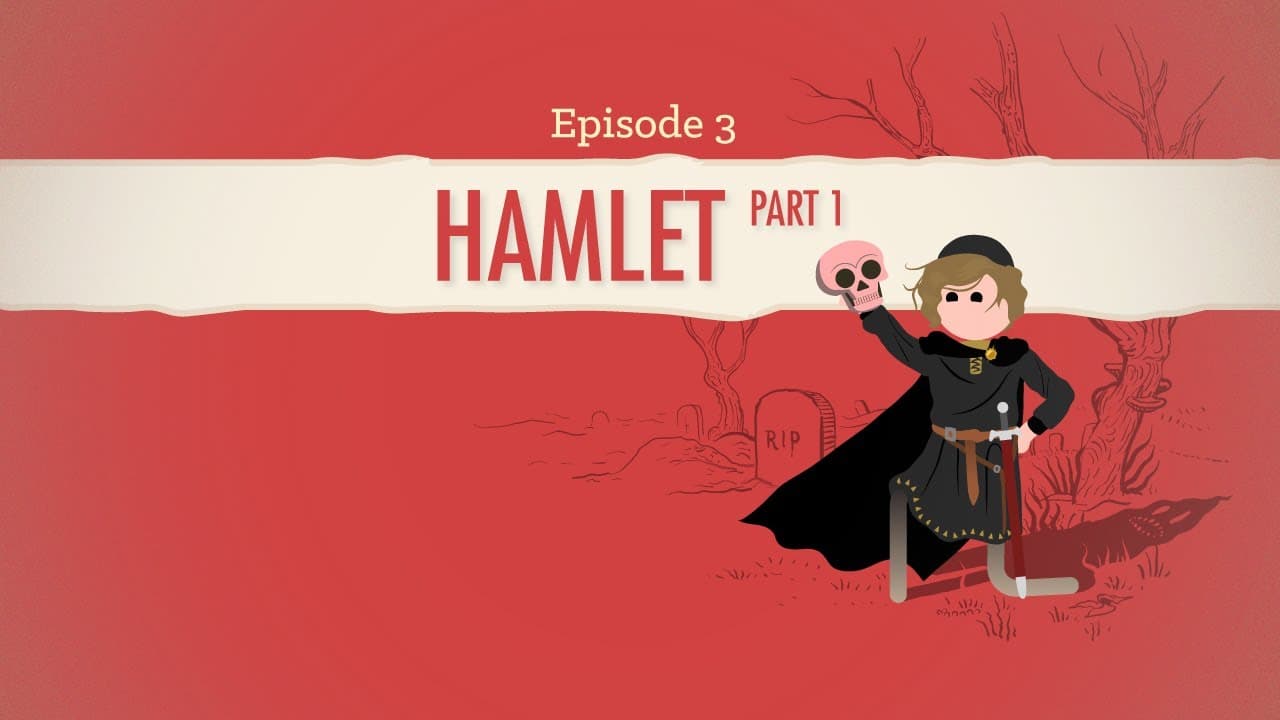
Ghosts, Murder, and More Murder - Hamlet Part 1: Crash Course Literature 203
TL;DR
John Green explores the themes and complexities of Shakespeare's Hamlet.
Transcript
Hi I’m John Green, this is CrashCourse Literature and today we’re going to talk about the greatest Dane of all, Scooby-Doo. No, it’s Hamlet. So Hamlet is either a 16h or 17th century play, we’re not positive. The Tragedy of Hamlet, Prince of Denmark was written by William Shakespeare sometime between 1599 and 1602 and it’s considered by many to be ... Read More
Key Insights
- Hamlet is Shakespeare's longest play, written between 1599 and 1602, and is renowned for its complexity and exploration of themes like justice, revenge, and existentialism.
- The play is based on a Scandinavian tale about Prince Amleth, who avenges his father's murder by his uncle, a story Shakespeare adapted with added ambiguity.
- There are three versions of Hamlet: two quartos and the Folio edition, with the first quarto known as the 'bad quarto' due to its poor transcription.
- Hamlet's struggle is not just about indecision but also about grappling with profound moral and existential questions, reflecting the human condition.
- The play features a surveillance society in Denmark, mirroring Elizabethan England's own culture of espionage and political intrigue.
- Hamlet's themes of doubling and mirroring raise questions about identity, change, and the nature of self-perception.
- The ghost of Hamlet's father embodies the theme of recurring violence and the cycle of vengeance, central to the play's tragic structure.
- Hamlet's contemplation of action versus divine justice highlights the play's exploration of moral ambiguity and the human struggle with decision-making.
Install to Summarize YouTube Videos and Get Transcripts
Explore YouTube Video Summarizer or Get YouTube Transcript Extractor
Questions & Answers
Q: What is the historical basis for Shakespeare's Hamlet?
Shakespeare's Hamlet is based on a medieval Scandinavian tale chronicled by Saxo Grammaticus, which tells the story of Prince Amleth. In this tale, Amleth avenges his father's murder by his uncle. Shakespeare adapted this story, introducing ambiguity and altering key elements, such as the protagonist's age and direct witness to the murder, to explore deeper themes.
Q: How does the play reflect Elizabethan England's culture?
Hamlet reflects Elizabethan England's culture through its depiction of a surveillance society, akin to the espionage prevalent during the reign of Elizabeth I. The play's setting in Denmark, where characters constantly watch each other, mirrors the political intrigue and anti-royal conspiracies of the time. This context highlights the play's commentary on the era's social and political dynamics.
Q: What are the different versions of Hamlet, and how do they differ?
There are three versions of Hamlet: two quartos and the Folio edition. The first quarto, known as the 'bad quarto,' is poorly transcribed, likely from an actor's memory who played minor roles. The second quarto and the Folio edition are more similar, with the second quarto based on Shakespeare's notes and the Folio on performances. These versions differ in length and textual fidelity.
Q: How does the theme of mirroring manifest in Hamlet?
The theme of mirroring in Hamlet is evident through characters and events that reflect each other, raising questions about identity and self-perception. Hamlet himself is split between different personas, and the play within the play mirrors the real events in Elsinore. This use of mirroring highlights the play's exploration of human nature and the complexity of understanding oneself and others.
Q: What role does the ghost play in Hamlet's narrative?
The ghost of Hamlet's father plays a crucial role in driving the narrative of revenge and highlighting the theme of recurring violence. As a revenant, the ghost embodies the cycle of vengeance, unable to rest until avenged. Its presence raises existential questions for Hamlet about the nature of justice and the afterlife, complicating his moral and existential dilemmas.
Q: How does the play explore the theme of indecision?
Hamlet explores the theme of indecision through the protagonist's struggle to take action against his uncle Claudius. This indecision is not merely a personal flaw but a reflection of deeper existential and moral questions. Hamlet's hesitation is tied to his contemplation of justice, the afterlife, and the human condition, making his indecision a central aspect of the play's exploration of human complexity.
Q: What is the significance of the play's length and multiple versions?
The play's length and multiple versions are significant as they reflect Shakespeare's intent and the play's enduring appeal. The lengthy text allowed for adaptation and interpretation, with different versions catering to various audiences. The existence of multiple versions highlights the play's flexibility and the richness of its themes, contributing to its status as one of Shakespeare's most performed works.
Q: How does Hamlet address the theme of divine versus earthly justice?
Hamlet addresses the theme of divine versus earthly justice through the protagonist's internal conflict about avenging his father's murder. Hamlet grapples with whether justice should be enacted by humans or left to divine intervention. This tension is evident in his hesitation to kill Claudius while praying, as he questions the morality and consequences of his actions, reflecting the play's exploration of justice and morality.
Summary & Key Takeaways
-
John Green delves into Shakespeare's Hamlet, examining its themes of revenge, justice, and existential struggle. The play, based on a Scandinavian tale, is famous for its length and complexity, with multiple versions existing. Hamlet's indecision and the play's mirroring themes reflect deep questions about identity and morality.
-
The play is set in a surveillance society reminiscent of Elizabethan England, where espionage and political intrigue were rampant. Hamlet's internal conflict and the external pressures of his environment highlight the human condition's complexity and the challenges of moral decision-making.
-
Hamlet's narrative of revenge and tragedy is underscored by the recurring theme of violence and the ghost of his father, symbolizing the cycle of vengeance. The play's exploration of divine justice versus human action raises questions about morality and the nature of justice.
Read in Other Languages (beta)
Share This Summary 📚
Summarize YouTube Videos and Get Video Transcripts with 1-Click
Try YouTube Summary with ChatGPT & Claude or YouTube Transcript Generator
Explore More Summaries from CrashCourse 📚




Summarize YouTube Videos and Get Video Transcripts with 1-Click
Try YouTube Summary with ChatGPT & Claude or YouTube Transcript Generator