H NMR Spectroscopy Review - Examples & Multiple Choice Practice Problems
TL;DR
This video explains the basics of HMR spectroscopy, including chemical shifts, spin-spin splitting, and signal identification in multiple-choice questions.
Transcript
in this video we're going to talk about hmr spectroscopy we're going to go over a few basic things like chemical shifts spin spin split in and how to identify the right compound in a multiple choice question and also to determine how many signals you would get in the hmr spectra if you're given a molecule so those are the most common questions that... Read More
Key Insights
- 🦻 Chemical shifts for specific functional groups in HMR spectroscopy can aid in compound identification.
- 📡 The number of signals in an HMR spectrum corresponds to the unique hydrogen environments in a molecule.
- ❓ Spin-spin splitting patterns can be determined by the adjacent hydrogens in a molecule.
- 🙊 Integration peaks in an HMR spectrum can provide additional information about the relative number of hydrogens in different signals.
- 🪪 Understanding HMR spectroscopy concepts is useful for answering multiple-choice questions and solving compound identification problems.
- 📡 Identifying the number of signals and chemical shifts can help narrow down possible answers in multiple-choice exams.
- ❓ Analyzing the splitting patterns in an HMR spectrum can provide further confirmation of the correct answer.
Install to Summarize YouTube Videos and Get Transcripts
Explore YouTube Video Summarizer or Get YouTube Transcript Extractor
Questions & Answers
Q: What are the important chemical shifts to know for carboxylic acids in HMR spectroscopy?
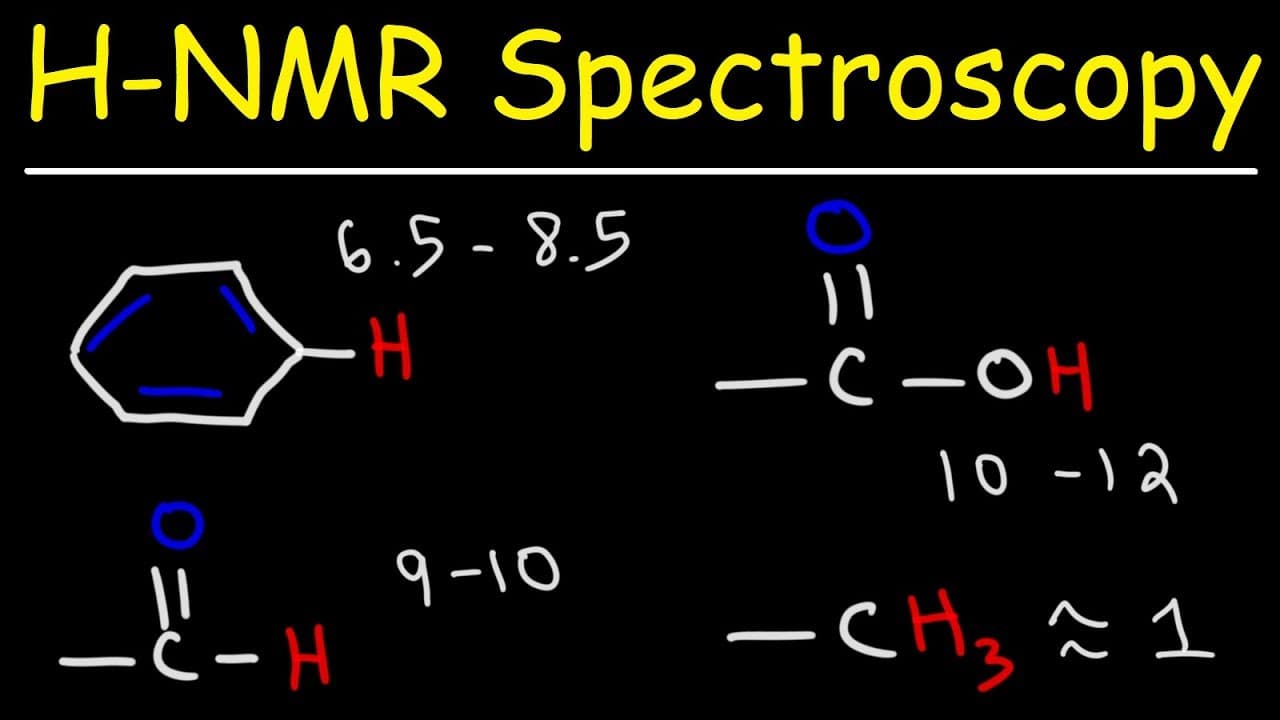
The chemical shift for carboxylic acids is typically between 10 and 12 ppm.
Q: How can you determine the number of signals in an HMR spectrum?
By identifying unique hydrogen environments in a molecule, each of which corresponds to a separate signal in the HMR spectrum.
Q: How does spin-spin splitting affect the number of peaks in an HMR spectrum?
Spin-spin splitting occurs when hydrogens are adjacent to each other. The number of peaks in the spectrum is determined by the combination of hydrogens that are adjacent to each other.
Q: What does integration represent in an HMR spectrum?
Integration represents the relative number of equivalent hydrogens in a specific signal. It can help distinguish different answers in multiple-choice questions.
Summary & Key Takeaways
-
The video covers important chemical shifts for various functional groups in HMR spectroscopy, such as carboxylic acids, aldehydes, and benzene rings.
-
The concept of signal identification is explained, where each unique hydrogen environment corresponds to a separate signal in the HMR spectrum.
-
Spin-spin splitting patterns are discussed, with examples of how adjacent hydrogens affect the splitting pattern and number of peaks in the spectrum.
-
Multiple-choice questions and answers are provided to test understanding of signal identification and interpretation of HMR spectra.
Read in Other Languages (beta)
Share This Summary 📚
Summarize YouTube Videos and Get Video Transcripts with 1-Click
Try YouTube Summary with ChatGPT & Claude or YouTube Transcript Generator
Explore More Summaries from The Organic Chemistry Tutor 📚


Summarize YouTube Videos and Get Video Transcripts with 1-Click
Try YouTube Summary with ChatGPT & Claude or YouTube Transcript Generator