How Does an Electron Gain Kinetic Energy Through Voltage?
TL;DR
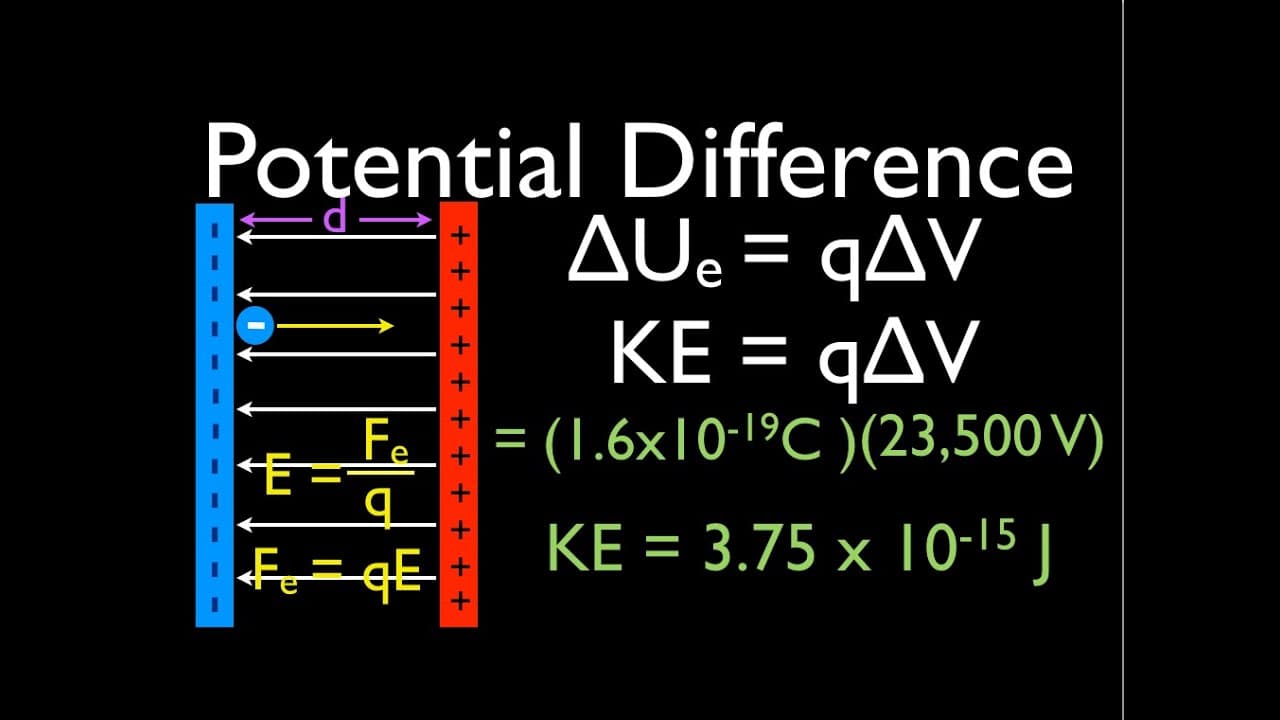
An electron gains 3.75 x 10^-15 joules of kinetic energy when moving through a potential difference of 23,500 volts. This increase in kinetic energy results from the conversion of electric potential energy as the electron moves from a negative plate to a positive one, consistent with the law of conservation of energy.
Transcript
okay in today's video we are going to do potential difference problem number three and in this problem we are going to calculate the amount of kinetic energy that an electron gains as it moves through a potential difference you can see here we have our electron it is against this negative plate it doesn't want to be there okay in order to get it th... Read More
Key Insights
- ❓ Potential energy of an electron moving through a potential difference is converted to kinetic energy.
- ✖️ The change in kinetic energy is equal to the charge of the electron multiplied by the potential difference.
- ❓ Conservation of energy applies to the transfer of potential energy to kinetic energy.
- ❓ Calculating kinetic energy can provide insights into the velocity of the moving electron.
- 💦 Work done in moving the electron and the change in potential energy are directly related.
- 🔌 Understanding electric potential energy and potential difference is crucial in solving such problems.
- ❓ The relationship between potential energy and kinetic energy follows the fundamental principles of physics.
Install to Summarize YouTube Videos and Get Transcripts
Explore YouTube Video Summarizer or Get YouTube Transcript Extractor
Questions & Answers
Q: How is the potential energy of the electron related to the potential difference?
The potential energy of the electron is directly proportional to the potential difference it moves through, as determined by the equation change in potential energy = charge x potential difference.
Q: What happens to the potential energy and kinetic energy of the electron as it moves through the potential difference?
As the electron moves through the potential difference, it loses potential energy and gains kinetic energy, following the conservation of energy principle.
Q: How can the calculated kinetic energy of the electron be used to determine its velocity?
By using the kinetic energy formula and the mass of the electron, the velocity of the electron can be calculated based on the gained kinetic energy.
Q: What is the relationship between the work done in moving the electron and the change in potential energy?
The work done in moving the electron through the potential difference is equal to the change in potential energy, as both factors are intertwined in the conservation of energy principle.
Summary & Key Takeaways
-
An electron moves through a potential difference of 23,500 volts in a picture tube setup.
-
The change in kinetic energy of the electron is equal to the charge times the potential difference.
-
The electron gains 3.75 x 10^-15 joules of kinetic energy as it moves across the potential difference.
Read in Other Languages (beta)
Share This Summary 📚
Summarize YouTube Videos and Get Video Transcripts with 1-Click
Try YouTube Summary with ChatGPT & Claude or YouTube Transcript Generator
Explore More Summaries from Step by Step Science 📚


Summarize YouTube Videos and Get Video Transcripts with 1-Click
Try YouTube Summary with ChatGPT & Claude or YouTube Transcript Generator