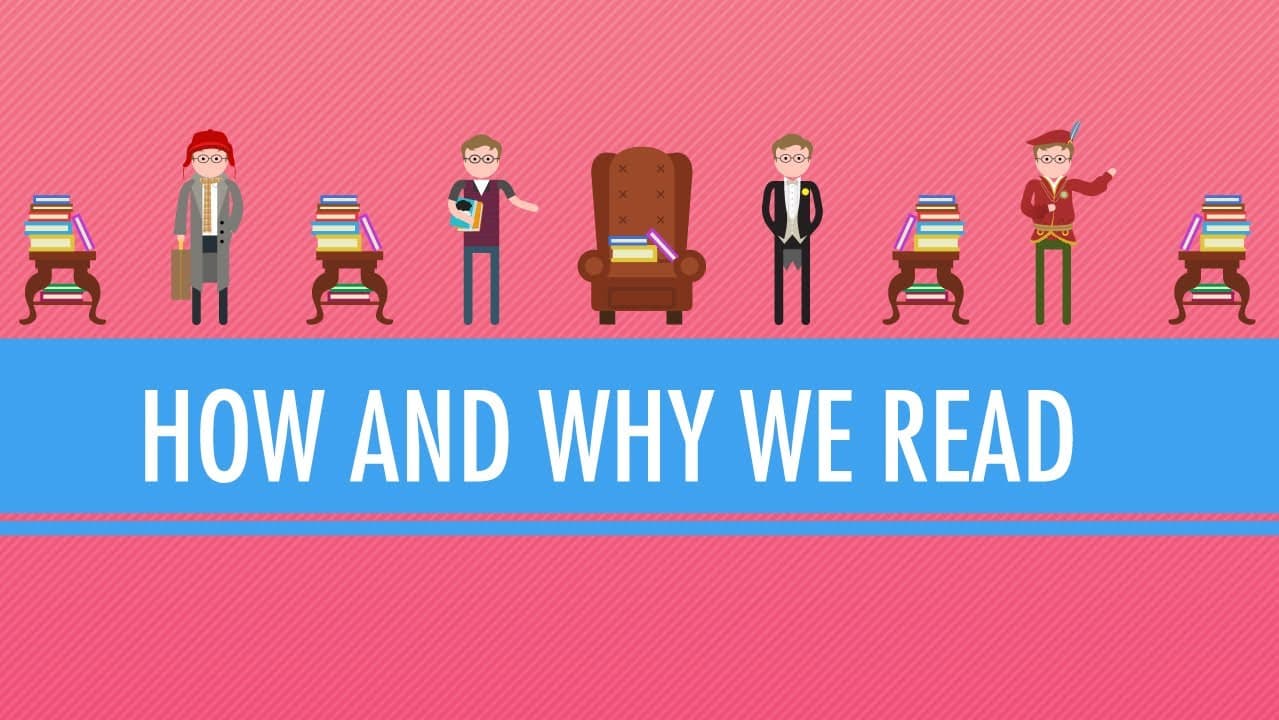
How and Why We Read: Crash Course English Literature #1
TL;DR
Reading fosters empathy and connects us across time and space.
Transcript
Hi I’m John Green and this is Crash Course. Can we get these books to roll in in the future? It doesn’t feel like Crash Course unless there’s a roll in. [Theme Music] Today, before we begin our mini-series on reading and writing in English, we’re going to discuss how to read and why. So, if you watched our series on world history, you’ll no doubt r... Read More
Key Insights
- Reading and writing are often seen as markers of civilization, though oral traditions also hold significant cultural value.
- Stories enable communication across distances and eras, allowing us to 'hear the voices of the dead.'
- Grammar and language are tools for expressing complex ideas and experiences, not just academic exercises.
- Reading is an act of empathy, offering insight into others' lives and experiences, whether through Shakespeare or modern fiction.
- The concept of authorial intent is less important than the reader's experience and interpretation of a text.
- Effective communication in writing is challenging, as it lacks the nuances of spoken interaction, such as tone and body language.
- Critical reading enhances empathy and understanding, providing tools for personal and professional communication.
- Symbols in literature, like the green light in The Great Gatsby, resonate universally, connecting readers to shared human experiences.
Install to Summarize YouTube Videos and Get Transcripts
Explore YouTube Video Summarizer or Get YouTube Transcript Extractor
Questions & Answers
Q: What is the main argument presented by John Green in this video?
John Green argues that reading is a form of communication that transcends time and space, allowing us to connect with others and understand different perspectives. He emphasizes that reading fosters empathy and enhances our ability to communicate complex ideas and emotions effectively.
Q: Why does John Green criticize the focus on authorial intent?
John Green criticizes the focus on authorial intent because he believes that the reader's experience and interpretation are more important. He argues that a text should be appreciated for the meanings and connections it creates for the reader, regardless of whether those were intended by the author.
Q: How does reading critically benefit individuals, according to John Green?
Reading critically benefits individuals by enhancing their empathy and understanding of others' lives. It also provides linguistic tools to express their own experiences more precisely, which can improve personal relationships and professional communication. Critical reading fosters a deeper connection with the world and the people in it.
Q: What challenge does John Green highlight about writing for an audience?
John Green highlights the challenge of conveying emotions and experiences through 'dry, dead text' on a page, as opposed to spoken communication, which includes tone and body language. Writers must overcome this barrier to effectively communicate complex ideas to an audience that may be distant in time and space.
Q: Why does John Green use hyperbole and metaphor in his example about a breakup?
John Green uses hyperbole and metaphor to illustrate how people often exaggerate or use figurative language to express their emotions. He demonstrates that while these techniques can convey intensity, they may not always elicit empathy unless the language is compelling and original, highlighting the importance of effective communication.
Q: What role do symbols play in literature, according to John Green?
According to John Green, symbols in literature, such as the green light in The Great Gatsby, resonate with readers because they capture universal human experiences and emotions. Symbols help readers relate to characters and themes, enriching their understanding and connection to the text and its broader implications.
Q: How does John Green suggest readers approach reading assignments?
John Green suggests that readers approach reading assignments with a critical mindset, focusing on understanding the author's use of language and the complexities of human experience. Rather than simply hunting for symbols for academic purposes, readers should engage with the text to enhance their empathy and communication skills.
Q: What upcoming works will be covered in the Crash Course Literature series?
The upcoming works to be covered in the Crash Course Literature series include Romeo and Juliet by William Shakespeare, The Great Gatsby by F. Scott Fitzgerald, The Catcher in the Rye, and poetry by Emily Dickinson. John Green encourages viewers to read these texts to explore their themes and enhance their literary understanding.
Summary & Key Takeaways
-
John Green discusses the importance of reading and writing as tools for communication, emphasizing their role in connecting people across time and space. He argues that stories, whether written or oral, serve as a means of understanding others and ourselves, fostering empathy and insight.
-
The episode highlights the limitations of focusing solely on authorial intent, suggesting that the reader's interpretation is more significant. Green encourages critical reading, not just for academic success, but to gain a deeper understanding of language and human experiences, which can be applied in various life contexts.
-
Green previews the Crash Course Literature series, outlining upcoming readings and encouraging viewers to engage with classic texts like Romeo and Juliet and The Great Gatsby. He underscores the value of reading as a means of personal growth and connection with others.
Read in Other Languages (beta)
Share This Summary 📚
Summarize YouTube Videos and Get Video Transcripts with 1-Click
Try YouTube Summary with ChatGPT & Claude or YouTube Transcript Generator
Explore More Summaries from CrashCourse 📚
Summarize YouTube Videos and Get Video Transcripts with 1-Click
Try YouTube Summary with ChatGPT & Claude or YouTube Transcript Generator