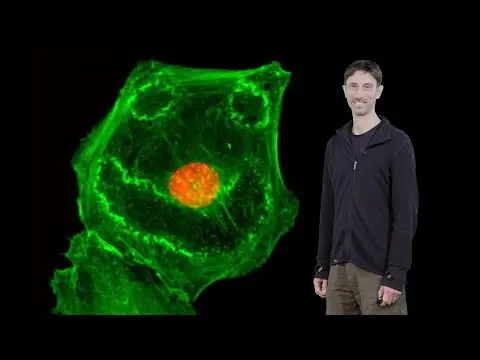
Bioimage Analysis 2: Pre-Processing (Kevin Eliceiri)
TL;DR
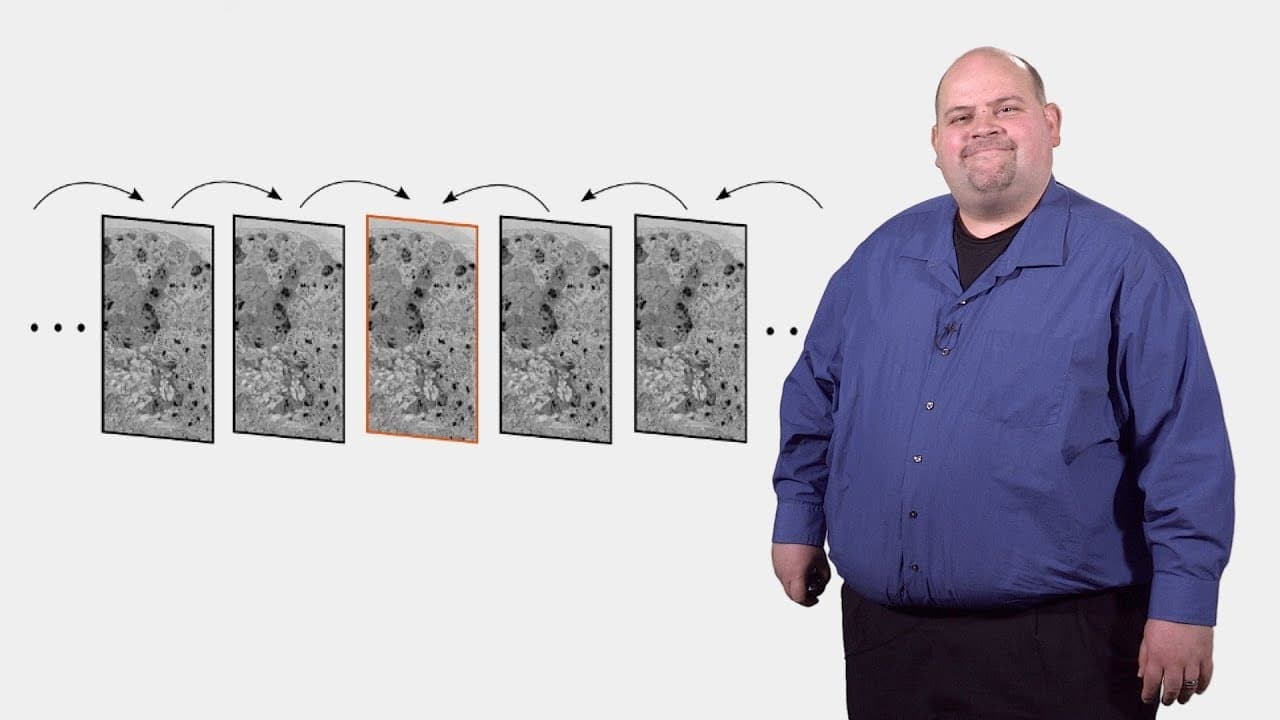
Kevin Eliceiri discusses essential bioimage pre-processing techniques for optimal analysis.
Transcript
My name is Kevin Eliceiri from the University of Wisconsin at Madison, and I work on the ImageJ project. This is the pre-processing part of our bioimage analysis. And in this section of the... of the video series, we're gonna be talking about the importance of understanding where your data came from. Image analysis has the goal to do measurements a... Read More
Key Insights
- Understanding the source and constraints of your data is crucial before analysis to avoid errors and ensure accurate results.
- Pre-processing involves techniques like cropping, inversion, and filtering to enhance image quality and reduce noise.
- Registration and stitching are essential for aligning images from different views or microscopes and creating comprehensive datasets.
- Colorimetric analysis helps differentiate between different biological structures using stains and dyes, crucial in pathology.
- 3D rendering and Z-projections provide better visualization of data, aiding in comprehensive analysis of 3D structures.
- Deconvolution corrects optical blurring and systematic errors, improving image clarity and contrast for better analysis.
- Maintaining a high signal-to-noise ratio is vital for accurate detection and segmentation of objects within an image.
- Advanced tools like ImageJ offer powerful functionalities for pre-processing, registration, and deconvolution of bioimages.
Install to Summarize YouTube Videos and Get Transcripts
Explore YouTube Video Summarizer or Get YouTube Transcript Extractor
Questions & Answers
Q: Why is understanding data acquisition constraints important in bioimage analysis?
Understanding data acquisition constraints is crucial because it helps identify potential errors and limitations in the data. Knowing these constraints ensures that the analysis is based on accurate and reliable data, preventing misinterpretation of results. It also aids in optimizing pre-processing techniques like filtering and registration to enhance data quality.
Q: What role does pre-processing play in bioimage analysis?
Pre-processing is a critical step in bioimage analysis that involves techniques like cropping, filtering, and inversion to enhance image quality and reduce noise. These steps improve the signal-to-noise ratio, making it easier to detect and segment objects accurately. Pre-processing ensures that the data is in optimal condition for further analysis.
Q: How does registration and stitching contribute to bioimage analysis?
Registration and stitching are essential for aligning images from different views or microscopes into a single coordinate system. This process creates comprehensive datasets by combining multiple images, allowing for a more detailed and accurate analysis. It is particularly useful in cases where a single image cannot capture the entire field of view.
Q: What is the significance of colorimetric analysis in bioimaging?
Colorimetric analysis is significant in bioimaging as it uses stains and dyes to differentiate between biological structures. This technique is crucial in pathology for identifying tumors and other structures. Tools like ImageJ and CellProfiler facilitate color extraction, allowing for detailed analysis of different components within an image.
Q: Why is 3D rendering important in bioimage analysis?
3D rendering is important because it provides a comprehensive view of the data, allowing for better visualization and understanding of three-dimensional structures. Techniques like Z-projections condense data for easier analysis, while 3D rendering tools like SciView in ImageJ enable detailed exploration of the data, enhancing the analysis process.
Q: How does deconvolution improve bioimage analysis?
Deconvolution improves bioimage analysis by correcting optical blurring and systematic errors introduced by the microscope's hardware. This process enhances image clarity and contrast, allowing for the detection of smaller features and more accurate analysis. It is essential for ensuring high-quality data for further processing and analysis.
Q: What is the importance of a high signal-to-noise ratio in bioimaging?
A high signal-to-noise ratio is crucial in bioimaging as it ensures that the objects of interest are clearly distinguishable from the background noise. This clarity is essential for accurate detection and segmentation of objects within an image. Pre-processing techniques are often employed to enhance this ratio, leading to more reliable analysis results.
Q: How do advanced tools like ImageJ facilitate bioimage pre-processing?
Advanced tools like ImageJ facilitate bioimage pre-processing by offering a wide range of functionalities for techniques such as filtering, registration, and deconvolution. These tools provide user-friendly interfaces and powerful algorithms that enhance image quality, making the pre-processing stage efficient and effective, ultimately leading to more accurate analysis.
Summary & Key Takeaways
-
Kevin Eliceiri emphasizes the importance of understanding data acquisition constraints in bioimage analysis. Pre-processing techniques like cropping, filtering, and inversion are crucial for enhancing image quality and reducing noise. Tools like ImageJ facilitate these processes, ensuring accurate and efficient analysis.
-
Registration and stitching align images from different sources, creating comprehensive datasets. Colorimetric analysis using stains helps differentiate biological structures, while 3D rendering and Z-projections enhance data visualization. These techniques are essential for accurate bioimage analysis.
-
Deconvolution corrects optical blurring, improving image clarity. Maintaining a high signal-to-noise ratio is crucial for accurate object detection and segmentation. Advanced tools like ImageJ provide functionalities for pre-processing, ensuring optimal image quality for further analysis.
Read in Other Languages (beta)
Share This Summary 📚
Summarize YouTube Videos and Get Video Transcripts with 1-Click
Try YouTube Summary with ChatGPT & Claude or YouTube Transcript Generator
Explore More Summaries from iBiology Techniques 📚
Summarize YouTube Videos and Get Video Transcripts with 1-Click
Try YouTube Summary with ChatGPT & Claude or YouTube Transcript Generator