Multi Programming - Computerphile
TL;DR
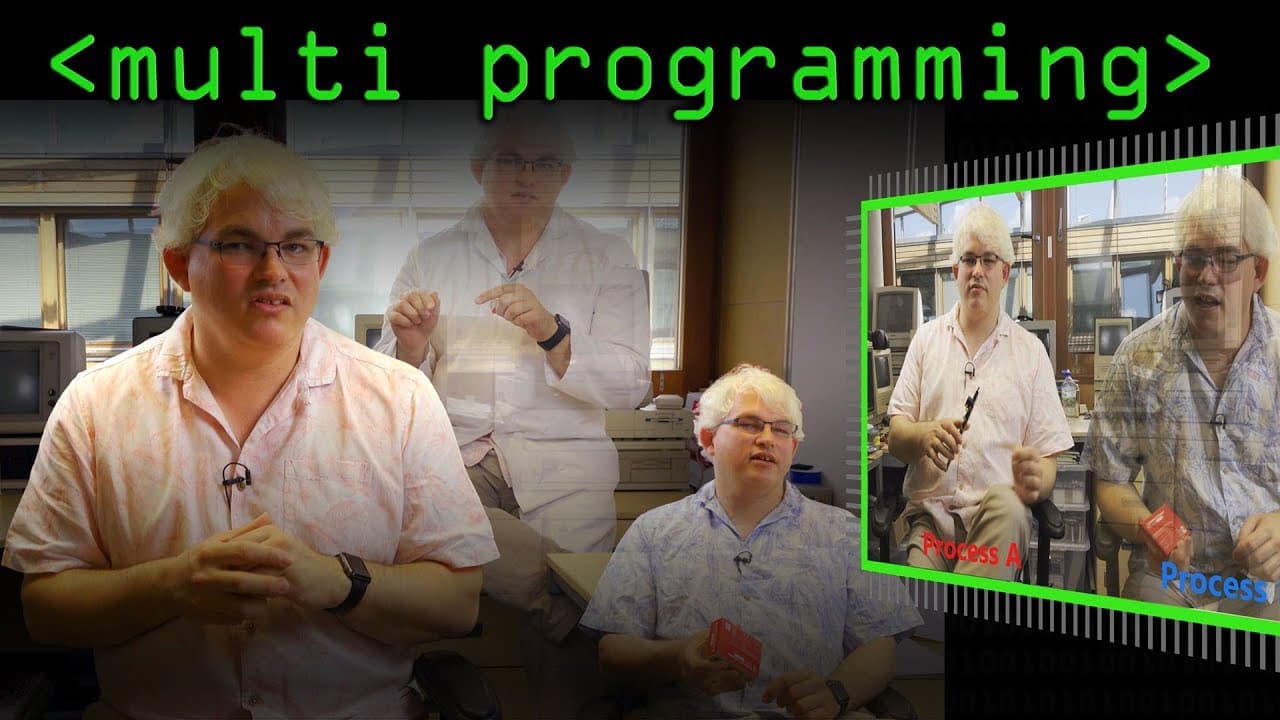
Learn about multitasking in operating systems, how processes switch, and the difference between cooperative and preemptive multitasking.
Transcript
Today we're going to talk about how we can make a computer CPU run more than one processor time we said look at the other side of this just before Christmas with us how we can have Many CPUs one Rotten program what we want to look at today is how we can have one CPU Appear to run many programs at the same time. We interrupt this program to bring yo... Read More
Key Insights
- 👻 Multitasking allows a single CPU to appear as if it is running multiple programs simultaneously.
- 🏃 Processes can be in different states, such as running, blocked, and runnable, depending on their interactions with the operating system.
- 🤗 Cooperative multitasking relies on processes voluntarily handing control back to the operating system, while preemptive multitasking allows the operating system to switch processes automatically.
- 💾 Context switching is the mechanism used to save and load the state of processes during process switching.
- 🏃 Process scheduling is responsible for determining which process should run next.
- 👻 Regular interrupts from an external timer allow the operating system to regain control and switch processes in preemptive multitasking systems.
- 💻 Multitasking can improve CPU utilization and the overall efficiency of a computer system.
Install to Summarize YouTube Videos and Get Transcripts
Explore YouTube Video Summarizer or Get YouTube Transcript Extractor
Questions & Answers
Q: What is multitasking in operating systems?
Multitasking refers to the ability of an operating system to make it seem like multiple programs are running simultaneously on a CPU by quickly switching between processes.
Q: Why do some programs appear to freeze or become unresponsive?
Programs can become unresponsive if they do not regularly pass control back to the operating system. In cooperative multitasking systems, processes need to cooperate by handing control back to the OS, whereas preemptive multitasking systems allow the OS to switch processes automatically.
Q: How does context switching work?
Context switching is the process of saving the state of a running process and loading the state of a new process. This allows the CPU to switch between processes, ensuring that each process gets its fair share of processing time.
Q: What is process scheduling?
Process scheduling is the decision-making process in an operating system that determines which process should run next. It considers factors like priority, time constraints, and available resources to optimize the usage of the CPU.
Summary & Key Takeaways
-
Multitasking involves simulating the appearance of multiple programs running on a CPU by quickly switching between different processes.
-
When a process is waiting for the operating system to perform a task, such as printing or network communication, the CPU is not being used efficiently.
-
Operating systems can switch between processes by using context switching, process scheduling, and maintaining different process states such as running, blocked, and runnable.
Read in Other Languages (beta)
Share This Summary 📚
Summarize YouTube Videos and Get Video Transcripts with 1-Click
Try YouTube Summary with ChatGPT & Claude or YouTube Transcript Generator
Explore More Summaries from Computerphile 📚



Summarize YouTube Videos and Get Video Transcripts with 1-Click
Try YouTube Summary with ChatGPT & Claude or YouTube Transcript Generator