Are you REALLY sick? (false positives) - Numberphile
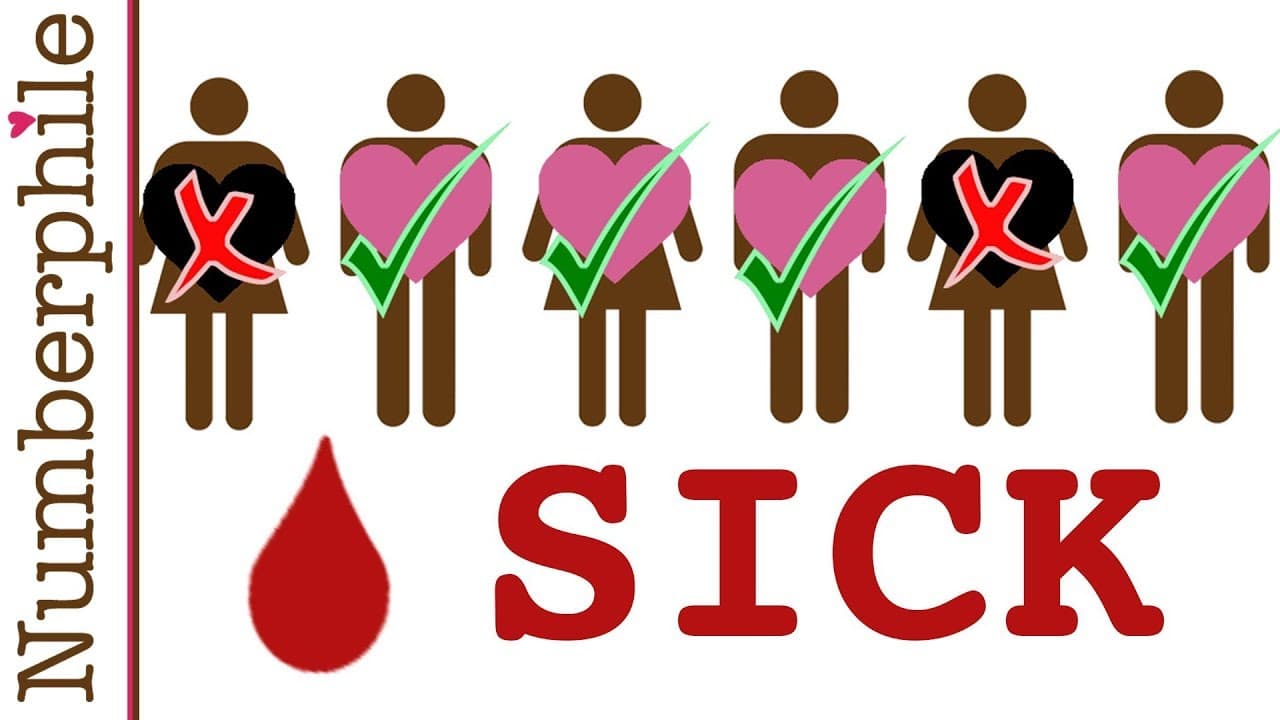
TL;DR
When receiving a positive test result, Bayes' rule helps determine the actual disease probability.
Transcript
Today we're going to talk about something emotional, which is what happens when you go to the doctor, have a basic screening for a test and you get that letter in the mail saying you have tested positive for this disease. If you get that letter, if you're anything like me your stomach falls into your feet and you start to worry; a question that mat... Read More
Key Insights
- 🏆 Positive test results can trigger worry and anxiety in individuals, emphasizing the importance of understanding the true disease probability.
- 🏣 Bayes' rule, named after Thomas Bayes, provides a mathematical approach to calculating disease probability post a positive test outcome.
- 🏆 The accuracy of the test and the rarity of the disease both play crucial roles in interpreting test results correctly.
- 🏆 Considering false positives and false negatives in test outcomes is vital in assessing the actual disease probability.
- 🏆 Prevalence rates of diseases and test accuracies significantly impact the probability calculations post a positive test result.
- 🏆 Emotional reactions to positive test results are normal and understanding the mathematical probabilities can help alleviate unnecessary worry.
- 💻 Bayes' rule has broad implications in statistics, data science, and various academic disciplines due to its ability to compute conditional probabilities accurately.
Install to Summarize YouTube Videos and Get Transcripts
Explore YouTube Video Summarizer or Get YouTube Transcript Extractor
Questions & Answers
Q: How does receiving a positive test result impact individuals emotionally?
Positive test results trigger significant worry and fear in individuals as they contemplate the implications of being sick.
Q: What role does Bayes' rule play in understanding disease probability from test results?
Bayes' rule is a statistical tool that helps calculate the actual likelihood of being sick based on a positive test result, considering disease prevalence and test accuracy.
Q: Why is knowing the prevalence of the disease important in interpreting test results?
Understanding the rarity of the disease is crucial as it influences the probability of being sick even after receiving a positive test result.
Q: How does the accuracy of the test impact the calculation of disease probability?
The accuracy of the test is essential in determining the reliability of the positive result and affects the calculation of the actual disease probability using Bayes' rule.
Summary & Key Takeaways
-
Positive test results can cause worry, but understanding the prevalence of the disease is crucial.
-
Bayes' rule can calculate the probability of being sick given a positive test result.
-
Consider the accuracy of the test and the rarity of the disease to interpret the result correctly.
Read in Other Languages (beta)
Share This Summary 📚
Summarize YouTube Videos and Get Video Transcripts with 1-Click
Try YouTube Summary with ChatGPT & Claude or YouTube Transcript Generator
Explore More Summaries from Numberphile 📚






Summarize YouTube Videos and Get Video Transcripts with 1-Click
Try YouTube Summary with ChatGPT & Claude or YouTube Transcript Generator