Predators and Prey - Numberphile
TL;DR
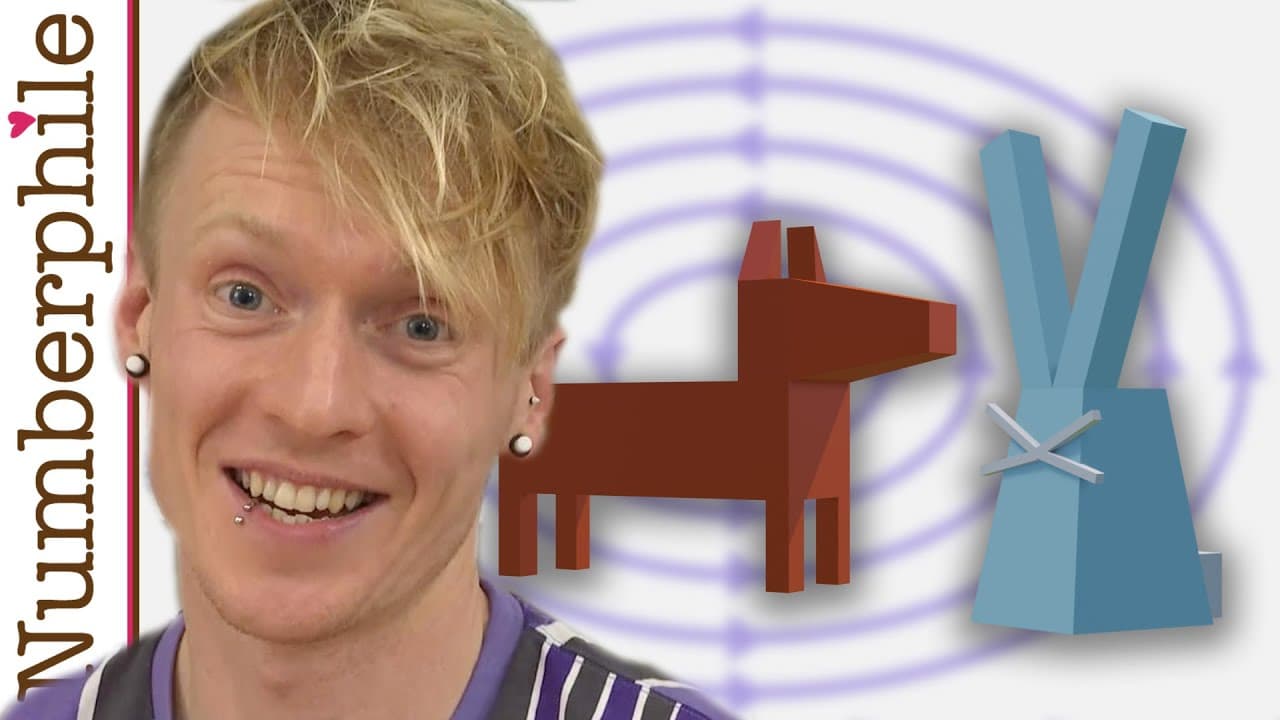
Using math to model interactions between rabbits (prey) and foxes (predators) and predict population changes.
Transcript
We're going to do uh, predator-prey cycles. We're going to do rabbits eating foxes, and we're going to try and use maths to-
- (Brady: Rabbits are gonna eat foxes?) Okay, we're not going to do- Well, I mean, maybe? We are doing foxes eating rabbits. Can we mathematically model and explain and predict the changes in the population numbers of that in... Read More
Key Insights
- 🦊 Mathematical modeling with differential equations captures interactions between predator (fox) and prey (rabbit).
- 🦊 Equations illustrate how reproduction and predation influence the growth and decline of rabbit and fox populations.
- ✈️ Phase plane analysis visually represents oscillating behaviors and steady states in predator-prey dynamics.
- 😥 Steady states indicate points of equilibrium where rabbit and fox populations stabilize.
- ❓ Stability analysis reveals the behavior around steady states and trajectories in the predator-prey model.
- 🦊 The relationship between rabbit and fox populations showcases a cyclic pattern of growth and decline.
- ❓ Non-dimensionalization in the model provides insight into relative population sizes and sustainability.
Install to Summarize YouTube Videos and Get Transcripts
Explore YouTube Video Summarizer or Get YouTube Transcript Extractor
Questions & Answers
Q: How are rabbits and foxes mathematically modeled in predator-prey dynamics?
Rabbits represent prey and are denoted by 'u,' while foxes represent predators and are denoted by 'v' in the equations. The interactions between them are captured using differential equations.
Q: What factors influence the population changes in the predator-prey model?
The population changes are affected by reproduction of rabbits (prey) leading to growth and by predation where foxes (predators) consume rabbits, causing a decrease in the rabbit population.
Q: How do steady states in the model impact the dynamics of rabbit and fox populations?
Steady states represent points where both prey and predator populations stabilize, leading to no change. These points indicate equilibrium conditions where both species coexist.
Q: How does the phase plane analysis help understand predator-prey interactions?
The phase plane analysis visualizes the behavior of rabbit and fox populations over time, showing oscillations, stable points, and trajectories in the predator-prey dynamics.
Summary & Key Takeaways
-
Mathematical modeling of predator-prey interactions like rabbits and foxes using equations.
-
Equations show how populations of rabbits (prey) and foxes (predators) change over time.
-
Phase plane analysis reveals oscillating behaviors and steady states in predator-prey dynamics.
Read in Other Languages (beta)
Share This Summary 📚
Summarize YouTube Videos and Get Video Transcripts with 1-Click
Try YouTube Summary with ChatGPT & Claude or YouTube Transcript Generator
Explore More Summaries from Numberphile 📚






Summarize YouTube Videos and Get Video Transcripts with 1-Click
Try YouTube Summary with ChatGPT & Claude or YouTube Transcript Generator