Why Did The Onion File a Supreme Court Brief?
TL;DR
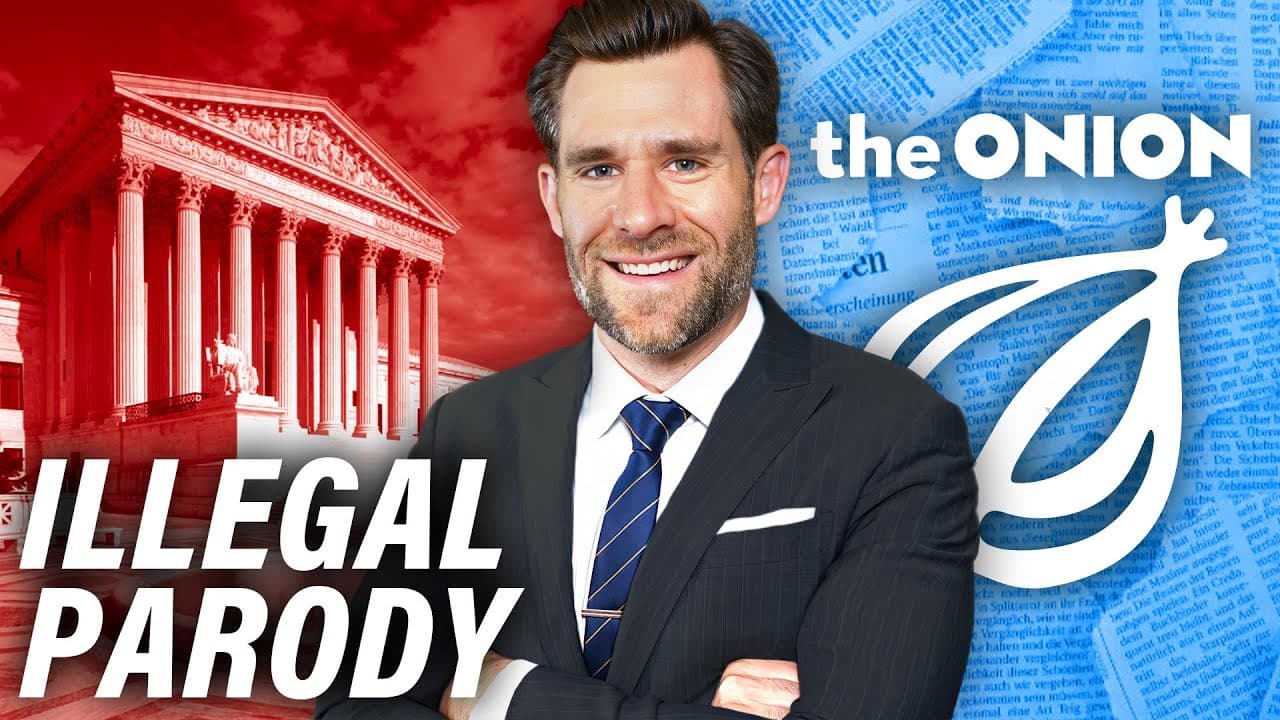
The Onion filed a U.S. Supreme Court amicus brief to support Anthony Novak and defend parody as protected speech that should not require disclaimers. Novak was arrested after operating a parody Parma Police Department Facebook page for six hours and publishing six satirical posts. The brief argues that some initial deception is essential to effective parody; read on for the case’s background, the Sixth Circuit’s ruling, and The Onion’s satirical legal strategy.
Transcript
- Corpus Juris. Ad hominen tu quoque. Post hoc ergo propter hoc. Quod... I know all of these things, and it's so hard to say. Every once in a while a genius changes the legal landscape forever. Sometimes that genius isn't even a lawyer. And scholars will look back on history as the days before "The Onion" filed its Supreme Court brief and the days ... Read More
Key Insights
- The Onion filed an amicus brief to support Anthony Novak's First Amendment rights.
- Novak was arrested for creating a parody Facebook page mimicking his local police department.
- The Sixth Circuit ruled against Novak, citing qualified immunity for the police officers.
- Parody and satire are protected under the First Amendment, requiring no explicit disclaimers.
- The Onion's brief uses humor to argue that parody should fool some people as part of its essence.
- The brief criticizes the Sixth Circuit's decision for not recognizing the obvious parody.
- Qualified immunity often protects officials from liability for constitutional rights violations.
- The Onion asserts that parody can expose the absurdity of real-world institutions and leaders.
Install to Summarize YouTube Videos and Get Transcripts
Explore YouTube Video Summarizer or Get YouTube Transcript Extractor
Questions & Answers
Q: Why did The Onion file a Supreme Court brief?
The Onion filed the friend-of-the-court brief to support Anthony Novak, an Ohio man arrested after mocking the Parma Police Department through a parody Facebook page. It argued that parody is protected speech and that requiring humorists to label parody with disclaimers would undermine how parody works.
Q: Who is Anthony Novak, and what did he create?
Anthony Novak is an Ohio man who created a Facebook page mocking his local police department in March 2016. The page copied the Parma Police Department page’s name, cover photo, and profile photo, but was designated as a community page and lacked the official blue verification check mark.
Q: How long was Anthony Novak’s parody page online?
Novak’s parody Facebook page was online for six hours and published six satirical posts. Its displayed slogan was “We no crime,” and its posts mocked the police department through fabricated announcements and apologies.
Q: What did Anthony Novak post on the parody police page?
One post apologized for failing to report an armed robbery by a white man while requesting information about an African American woman who had been nearby. Other posts announced a police recruitment process that discouraged minorities from applying and a fake pedophile reform event offering removal from the sex-offender registry and honorary police status.
Q: How did the Parma Police Department respond to the parody page?
After receiving a few calls from confused citizens, the department warned people on its real Facebook page that the other page was fake and under investigation. Police later subpoenaed Facebook to identify Novak, even though he had already removed the page.
Q: What crime did Parma officials accuse Anthony Novak of committing?
After identifying Novak, officers consulted prosecutor Timothy Dobeck and selected Ohio Revised Code Section 2909.04(B). The felony statute prohibited knowingly using a computer to disrupt, interrupt, or impair the functions of a police operation.
Q: What did the Sixth Circuit rule in Anthony Novak’s case?
After Novak was acquitted, he sued the city for civil-rights violations. The Sixth Circuit ruled against him and upheld qualified immunity for the police officers involved in his arrest.
Q: How did The Onion use satire in its Supreme Court brief?
The brief presented exaggerated claims in the form of a serious legal filing, including that The Onion began as a print newspaper in 1756 and had 4.3 trillion daily readers. Written by head writer Mike Gillis with lawyers Stephen J. van Stempvoort and D. Andrew Portinga, it used that style to demonstrate how parody mimics reality while exposing absurdity.
Summary & Key Takeaways
-
The Onion filed a satirical brief with the Supreme Court supporting Anthony Novak, who was arrested for a parody Facebook page mocking the Parma Police Department. The case underscores the importance of parody as protected speech under the First Amendment. The Onion's brief humorously argues that parody must mimic reality to be effective, and requiring disclaimers would undermine its purpose.
-
Anthony Novak's parody page was mistaken as real by some, leading to his arrest under a statute for disrupting police operations. Despite his acquittal, Novak sued the city for civil rights violations, but the Sixth Circuit upheld the officers' qualified immunity. The Onion's brief contends that parody's nature inherently involves some deception, crucial for its critique.
-
The Onion's amicus brief highlights the role of parody in critiquing authority and protecting free speech. By using humor and satire in its legal arguments, The Onion defends the right to parody without disclaimers, emphasizing its historical and social value. The case reflects broader issues with qualified immunity and the protection of constitutional rights.
Read in Other Languages (beta)
Share This Summary 📚
Summarize YouTube Videos and Get Video Transcripts with 1-Click
Try YouTube Summary with ChatGPT & Claude or YouTube Transcript Generator
Explore More Summaries from LegalEagle 📚





Summarize YouTube Videos and Get Video Transcripts with 1-Click
Try YouTube Summary with ChatGPT & Claude or YouTube Transcript Generator