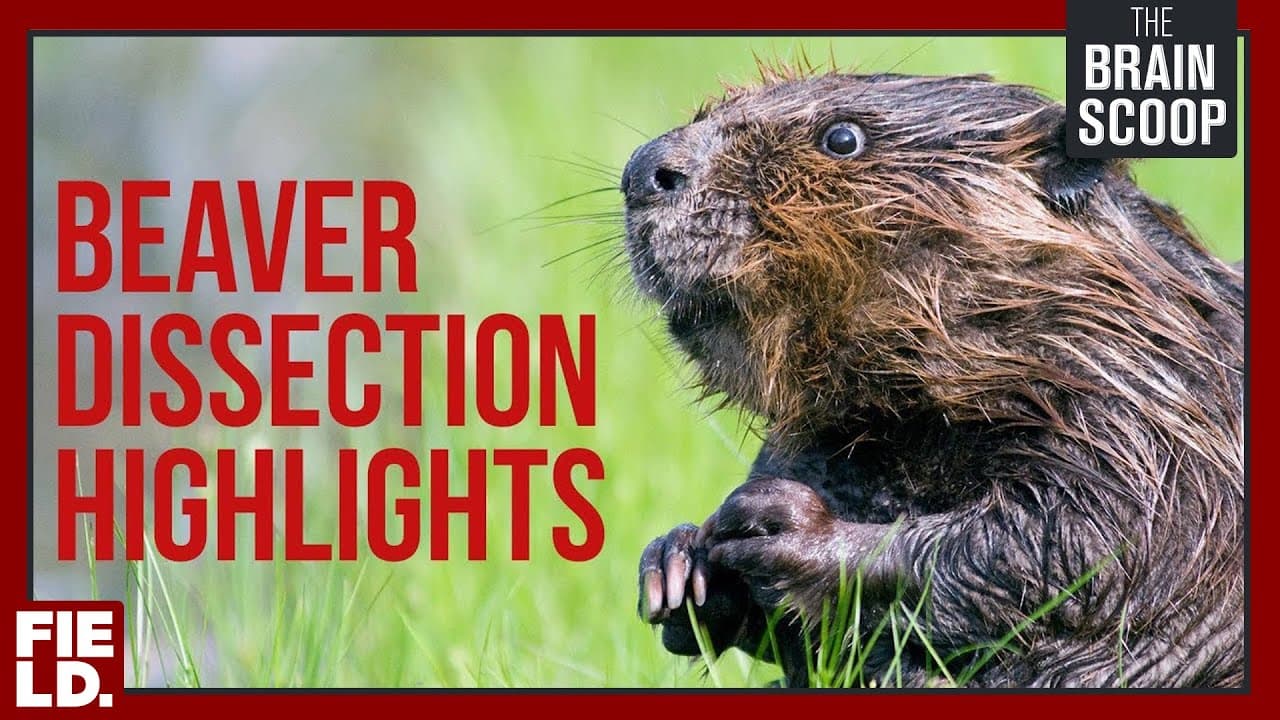
Beaver Dissection HIGHLIGHTS!
TL;DR
A livestream of a beaver dissection at the Field Museum's Granger Science Hub, where the process of skinning the beaver and removing its major organs and glands was showcased.
Transcript
Hey so a couple of weeks ago my friend Lauren Smith who's a collections assistant here at the Field Museum and I did a livestream of a North American beaver dissection in the field museum's new interactive learning space called the Granger science hub which means that a lot of people from in and around Chicago including some of you from Wisconsin w... Read More
Key Insights
- 👻 Beavers have adaptations that allow them to survive in semi-aquatic habitats, including webbed feet for efficient swimming.
- 😒 Castor glands in beavers secrete fluids with pheromones, which have various uses for waterproofing fur and communication.
- 🦫 Beavers practice coprophagy to extract maximum nutrition from their plant-based diet.
- 😘 Beavers have a unique lower opening called a cloaca, used for excretory and reproductive functions.
- 💪 The beaver's strong cheek and neck muscles allow them to gnaw through wood.
- ❓ The Granger Science Hub at the Field Museum provides interactive learning experiences for visitors, including livestreamed dissections.
- 🥰 The dissection process revealed the beaver's major organs, such as the liver, bladder, and heart.
Install to Summarize YouTube Videos and Get Transcripts
Explore YouTube Video Summarizer or Get YouTube Transcript Extractor
Questions & Answers
Q: Why did the beaver have such thick fur?
Beavers have thick fur to keep warm in cold climates, with the white fur providing extra insulation.
Q: What is the purpose of the beaver's castor glands?
The castor glands secrete fluids, including castoreum, which have pheromones used for waterproofing their fur and communication with other beavers.
Q: What is the beaver's diet?
Beavers primarily eat plant material, including leaves, twigs, and fresh shoots. They practice coprophagy, or eating their own feces, to extract more nutrients from their diet.
Q: How do beavers communicate and navigate underwater?
Beavers rely on sound and smell to navigate their environment underwater. They have a third membrane that covers their eyes, allowing them to see underwater without getting debris in their eyes.
Summary & Key Takeaways
-
The livestream showcased the dissection of a beaver, where its skin was removed, major organs were dissected out, and glands were examined.
-
The beaver, which had no known origin data, was being prepared for use in the museum's education collection.
-
The dissection highlighted interesting features, such as the beaver's thick fur, webbed feet, and unique digestive system.
Read in Other Languages (beta)
Share This Summary 📚
Summarize YouTube Videos and Get Video Transcripts with 1-Click
Try YouTube Summary with ChatGPT & Claude or YouTube Transcript Generator
Explore More Summaries from thebrainscoop 📚
Summarize YouTube Videos and Get Video Transcripts with 1-Click
Try YouTube Summary with ChatGPT & Claude or YouTube Transcript Generator