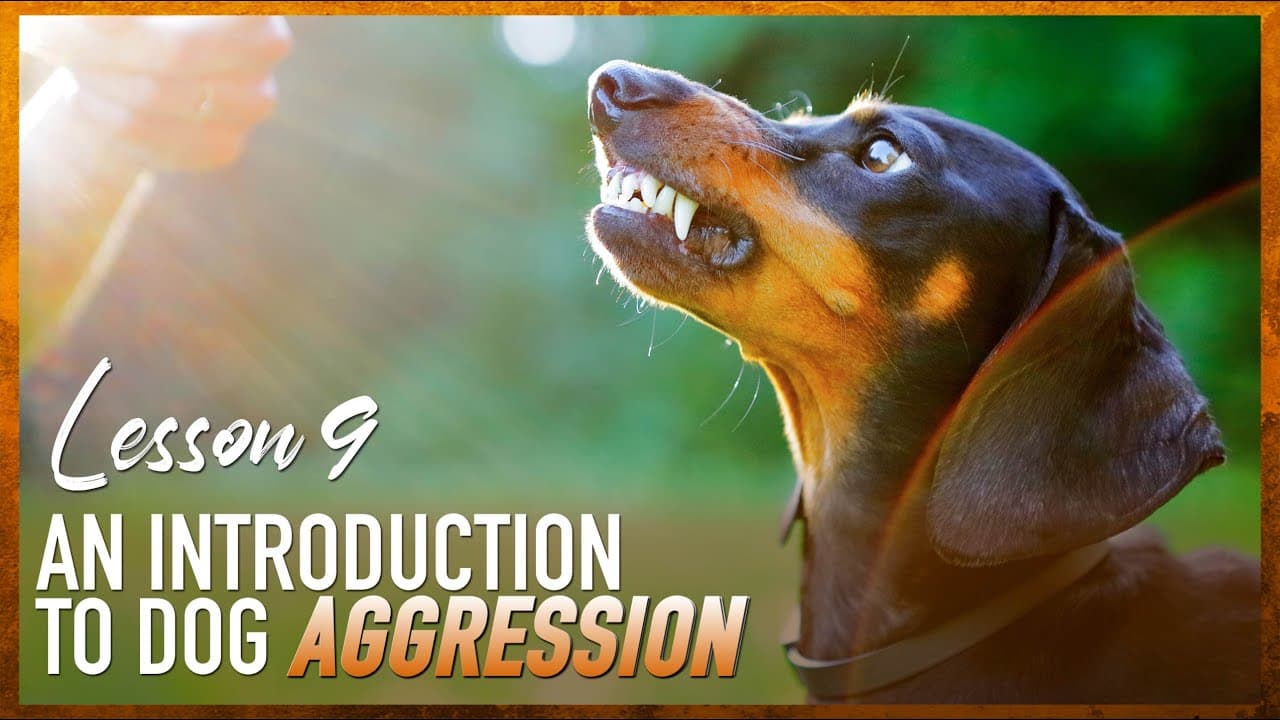
An Introduction to Dog Fear and Aggression.
TL;DR
Explores causes and solutions for dog fear and aggression.
Transcript
sometimes fear and aggression are taught behaviors but in many cases it can also be caused by genetics people often underestimate how much genetics have an effect in the dog's training and abilities the goal of today's episode is to give you an idea of what you might be dealing with and as a professional dog trainer you may have to deal with aggres... Read More
Key Insights
- Genetics play a significant role in a dog's behavior, affecting their training and capabilities, often underestimated by owners.
- Differentiating between communication and aggression is crucial; dogs often signal intentions through body language before aggressive actions.
- Fear-based aggression is common and can stem from trauma, genetics, or lack of exposure, requiring careful management and training.
- Bluff aggression involves dogs using aggressive behaviors to manipulate owners for desired outcomes, often reinforced unknowingly.
- Resource guarding is a form of aggression where dogs defend their possessions; training can mitigate this by teaching positive associations.
- Confusion-based aggression arises from inconsistent training; clear, timely communication is essential to prevent misunderstandings.
- Dominant aggression is rare but dangerous; requires protective gear and strategic training to manage effectively.
- Dog-on-dog aggression can result from past experiences or genetics; controlled exposure and obedience training can help manage it.
Install to Summarize YouTube Videos and Get Transcripts
Explore YouTube Video Summarizer or Get YouTube Transcript Extractor
Questions & Answers
Q: What role do genetics play in dog aggression?
Genetics significantly influence a dog's behavior, including their propensity for aggression. Many owners underestimate this factor, focusing solely on training. However, a dog's genetic makeup can predispose them to certain behaviors, making it crucial to consider genetics when addressing aggression issues. Understanding this helps in creating more effective training plans tailored to individual dogs.
Q: How can owners differentiate between communication and aggression in dogs?
Owners can differentiate communication from aggression by learning to read a dog's body language and vocal signals. Dogs often display signs like lip licking, yawning, or tail positioning before escalating to aggression. Recognizing these signals allows owners to intervene early, preventing aggressive incidents by understanding the dog's communication attempts rather than misinterpreting them as aggression.
Q: What is bluff aggression and how should it be addressed?
Bluff aggression occurs when dogs use aggressive behaviors to manipulate owners into getting what they want. This behavior is often inadvertently reinforced by owners. To address it, owners should ignore the bluffing behaviors, ensuring not to reward them, and instead reinforce desired behaviors through consistent training and commands, preventing the escalation of bluff aggression into real aggression.
Q: How should resource guarding be managed in dogs?
Resource guarding involves dogs aggressively protecting their possessions. Management includes teaching dogs that hands approaching them predict positive outcomes, like treats or petting. Training should focus on creating positive associations with people near their resources, using methods like the Superman technique for puppies, while ensuring not to reinforce guarding behaviors by unnecessarily taking items away.
Q: What is confusion-based aggression in dogs?
Confusion-based aggression arises from inconsistent training, where dogs are unsure of what is expected, leading to frustration and aggression. This can be caused by poorly timed commands or corrections. Addressing it involves clear, consistent training with properly timed rewards and corrections, helping dogs understand expectations and reducing aggressive responses born from confusion.
Q: How rare is dominant aggression in dogs and how is it managed?
Dominant aggression is quite rare, with trainers encountering it infrequently. It involves dogs using aggression to control situations. Managing it requires protective gear and strategic training to show that aggression doesn't achieve desired outcomes. Trainers should avoid showing fear, and instead, demonstrate that aggressive behaviors are ineffective, often involving repeated controlled exposure to triggers.
Q: What strategies are effective for managing dog-on-dog aggression?
Dog-on-dog aggression can stem from past negative experiences or genetic predispositions. Effective strategies include controlled exposure to other dogs, obedience training, and desensitization. Trainers should ensure safety by using leashes and muzzles if necessary, and gradually increase exposure to other dogs, rewarding calm behavior to reduce aggressive tendencies over time.
Q: How can fear-based aggression be addressed in dogs?
Fear-based aggression is often addressed through confidence building, counter-conditioning, and desensitization. Training should focus on gradually exposing dogs to fear-inducing stimuli while associating them with positive experiences. Providing escape routes and avoiding cornering fearful dogs can prevent escalation to aggression, while consistent, patient training helps build trust and reduce fear responses.
Summary & Key Takeaways
-
Dog aggression can arise from various causes including genetics, fear, confusion, and dominance, requiring tailored training approaches.
-
Understanding dog body language is essential to differentiate between communication and actual aggression, preventing misinterpretations.
-
Effective management of aggression involves consistent training, positive reinforcement, and, in severe cases, professional intervention.
Read in Other Languages (beta)
Share This Summary 📚
Summarize YouTube Videos and Get Video Transcripts with 1-Click
Try YouTube Summary with ChatGPT & Claude or YouTube Transcript Generator
Explore More Summaries from Nate Schoemer 📚

Summarize YouTube Videos and Get Video Transcripts with 1-Click
Try YouTube Summary with ChatGPT & Claude or YouTube Transcript Generator