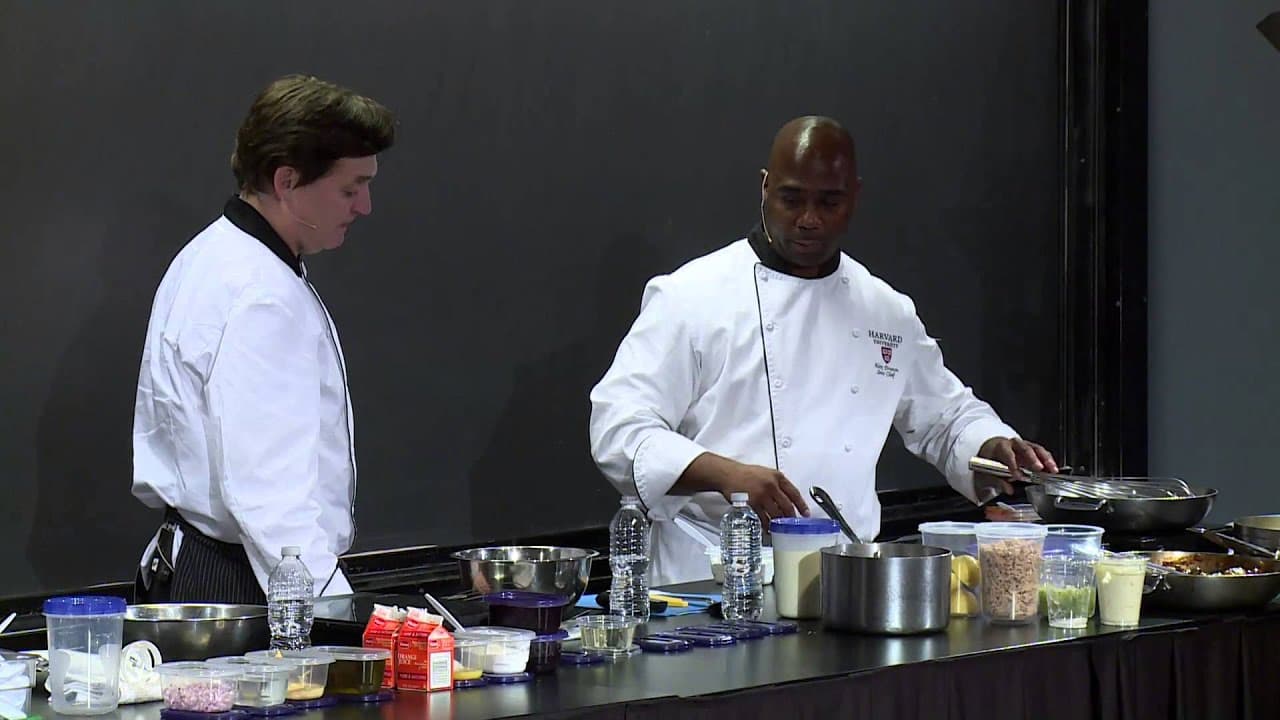
Martin Breslin: The History of Culinary Thickeners, Science and Cooking Public Lecture Series 2014
TL;DR
This lecture explores the science behind thickening sauces and the various techniques and ingredients used to achieve desired textures and consistencies.
Transcript
MICHAEL BRENNER: OK, so welcome to I think this is the eighth lecture, although I'm starting to lose count in this year's science and cooking lecture series. And we're really honored to have with us Martin Breslin, who's the chef for HUDS for Harvard. And we also have Alex and Luiz. And we're really honored to have them with us. We've been doing th... Read More
Key Insights
- 🖐️ Thickening agents like blood, liaison, arrowroot, cornstarch, roux, and xanthan gum play different roles in altering the viscosity and texture of sauces.
- 🛸 The dispersion, hydration, and setting processes are involved in thickening sauces with various agents.
- 😋 The thickening process can improve mouthfeel, increase cling to food surfaces, suspend particles, and stabilize emulsions.
- 🥶 Xanthan gum and arrowroot are gluten-free alternatives to traditional thickeners like flour.
- 💦 Emulsion techniques can be used to create stable dressings and sauces by suspending oil droplets in a water-based mixture.
- 🔇 The volume fraction, or the ratio of thickening agent to total volume, determines the thickness of the sauce.
Install to Summarize YouTube Videos and Get Transcripts
Explore YouTube Video Summarizer or Get YouTube Transcript Extractor
Questions & Answers
Q: What are the main reasons for thickening food?
Thickening food improves mouthfeel, enhances cling to food surfaces, suspends particles, and stabilizes emulsions.
Q: How does the process of thickening with blood work?
Blood contains proteins that swell and excrete substances when heated, creating a thicker texture in sauces.
Q: What is the purpose of making a liaison in cooking?
A liaison, made of egg yolks and cream, is used to thicken sauces and provide a velvety texture without adding a strong flavor.
Q: How does xanthan gum work as a thickening agent?
Xanthan gum, a polymer derived from bacteria, forms a gel in water that traps water molecules, preventing separation in sauces.
Summary & Key Takeaways
-
The lecture discusses the importance of texture in cooking and the role of viscosity in creating desirable mouthfeel.
-
Various thickening agents, including blood, liaison, arrowroot, cornstarch, roux, and xanthan gum, are demonstrated to showcase their effects on sauces.
-
The molecular processes of dispersion, hydration, and setting are explained to understand how thickening agents work.
Read in Other Languages (beta)
Share This Summary 📚
Summarize YouTube Videos and Get Video Transcripts with 1-Click
Try YouTube Summary with ChatGPT & Claude or YouTube Transcript Generator
Explore More Summaries from Harvard University 📚


Summarize YouTube Videos and Get Video Transcripts with 1-Click
Try YouTube Summary with ChatGPT & Claude or YouTube Transcript Generator