What Is Knowledge First Epistemology?
TL;DR
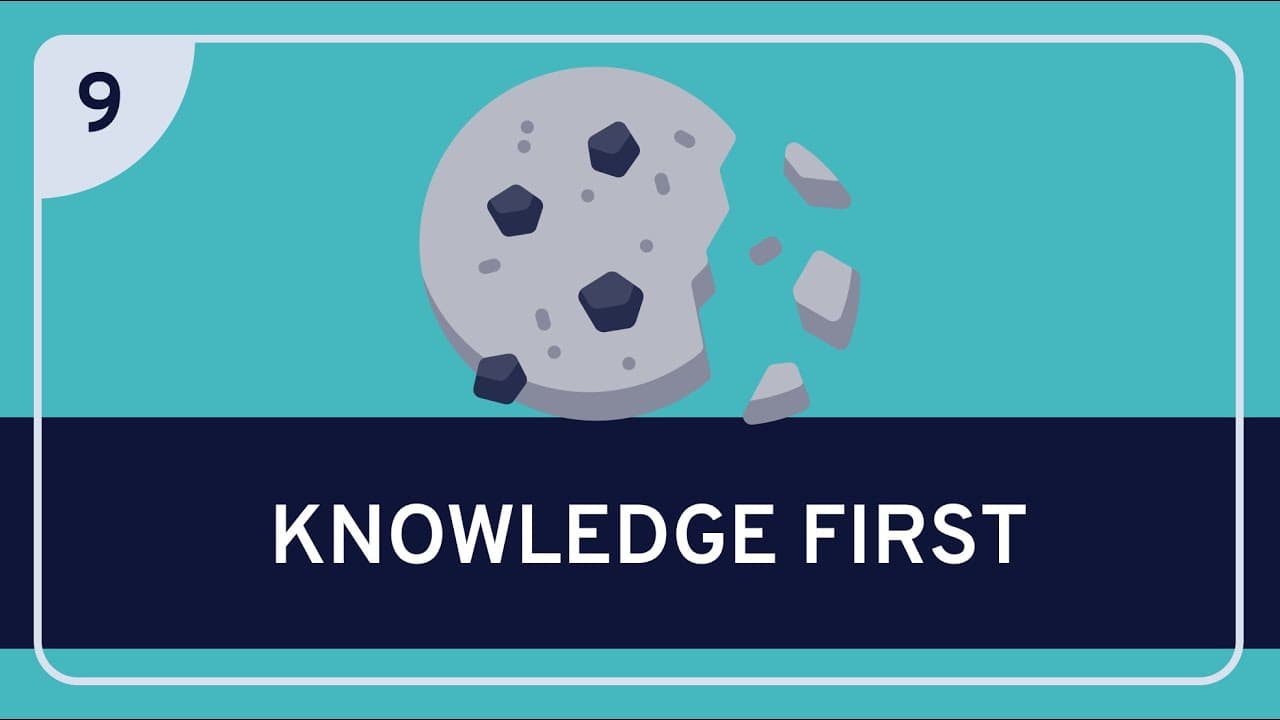
Knowledge First Epistemology suggests that knowledge is a fundamental concept that cannot be broken down into simpler components. This approach, advocated by philosophers like Timothy Williamson, proposes that knowledge is a basic mental state, with belief being a derivative or approximation of it. This perspective challenges traditional belief-first epistemology.
Transcript
my name is Jenifer Nagel I teach philosophy at the University of Toronto and today I want to talk to you about knowledge first epistemology knowledge first epistemology marks a reversal from the kind of epistemology that got started with Edmund gar in 1963 which is now looking back sometimes called belief first epistemology ology let's explore that... Read More
Key Insights
- Knowledge First Epistemology posits that knowledge is a basic mental state, not reducible to simpler components.
- Belief-first epistemology, which dominated since 1963, suggests knowledge equals true belief plus additional factors.
- Linda Zagzebski argued that attempts to analyze knowledge as true belief plus something else are inherently flawed.
- Timothy Williamson revived the idea that knowing is more primitive than believing, viewing belief as an approximation to knowledge.
- Factive mental states, like knowing, can only relate to truths, unlike non-factive states such as hoping or believing.
- Williamson argues that all factive mental states entail knowing, making knowledge the most general factive mental state.
- Knowledge First Epistemology challenges the traditional analysis of knowledge, sparking debates on its implications for other concepts.
- The approach suggests knowledge can be used to build theories of evidence and rational action without reducing it to simpler elements.
Install to Summarize YouTube Videos and Get Transcripts
Explore YouTube Video Summarizer or Get YouTube Transcript Extractor
Questions & Answers
Q: What is Knowledge First Epistemology?
Knowledge First Epistemology is an approach that treats knowledge as a fundamental mental state that cannot be broken down into simpler components. This perspective, advocated by philosophers like Timothy Williamson, suggests that belief is a derivative or approximation of knowledge, challenging the traditional belief-first epistemology.
Q: Why is belief-first epistemology criticized?
Belief-first epistemology is criticized because it attempts to define knowledge as true belief plus additional factors, which often leads to circular or redundant analyses. Linda Zagzebski argued that such attempts are inherently flawed, as they cannot adequately account for knowledge without presupposing it or adding unnecessary elements.
Q: How does Timothy Williamson view the relationship between belief and knowledge?
Timothy Williamson views knowledge as a more primitive mental state than belief, suggesting that belief is an approximation or spin-off of knowledge. He argues that belief attempts to meet the standard set by knowledge, reversing the traditional view that belief is a building block of knowledge.
Q: What are factive mental states?
Factive mental states are mental states that can only relate to truths. Unlike non-factive states, such as hoping or believing, factive states like knowing, seeing, and remembering require the truth of the propositions they are connected to. This makes knowledge the most general factive mental state.
Q: How does Knowledge First Epistemology impact the analysis of evidence?
Knowledge First Epistemology suggests that knowledge can be used as a foundation to build theories of evidence without reducing it to simpler components. This approach challenges traditional analyses and offers new perspectives on how evidence relates to knowledge and rational action.
Q: What is Linda Zagzebski's argument against reductive analyses of knowledge?
Linda Zagzebski argues that reductive analyses of knowledge, which attempt to define it as true belief plus additional factors, are inherently flawed. She claims these analyses either presuppose knowledge, making them circular, or add redundant elements, making them ineffective in capturing the essence of knowledge.
Q: How does Williamson's view of knowledge differ from traditional epistemology?
Williamson's view differs by treating knowledge as a fundamental mental state, rather than a compound of belief and other factors. He argues that knowing is more basic than believing, reversing the traditional belief-first approach and suggesting that belief is an approximation of knowledge.
Q: What are the implications of Knowledge First Epistemology for philosophical inquiry?
Knowledge First Epistemology opens new avenues for philosophical inquiry by challenging traditional analyses and suggesting that knowledge can be a foundation for understanding evidence, rational action, and other concepts. It encourages philosophers to explore how knowledge relates to other mental states and its role in epistemology.
Summary & Key Takeaways
-
Knowledge First Epistemology challenges traditional views by suggesting that knowledge is a fundamental mental state, irreducible to simpler components. This perspective, championed by Timothy Williamson, argues that belief is merely an approximation of knowledge, shifting the focus from belief-first epistemology. This approach opens new avenues for understanding evidence and rational action.
-
Linda Zagzebski's critique of belief-first epistemology highlights the difficulty in defining knowledge as true belief plus additional factors. She argues that such analyses are inherently circular or redundant, prompting a reconsideration of knowledge's fundamental nature. This has led to the development of Knowledge First Epistemology.
-
Factive mental states, like knowing, are distinct because they only relate to truths. Williamson contends that knowing is the most general factive mental state, with other states like seeing or remembering being specific ways of knowing. This view challenges traditional epistemological analyses and suggests new directions for philosophical inquiry.
Read in Other Languages (beta)
Share This Summary 📚
Summarize YouTube Videos and Get Video Transcripts with 1-Click
Try YouTube Summary with ChatGPT & Claude or YouTube Transcript Generator
Explore More Summaries from Wireless Philosophy 📚
![PHILOSOPHY - Ancient: Xunzi on Human Nature [HD] thumbnail](/_next/image?url=https%3A%2F%2Fi.ytimg.com%2Fvi%2FhEgLzTtQj7I%2Fhqdefault.jpg&w=750&q=75)
![PHILOSOPHY - Language: Conventional Implicature [HD] thumbnail](/_next/image?url=https%3A%2F%2Fi.ytimg.com%2Fvi%2FYD82l_bUhLc%2Fhqdefault.jpg&w=750&q=75)
![CRITICAL THINKING - Fallacies: Appeal to the People [HD] thumbnail](/_next/image?url=https%3A%2F%2Fi.ytimg.com%2Fvi%2FaF6EHTtyYqw%2Fhqdefault.jpg&w=750&q=75)

Summarize YouTube Videos and Get Video Transcripts with 1-Click
Try YouTube Summary with ChatGPT & Claude or YouTube Transcript Generator