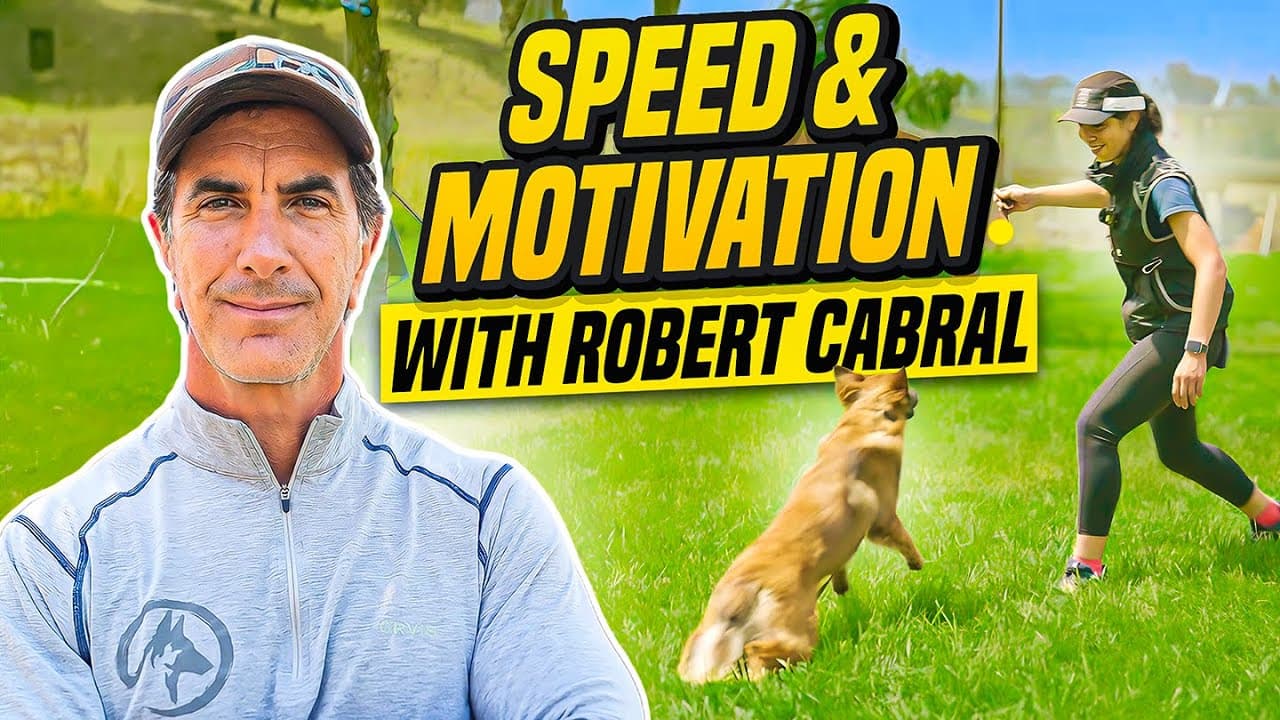
Boost Your Dog's Speed and Motivation with Robert Cabral
TL;DR
Robert Cabral teaches dog training focusing on speed and excitement.
Transcript
welcome back to another episode if you don't know who I am I am Nate Sher I'm a certified professional and master dog trainer and today we have a special guest Robert cabal a lot of you may already know him if you're not aware check the link in the description go check out his work his YouTube channel he has a lot of phenomenal content he's been do... Read More
Key Insights
- Speed in dog training is achieved by maintaining excitement and avoiding long, boring sessions. Short bursts of activity keep the dog engaged and motivated.
- Handlers should aim to end training sessions feeling tired themselves, ensuring the dog is also adequately stimulated.
- Building expectation into commands can make training boring. Instead, focus on creating excitement and unpredictability to maintain the dog's interest.
- Using two toys can effectively teach a dog to release one toy and focus on another, enhancing their response to commands.
- The handler's energy and enthusiasm significantly impact the dog's performance. A positive and engaging demeanor from the handler can lead to better training outcomes.
- It's crucial to differentiate between rewarding correct behavior and simply reassuring the dog after a mistake. This helps in reinforcing the correct actions.
- For young dogs, focus on building individual skills rather than trying to integrate all skills into one session. This approach helps in developing a strong foundation.
- Training should be fun for both the dog and the handler. Keeping sessions light-hearted and engaging ensures better learning and a stronger bond.
Install to Summarize YouTube Videos and Get Transcripts
Explore YouTube Video Summarizer or Get YouTube Transcript Extractor
Questions & Answers
Q: How can speed be incorporated into dog training?
Speed can be incorporated into dog training by maintaining excitement and avoiding long, monotonous sessions. Short bursts of activity keep the dog engaged and motivated. By being interesting and engaging, handlers can create a dynamic relationship with their dogs, leading to faster and more responsive training sessions.
Q: What is the importance of using two toys in training?
Using two toys in training helps teach a dog to release one toy and focus on another, enhancing their response to commands. This method effectively trains the dog to 'out' or release objects on command, which is crucial for obedience and advanced training. It also keeps the training session lively and engaging for the dog.
Q: Why is handler energy important in dog training?
Handler energy is vital in dog training because it directly impacts the dog's performance. A positive and enthusiastic demeanor from the handler can lead to better training outcomes. Dogs respond to the energy levels of their handlers, and an engaging, upbeat approach can motivate the dog to perform better and enjoy the training process.
Q: What should handlers focus on for young dogs?
Handlers should focus on building individual skills for young dogs rather than trying to integrate all skills into one session. This approach helps in developing a strong foundation, ensuring the dog learns each command thoroughly before moving on to more complex tasks. It prevents overwhelming the dog and promotes better learning.
Q: How should mistakes be handled during training?
Mistakes during training should be handled by providing reassurance without rewarding the mistake. It's crucial to differentiate between rewarding correct behavior and simply reassuring the dog after a mistake. This helps in reinforcing the correct actions and ensures the dog understands the desired behavior without getting confused.
Q: What role does excitement play in training?
Excitement plays a crucial role in training as it keeps the dog engaged and motivated. By creating an exciting and unpredictable environment, handlers can maintain the dog's interest and prevent training sessions from becoming boring. Excitement encourages the dog to respond quickly and accurately to commands, enhancing the overall training experience.
Q: How can training sessions be made more effective?
Training sessions can be made more effective by keeping them short, engaging, and fun. Incorporating elements of play, using toys, and maintaining a positive attitude can significantly enhance the dog's learning experience. Ensuring the handler is as engaged as the dog helps create a dynamic and productive training environment.
Q: Why is it important to end training sessions on a high note?
Ending training sessions on a high note is important because it leaves the dog with a positive association with the training. Concluding with a successful command or an exciting activity ensures the dog remains motivated for future sessions. It reinforces the dog's learning and strengthens the bond between the handler and the dog.
Summary & Key Takeaways
-
Robert Cabral emphasizes the importance of speed and excitement in dog training. He advises handlers to keep sessions short and engaging to maintain the dog's interest and motivation.
-
Using a combination of toys and commands, handlers can effectively teach dogs to release objects and respond quickly to commands, enhancing their training outcomes.
-
The handler's attitude plays a crucial role in training success. A positive, enthusiastic approach can lead to better performance and a stronger bond with the dog.
Read in Other Languages (beta)
Share This Summary 📚
Summarize YouTube Videos and Get Video Transcripts with 1-Click
Try YouTube Summary with ChatGPT & Claude or YouTube Transcript Generator
Explore More Summaries from Nate Schoemer 📚


Summarize YouTube Videos and Get Video Transcripts with 1-Click
Try YouTube Summary with ChatGPT & Claude or YouTube Transcript Generator