How Does EcoWeave Enhance Ecosystem Resilience?
TL;DR
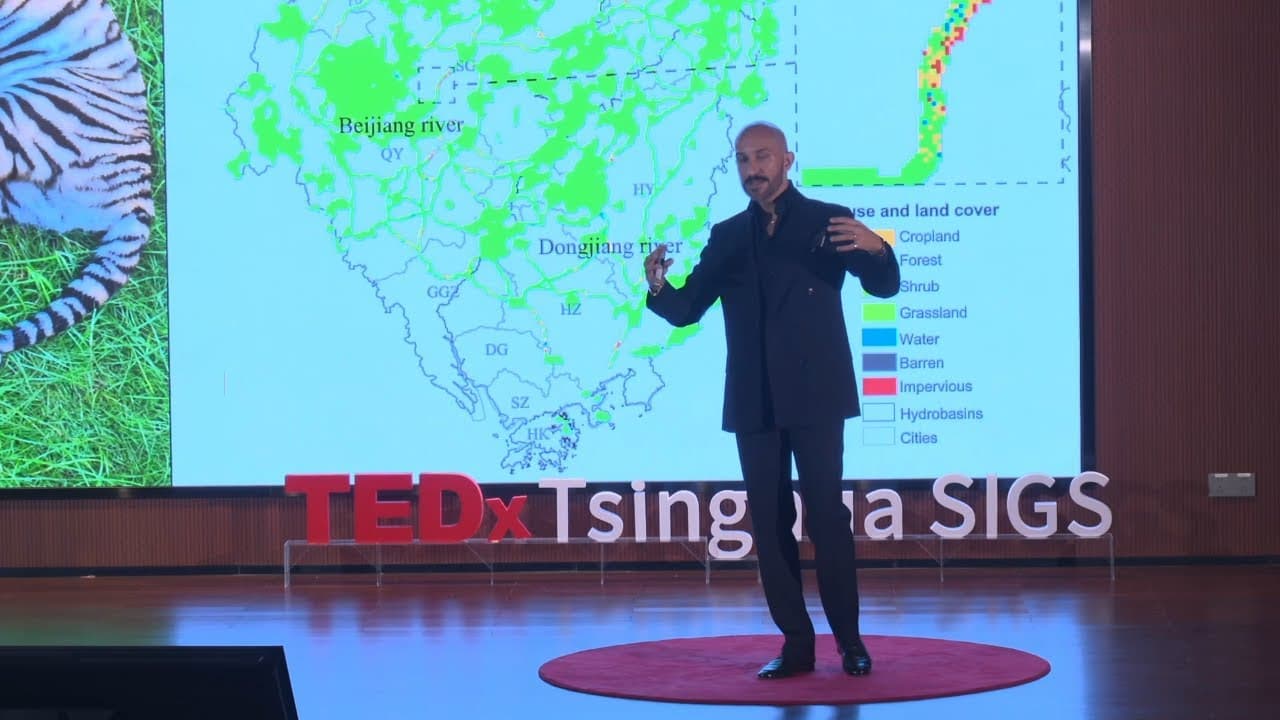
EcoWeave is a global initiative focused on ecosystem restoration by leveraging nature's interconnectedness. By using network science, it aims to enhance biodiversity, water retention, and carbon sequestration. The initiative emphasizes the importance of restoring natural habitats to mitigate climate change and improve ecosystem services, advocating for a collaborative approach involving both public and private sectors.
Transcript
What if I tell you that the sound of a healthy plant is mimicking like a Beethoven sonata? What if I tell you that the sound of this plant is mimicking the sound of a healthy heartbeat? This plant is one of the plant of our Chinga Chinua campus and it's reflecting the species that are next to the plant itself. the water fluctuation. Together, these... Read More
Key Insights
- EcoWeave is a global initiative aimed at restoring ecosystems by leveraging natural interconnectedness.
- Network science is used to understand and enhance ecosystem resilience and services.
- Restoring ecosystems can significantly increase biodiversity, water retention, and carbon sequestration.
- The initiative emphasizes the importance of global-local reconnections of nature.
- Ecosystem restoration can mitigate climate change impacts and improve ecosystem services.
- Collaboration between public and private sectors is crucial for successful ecosystem restoration.
- Functional connectivity is key to understanding the impact of ecosystem restoration on climate.
- Restoring natural habitats can have positive global climate effects, such as reducing floods.
Install to Summarize YouTube Videos and Get Transcripts
Explore YouTube Video Summarizer or Get YouTube Transcript Extractor
Questions & Answers
Q: How does EcoWeave enhance ecosystem resilience?
EcoWeave enhances ecosystem resilience by using network science to understand and improve the interconnectedness of natural systems. By restoring natural habitats, the initiative aims to increase biodiversity, water retention, and carbon sequestration. This approach helps mitigate climate change impacts and improve ecosystem services, emphasizing collaboration between public and private sectors for successful restoration.
Q: What role does network science play in EcoWeave?
Network science plays a crucial role in EcoWeave by providing a framework to understand and enhance the interconnectedness of ecosystems. It helps in predicting and improving ecosystem resilience and services by analyzing the dependencies and interactions within natural systems. This approach allows for effective restoration strategies that enhance biodiversity, water retention, and carbon sequestration.
Q: Why is restoring natural habitats important in EcoWeave?
Restoring natural habitats is important in EcoWeave because it helps to mitigate climate change impacts and improve ecosystem services. By enhancing biodiversity, water retention, and carbon sequestration, restored habitats contribute to a more resilient ecosystem. This restoration also fosters a global-local reconnection of nature, which is crucial for addressing collective environmental challenges.
Q: What are the expected benefits of ecosystem restoration in EcoWeave?
The expected benefits of ecosystem restoration in EcoWeave include increased biodiversity, enhanced water retention, and improved carbon sequestration. These benefits contribute to mitigating climate change impacts and improving ecosystem services. Restored ecosystems can also have positive global climate effects, such as reducing floods, by fostering a more resilient and interconnected natural environment.
Q: How does EcoWeave address climate change impacts?
EcoWeave addresses climate change impacts by restoring natural habitats to enhance ecosystem resilience and services. By leveraging network science, the initiative aims to increase biodiversity, water retention, and carbon sequestration. This approach helps mitigate climate change impacts by fostering a more interconnected and resilient natural environment, emphasizing the importance of global-local reconnections.
Q: What is the significance of functional connectivity in EcoWeave?
Functional connectivity is significant in EcoWeave as it helps to understand the impact of ecosystem restoration on climate. By analyzing the dependencies and interactions within natural systems, functional connectivity provides insights into how restored habitats can enhance ecosystem resilience and services. This understanding is crucial for developing effective restoration strategies that mitigate climate change impacts.
Q: How does EcoWeave involve public and private sectors?
EcoWeave involves public and private sectors by advocating for a collaborative approach to ecosystem restoration. The initiative emphasizes the importance of partnerships to achieve successful restoration and improve ecosystem services. By engaging various stakeholders, EcoWeave seeks to leverage collective resources and expertise to enhance biodiversity, water retention, and carbon sequestration.
Q: What are the global climate effects of restoring natural habitats in EcoWeave?
Restoring natural habitats in EcoWeave can have positive global climate effects, such as reducing floods and enhancing ecosystem resilience. By increasing biodiversity, water retention, and carbon sequestration, restored habitats contribute to a more interconnected and resilient natural environment. This restoration helps mitigate climate change impacts by fostering a global-local reconnection of nature.
Summary & Key Takeaways
-
EcoWeave is a global initiative that seeks to restore ecosystems by leveraging the interconnectedness of nature. By using network science, it aims to enhance biodiversity, water retention, and carbon sequestration, thereby mitigating climate change impacts. The initiative calls for collaboration between public and private sectors to achieve successful restoration and improve ecosystem services.
-
The initiative emphasizes the importance of restoring natural habitats to create a global-local reconnection of nature. By understanding and enhancing functional connectivity, EcoWeave aims to mitigate climate change impacts and improve ecosystem services. This approach involves using network science to predict and enhance ecosystem resilience and services.
-
EcoWeave advocates for a collaborative approach involving both public and private sectors to restore ecosystems effectively. By leveraging network science, the initiative seeks to enhance biodiversity, water retention, and carbon sequestration, thereby mitigating climate change impacts and improving ecosystem services. The restoration of natural habitats can have positive global climate effects, such as reducing floods.
Read in Other Languages (beta)
Share This Summary 📚
Summarize YouTube Videos and Get Video Transcripts with 1-Click
Try YouTube Summary with ChatGPT & Claude or YouTube Transcript Generator
Explore More Summaries from TEDx Talks 📚






Summarize YouTube Videos and Get Video Transcripts with 1-Click
Try YouTube Summary with ChatGPT & Claude or YouTube Transcript Generator