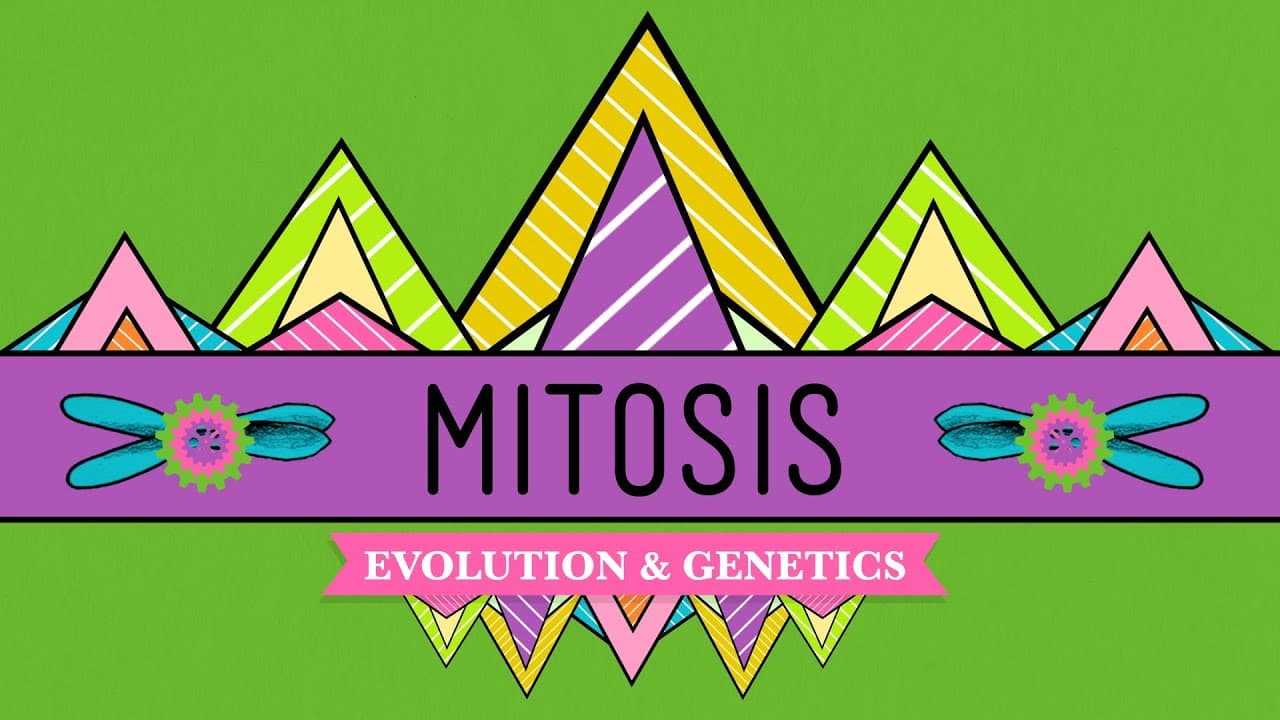
Mitosis: Splitting Up is Complicated - Crash Course Biology #12
TL;DR
Mitosis is the process of cell division creating identical cells.
Transcript
Hey, check this out. Cool, huh? I bet you wish you could do this have a clone clean up around the apartment for you go to class, maybe take your Mom to dinner on her birthday? Well, you can't do that. And actually there are some really good reasons why you can't do that. We're going to talk about those in the next episode. But, do you know what CAN... Read More
Key Insights
- Mitosis is essential for growth, development, and healing in multicellular organisms, allowing cells to reproduce and maintain life.
- The process of mitosis occurs approximately 10 quadrillion times in a human lifetime, highlighting its central role in biology.
- Mitosis involves a series of stages: prophase, metaphase, anaphase, and telophase, each with specific cellular activities.
- During interphase, cells prepare for division by replicating DNA and centrosomes, crucial for the mitotic process.
- Chromosomes, formed from condensed chromatin, play a key role in ensuring genetic information is accurately divided.
- Motor proteins, including dynein, are instrumental in moving chromosomes during mitosis, although many mechanisms remain under study.
- The discovery of dynein's role in chromosome alignment was a significant advancement in understanding mitosis, achieved over 130 years.
- Cytokinesis completes the process of mitosis by physically separating the two new daughter cells, each genetically identical to the parent cell.
Install to Summarize YouTube Videos and Get Transcripts
Explore YouTube Video Summarizer or Get YouTube Transcript Extractor
Questions & Answers
Q: What is the primary function of mitosis in multicellular organisms?
Mitosis is crucial for growth, development, and repair in multicellular organisms. It allows cells to reproduce and create identical copies, facilitating the replacement of damaged cells and contributing to the organism's overall development and maintenance of life.
Q: How often does mitosis occur in the human body over a lifetime?
Mitosis occurs approximately 10 quadrillion times in a human lifetime. This staggering frequency underscores the process's essential role in maintaining life, as it continually replaces cells to support growth, repair, and overall biological functions.
Q: What are the main stages of mitosis, and what happens in each?
Mitosis consists of four main stages: prophase, metaphase, anaphase, and telophase. In prophase, chromosomes condense and the nuclear envelope disintegrates. Metaphase aligns chromosomes in the cell center. Anaphase separates chromatids, and telophase reconstructs nuclear membranes, completing cell division.
Q: What role do centrosomes play during mitosis?
Centrosomes are crucial during mitosis as they help organize microtubules, which are essential for chromosome movement and alignment. They duplicate during interphase, ensuring that each daughter cell receives the necessary cellular machinery to function and divide properly in the future.
Q: How do chromosomes form from chromatin during mitosis?
During mitosis, chromatin condenses and coils into thick strands, forming chromosomes. This transformation occurs in the prophase stage, where DNA is tightly wrapped around proteins, ensuring that genetic material is organized and can be accurately divided between the two new daughter cells.
Q: What recent discovery was made regarding motor proteins in mitosis?
A significant recent discovery in mitosis research involved the motor protein dynein. It plays a crucial role in chromosome alignment by engaging in a tug-of-war, ensuring chromosomes line up properly for division. This finding was a major advancement, achieved over 130 years after mitosis was first observed.
Q: What is cytokinesis, and how does it relate to mitosis?
Cytokinesis is the final step following mitosis, where the cell physically divides into two separate daughter cells. It involves the movement of new nuclei apart and the formation of a cleavage, ensuring that each new cell is fully equipped with the necessary genetic material and cellular components.
Q: What is the significance of the discovery made by Tomomi Kiyomitsu?
Tomomi Kiyomitsu's discovery of dynein's role in chromosome alignment during mitosis was pivotal. It shed light on the intricate mechanisms of cell division, revealing how motor proteins facilitate chromosome positioning, a process that had puzzled scientists for over a century, thus advancing our understanding of cellular biology.
Summary & Key Takeaways
-
Mitosis is a fundamental biological process allowing cells to duplicate, crucial for growth, repair, and maintaining life. It involves stages like prophase and metaphase, where chromosomes are organized and aligned for division.
-
Interphase is the preparatory phase where DNA and centrosomes replicate, setting the stage for mitosis. Chromosomes form from chromatin, and motor proteins facilitate their movement during cell division.
-
The discovery of dynein's role in chromosome alignment marked a significant breakthrough in mitosis research. Cytokinesis concludes the process by splitting the cell into two identical daughter cells, ensuring genetic continuity.
Read in Other Languages (beta)
Share This Summary 📚
Summarize YouTube Videos and Get Video Transcripts with 1-Click
Try YouTube Summary with ChatGPT & Claude or YouTube Transcript Generator
Explore More Summaries from CrashCourse 📚




Summarize YouTube Videos and Get Video Transcripts with 1-Click
Try YouTube Summary with ChatGPT & Claude or YouTube Transcript Generator