Is President Trump's National Emergency Declaration Legal? (Real Law Review)
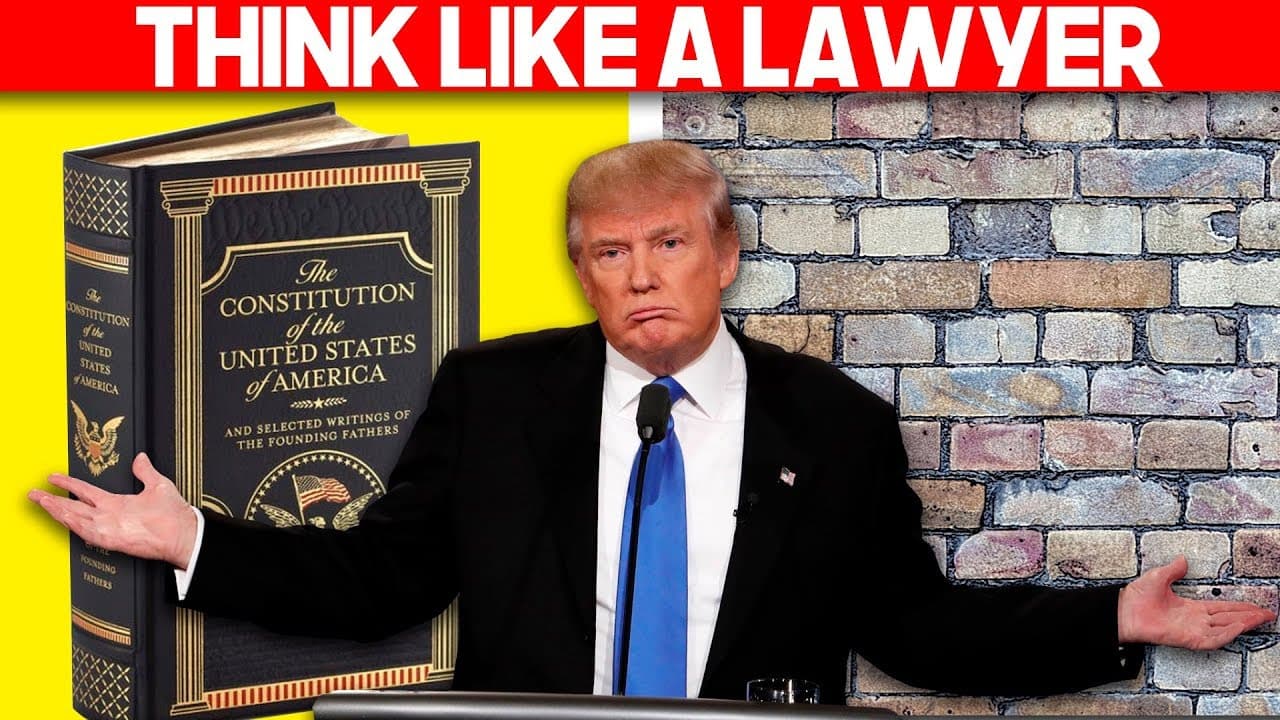
TL;DR
President Trump's national emergency declaration for the border wall faces legal scrutiny.
Transcript
- Thanks to Skillshare for keeping Legal Eagle in the air. Learn to think like a lawyer for free for two months by clicking the link in the description. The president has declared a national emergency and is using that as justification to build his wall. Can he do that? (orchestral musical flourish) In ancient Rome, the dictator was a temporary pos... Read More
Key Insights
- ✊ Presidential emergency powers are limited under the Constitution, requiring Congressional authorization for most actions.
- 😒 The appropriations clause grants Congress exclusive spending power, posing a challenge to Trump's use of executive authority for the border wall.
- 🚨 Legal challenges to Trump's emergency declaration focus on the National Emergencies Act and the lack of a clear definition of "emergency."
- 🚨 The Supreme Court's interpretation of the emergency declaration's legality will have significant implications for future presidential actions.
- 🧍 Standing and ripeness issues in legal challenges may impact the courts' ability to adjudicate the emergency declaration.
- ✊ Deference to the president's authority in declaring a national emergency conflicts with the Constitution's division of powers between branches.
- 🥳 The National Emergencies Act allows Congress to overturn a presidential declaration within 18 days, but a presidential veto complicates the process.
Install to Summarize YouTube Videos and Get Transcripts
Explore YouTube Video Summarizer or Get YouTube Transcript Extractor
Questions & Answers
Q: What emergency powers does the president have, and can he act outside of Congress's approval?
The president's emergency powers are limited, requiring Congressional authorization except for narrow exceptions. The Supreme Court has historically ruled against unilateral presidential actions, as seen in the Youngstown Sheet case.
Q: How does the emergency declaration affect the appropriations clause in the Constitution?
The declaration raises concerns about violating the exclusive spending power granted to Congress, as only Congress can appropriate federal funds. Lawsuits suggest that Trump's actions bypassed the appropriations process.
Q: Under what laws is Trump justifying the reappropriation of funds for the border wall?
The National Emergencies Act of 1976 serves as the primary law invoked by Trump, requiring specific provisions to be followed. However, the lack of a clear definition of "emergency" presents legal challenges to the declaration.
Q: What implications does the emergency declaration have for future presidential actions?
The declaration sets a precedent that could empower future presidents to declare emergencies on various issues, potentially bypassing Congressional approval. Legal battles will shape the extent of executive power in national emergencies.
Summary & Key Takeaways
-
President Trump's emergency declaration for the border wall raises questions about his use of executive powers and bypassing Congressional authorization.
-
The Constitution outlines a separation of powers, with only Congress having the authority to appropriate federal funds.
-
Legal challenges to the emergency declaration focus on violations of the appropriations clause and the National Emergencies Act.
Read in Other Languages (beta)
Share This Summary 📚
Summarize YouTube Videos and Get Video Transcripts with 1-Click
Try YouTube Summary with ChatGPT & Claude or YouTube Transcript Generator
Explore More Summaries from LegalEagle 📚






Summarize YouTube Videos and Get Video Transcripts with 1-Click
Try YouTube Summary with ChatGPT & Claude or YouTube Transcript Generator