Design Matrix Examples in R, Clearly Explained!!!
TL;DR
Learn how to perform linear models in R with example datasets and interpretations of statistical significance.
Transcript
statquest is awesome stat Quest is cool stack Quest is freaky stand Quest rules hello and welcome to stat Quest stat Quest is brought to you by the friendly folks in the genetics department at the University of North Carolina at Chapel Hill this stat Quest complements the stat Quest on General linear models part three the one that focused on design... Read More
Key Insights
- 🤢 Linear models in R use design matrices to efficiently analyze and interpret data.
- 😀 Understanding p-values is crucial for determining statistical significance in linear modeling.
- ❎ Adjusted r squared values provide a more reliable measure of model goodness of fit.
- 🎮 Control for batch effects in comparing data from different labs ensures accurate statistical conclusions.
- 😀 StatQuest offers insightful tutorials on statistical analysis with practical R examples.
- 🦻 Interpreting output summaries from linear models aids in making informed decisions about data comparisons.
- ❎ Utilizing the LM function in R simplifies least squares fitting and statistical calculations.
Install to Summarize YouTube Videos and Get Transcripts
Explore YouTube Video Summarizer or Get YouTube Transcript Extractor
Questions & Answers
Q: How does R handle creating design matrices for linear models?
R automatically generates design matrices when using the linear models function, simplifying the creation process. The design matrices are crucial for fitting statistical models efficiently.
Q: What does the adjusted r squared value indicate in linear models?
The adjusted r squared value in linear models adjusts for the number of parameters in the equation, providing a more accurate measure of the goodness of fit for the model.
Q: Why is interpreting the p-value important in linear modeling?
The p-value in linear modeling signifies the significance of parameters in the model, helping determine the statistical significance of differences between groups or variables.
Q: How can one control for batch effects in comparing data from different labs in R?
Controlling for batch effects involves creating design matrices that consider lab sources and differences between control and mutant data, ensuring accurate comparisons and interpretations.
Summary & Key Takeaways
-
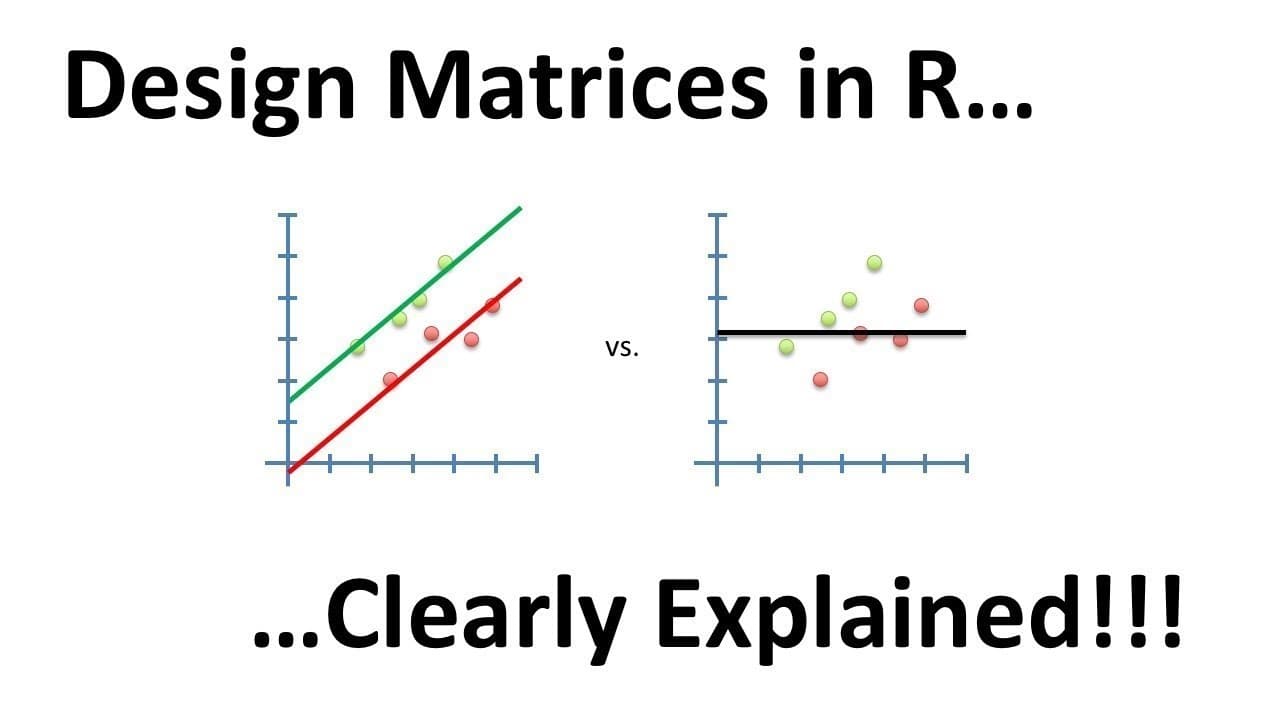
StatQuest explains linear models in R for comparing control and mutant mice sizes.
-
Utilizes design matrices and linear model functions in R for statistical analysis.
-
Emphasizes interpreting p-values and adjustments for better data fit in linear models.
Read in Other Languages (beta)
Share This Summary 📚
Summarize YouTube Videos and Get Video Transcripts with 1-Click
Try YouTube Summary with ChatGPT & Claude or YouTube Transcript Generator
Explore More Summaries from StatQuest with Josh Starmer 📚



Summarize YouTube Videos and Get Video Transcripts with 1-Click
Try YouTube Summary with ChatGPT & Claude or YouTube Transcript Generator