vlog #8 - Using Dual Tasks to Study & Train Sports Skills
TL;DR
Explores dual tasks to study and train sports skills.
Transcript
Oh hi everyone this is Rob gray from Arizona State University in the perception and action podcast and this is log number eight today I want to talk to you about one of my favorite experimental paradigms that I've used a lot of different ways for studying sports skills and I'm also going to talk to you a little bit about how it's been used in train... Read More
Key Insights
- Dual task paradigms involve performing a primary task and a secondary task simultaneously to study sports skills and training.
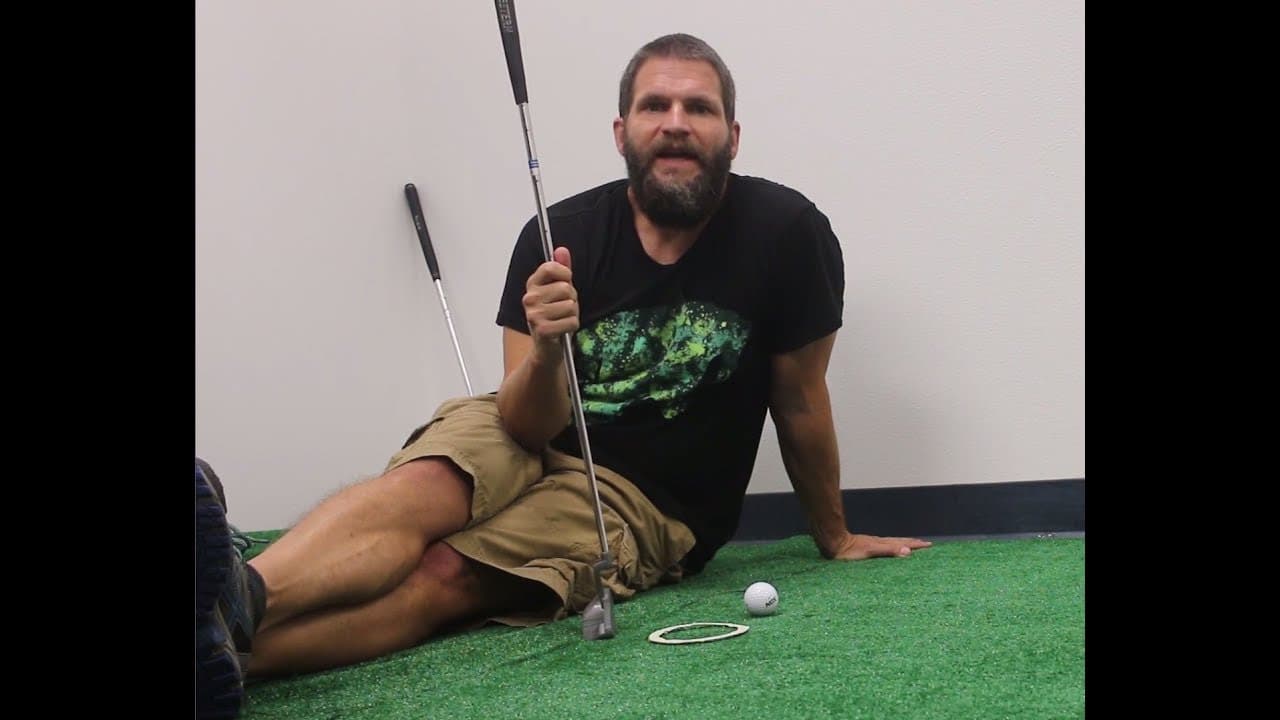
- The primary task in the demonstration is golf putting, while the secondary task involves judging sounds.
- The dual task paradigm helps understand attentional and working memory requirements at different skill levels.
- Experts perform well on both tasks as their primary task is automatic, while novices struggle due to limited attentional capacity.
- Skill-focused dual tasks can disrupt experts by turning their attention inward, simulating choking under pressure.
- Extraneous dual tasks encourage implicit learning by preventing explicit knowledge development during skill acquisition.
- Dual tasks can be used as an intervention to prevent choking by keeping attention away from internal focus.
- The paradigm offers valuable insights into sports skills and potential training interventions.
Install to Summarize YouTube Videos and Get Transcripts
Explore YouTube Video Summarizer or Get YouTube Transcript Extractor
Questions & Answers
Q: What is the primary task used in the dual task demonstration?
The primary task used in the dual task demonstration is golf putting. The demonstration involves performing the task of putting a golf ball into a target while simultaneously engaging in a secondary task, such as judging the pitch of sounds. This setup is used to study the attentional and working memory requirements of the task.
Q: How do experts and novices differ in performing dual tasks?
Experts and novices differ in their ability to perform dual tasks due to their level of skill and cognitive resource allocation. Experts can perform both the primary and secondary tasks effectively because their primary task is automatic and requires minimal cognitive resources. Novices, however, use most of their attentional capacity for the primary task, leaving little for the secondary task, which affects their overall performance.
Q: What is the purpose of using a skill-focused dual task?
The purpose of using a skill-focused dual task is to study the effects of turning an expert's attention inward, which can disrupt their performance. This type of task requires the performer to make judgments about their skill execution, simulating conditions that lead to choking under pressure. It provides insights into how attention affects performance and is used to explore theories like the constrained action hypothesis and reinvestment theory.
Q: How can dual tasks be used to encourage implicit learning?
Dual tasks can encourage implicit learning by using extraneous tasks that prevent the development of explicit knowledge during skill acquisition. By engaging in a secondary task, performers are less likely to focus on the mechanics of their movements, promoting a more automatic and implicit learning process. This approach is supported by research and has been shown to be effective in various sports skill training scenarios.
Q: What is the theory behind using dual tasks to prevent choking?
The theory behind using dual tasks to prevent choking is based on the idea that choking occurs when performers focus too much on their internal processes, disrupting their automatic skills. By introducing an extraneous dual task, attention is diverted away from internal focus, reducing the likelihood of overthinking and maintaining performance under pressure. This intervention helps performers stay in an optimal state of automatic execution.
Q: What are the key benefits of using dual task paradigms in sports training?
Dual task paradigms offer several benefits in sports training, including understanding attentional and working memory requirements at different skill levels, simulating conditions that lead to choking under pressure, and encouraging implicit learning. They provide a framework for studying cognitive demands and can be used as interventions to enhance performance and prevent performance decrements under pressure.
Q: How does the dual task paradigm simulate choking under pressure?
The dual task paradigm simulates choking under pressure by using skill-focused tasks that force experts to turn their attention inward, disrupting their automatic performance. This inward focus is a characteristic of choking, where performers overthink their actions. By recreating these conditions, researchers can study the cognitive processes involved in choking and develop strategies to mitigate its effects.
Q: What future research is suggested by the use of dual tasks in sports?
Future research suggested by the use of dual tasks in sports includes exploring more precise control of secondary tasks to better understand their impact on primary task performance, investigating the long-term effects of dual task training on skill acquisition, and developing new interventions to enhance performance under pressure. Further studies could also examine the applicability of dual tasks across different sports and skill levels.
Summary & Key Takeaways
-
The dual task paradigm is a method used to study and train sports skills by having an individual perform a primary and secondary task simultaneously. The primary task in the demonstration is golf putting, and the secondary task involves judging sounds. This method helps to understand the attentional and working memory requirements of sports skills at different skill levels.
-
Experts can perform both primary and secondary tasks well as their primary task is automatic and requires minimal cognitive resources. In contrast, novices use most of their attentional capacity for the primary task, leaving little for the secondary task. This paradigm helps in understanding the cognitive demands of different skill levels.
-
Skill-focused dual tasks can disrupt expert performance by forcing them to turn their attention inward, which is a common characteristic of choking under pressure. Extraneous dual tasks can encourage implicit learning by preventing the development of explicit knowledge, and they can also be used as an intervention to prevent choking by keeping attention away from internal focus.
Read in Other Languages (beta)
Share This Summary 📚
Summarize YouTube Videos and Get Video Transcripts with 1-Click
Try YouTube Summary with ChatGPT & Claude or YouTube Transcript Generator
Explore More Summaries from Rob Gray 📚
Summarize YouTube Videos and Get Video Transcripts with 1-Click
Try YouTube Summary with ChatGPT & Claude or YouTube Transcript Generator