The architectural wonder of impermanent cities | Rahul Mehrotra
TL;DR
This content explores the ephemeral megacity of Kumbh Mela and its lessons on impermanence and sustainable urbanism.
Transcript
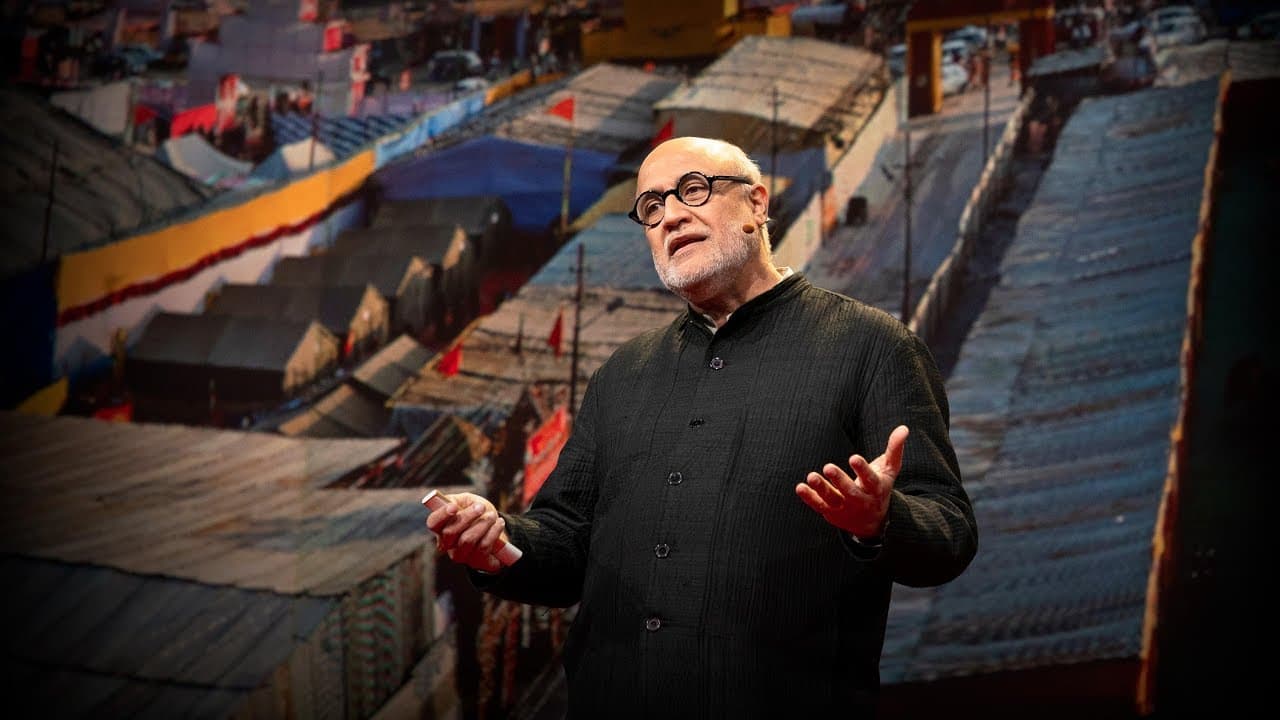
On this planet today, there are about 50 cities that are larger than five million people. I'm going to share with you the story of one such city, a city of seven million people, but a city that's a temporary megacity, an ephemeral megacity. This is a city that is built for a Hindu religious festival called Kumbh Mela, which occurs every 12 years, i... Read More
Key Insights
- 🏙️ Every 12 years, millions of people gather at the confluence of the Ganges and Yamuna rivers in India for the Kumbh Mela religious festival, creating a temporary megacity of seven million people.
- 🌊 The city is built on the exposed sand banks when the rivers recede after the monsoon season, and is disassembled after the festival ends.
- 🔌 The temporary city replicates all forms of physical and social infrastructure, including water supply, sewage, electricity, clinics, hospitals, and community services.
- 👀 The city employs a grid system and pontoon bridges to adapt to the volatile terrain caused by unseasonal downpours or river course changes.
- 🌱 The city sits lightly on the ground without foundations, using materials like bamboo, string, nails, and fabric. ⏰ The example of the Kumbh Mela city raises questions about whether we are making permanent solutions for temporary problems in our cities, locking resources into outdated paradigms.
- 🎡 Temporary structures like abandoned shopping malls and Olympic stadiums waste resources and could be repurposed or made more temporary.
- 🌍 The need to extend the expiry date of our planet requires a shift in our imagination about cities, reserving more space for temporary uses and using resources efficiently.
Install to Summarize YouTube Videos and Get Transcripts
Explore YouTube Video Summarizer or Get YouTube Transcript Extractor
Questions & Answers
Q: How often does the Kumbh Mela festival occur and how many people attend?
The Kumbh Mela festival occurs every 12 years, with smaller editions occurring every four years. About 100 million people congregate for this festival.
Q: How long does the city for the Kumbh Mela festival exist and how many people live there?
The city for the Kumbh Mela festival exists for 55 days. Seven million people live in the city during this time, while an additional 100 million people visit.
Q: What are some of the characteristics of the temporary city built for the Kumbh Mela festival?
The temporary city for the Kumbh Mela festival has a grid layout, with every street going across the river on a pontoon bridge. It replicates both physical infrastructure (water supply, sewage, electricity) and social infrastructure (clinics, hospitals, community services).
Q: How is the temporary city for the Kumbh Mela festival built and disassembled?
The temporary city is built using five materials: bamboo, string/rope, nails/screws, and a skinning material such as corrugated metal, fabric, or plastic. These materials are assembled like a kit of parts and can be used to build everything from small tents to larger structures. At the end of the festival, the entire city is disassembled within a week and the materials are reabsorbed or repurposed elsewhere.
Summary & Key Takeaways
-
The city of Kumbh Mela in India is a temporary megacity built every 12 years for a Hindu religious festival, attracting around 100 million people.
-
The city has all the characteristics of a real megacity, with infrastructure for water supply, sewage, electricity, and social services.
-
The city is built using simple materials like bamboo, string, nails, and fabric, and is disassembled after the festival, leaving very little mark on the environment.
Read in Other Languages (beta)
Share This Summary 📚
Summarize YouTube Videos and Get Video Transcripts with 1-Click
Try YouTube Summary with ChatGPT & Claude or YouTube Transcript Generator
Explore More Summaries from TED 📚





Summarize YouTube Videos and Get Video Transcripts with 1-Click
Try YouTube Summary with ChatGPT & Claude or YouTube Transcript Generator