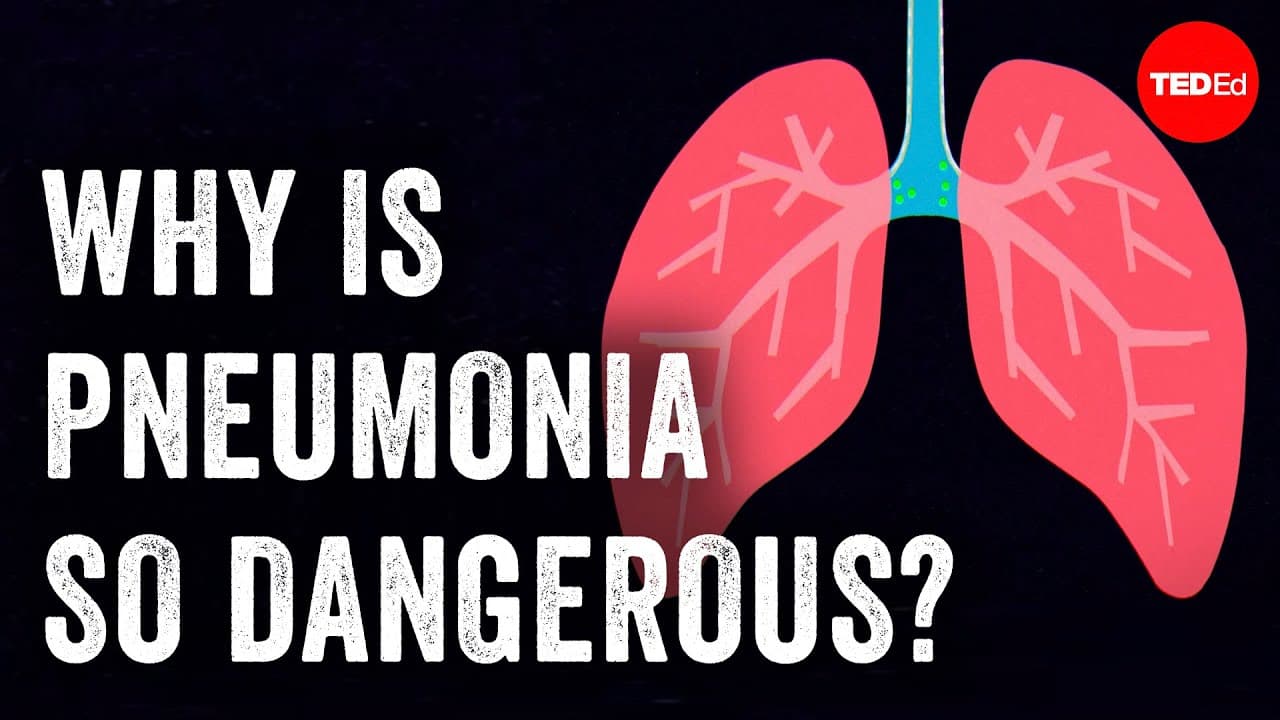
Why is pneumonia so dangerous? - Eve Gaus and Vanessa Ruiz
TL;DR
Pneumonia is a lung infection affecting alveoli, causing fluid buildup, treated with antibiotics; prevention includes vaccines and hygiene.
Transcript
Every time you breathe in, air travels down the trachea, through a series of channels called bronchi, and finally reaches little clusters of air sacs called alveoli. There are some 600 million alveoli in the lungs, adding up to a surface area of roughly 75 square meters— the size of a tennis court. These tiny sacs, only one cell thick, facilitate... Read More
Key Insights
- 🫢 Alveoli in the lungs, responsible for gas exchange, can be severely impacted by pneumonia, leading to breathing difficulties.
- 💦 Pathogens causing pneumonia can be viruses or bacteria, transmitted through respiratory droplets or contaminated surfaces.
- 🫁 Treatment for pneumonia involves antibiotics to clear the infection and restore lung function.
- 😪 Prevention of pneumonia includes good hygiene practices, vaccines, healthy lifestyle choices like diet, exercise, and sleep.
- 😣 Individuals with compromised respiratory health, genetic disorders, or weakened immunity are at higher risk for severe pneumonia.
- 🥺 In severe cases, pneumonia can lead to hospitalization, oxygen support, or even organ failure if not treated promptly.
- 😷 Lack of access to healthcare contributes to pneumonia-related deaths, emphasizing the importance of timely medical intervention.
Install to Summarize YouTube Videos and Get Transcripts
Explore YouTube Video Summarizer or Get YouTube Transcript Extractor
Questions & Answers
Q: How does pneumonia impact the body's ability to exchange gases?
Pneumonia affects the alveoli, filling them with fluid, making gas exchange difficult causing an increase in carbon dioxide in the bloodstream, stimulating rapid breathing and coughing.
Q: What are the common causes of pneumonia?
Pneumonia is commonly caused by viruses or bacteria, transmitted through respiratory droplets or contaminated surfaces, often affecting individuals with weakened immune systems or respiratory health issues.
Q: How does the immune system defend against pneumonia?
The immune system deploys specialized white blood cells called macrophages in the alveoli to engulf and destroy pathogens causing inflammation and fluid buildup, facilitating healing with antibiotic treatment.
Q: What are some risk factors that make individuals more susceptible to severe pneumonia?
Factors like smoking, genetic disorders, weakened immunity (in infants, elderly), and viral pneumonia increase susceptibility to pneumonia, requiring medical intervention in severe cases.
Summary & Key Takeaways
-
Air enters lungs through the trachea, bronchi, and alveoli for oxygen exchange.
-
Pneumonia infects alveoli with pathogens, causing fluid accumulation hindering gas exchange.
-
Treatment involves antibiotics to clear infection, while prevention includes vaccines and good hygiene habits.
Read in Other Languages (beta)
Share This Summary 📚
Summarize YouTube Videos and Get Video Transcripts with 1-Click
Try YouTube Summary with ChatGPT & Claude or YouTube Transcript Generator
Explore More Summaries from TED-Ed 📚





Summarize YouTube Videos and Get Video Transcripts with 1-Click
Try YouTube Summary with ChatGPT & Claude or YouTube Transcript Generator