The Art of Silence – Nietzsche’s Philosophy on Strength
TL;DR
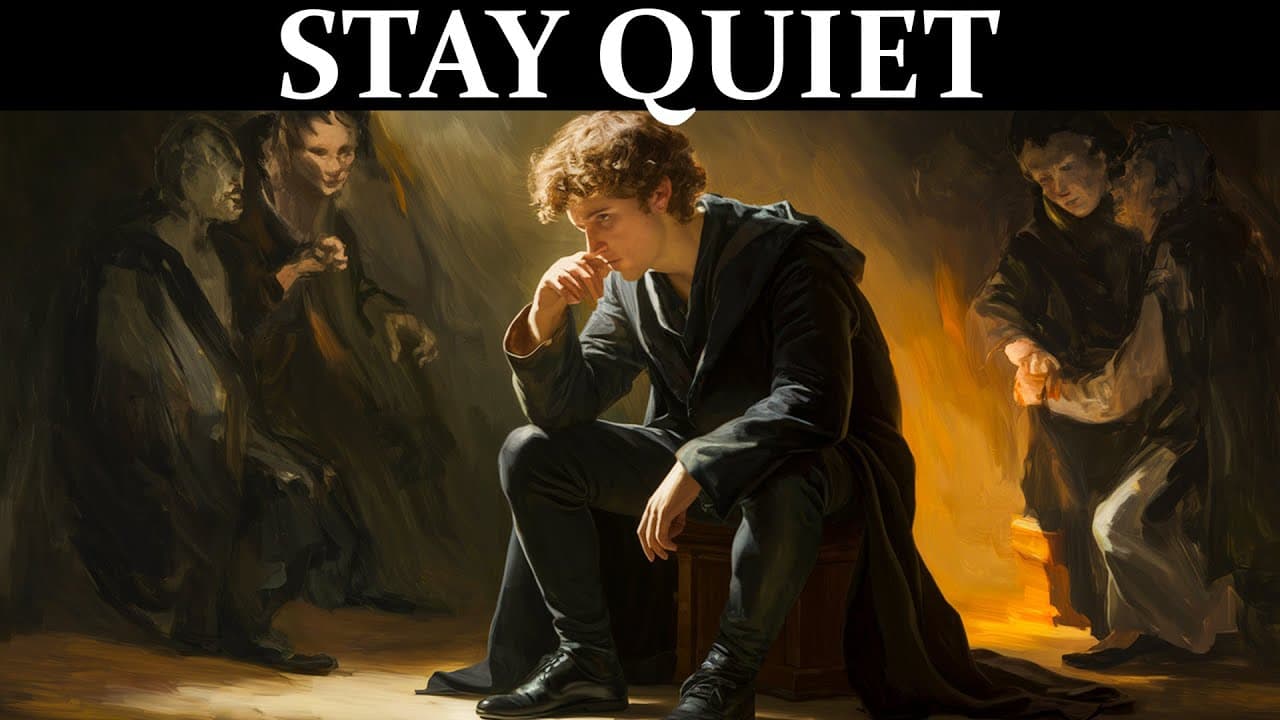
Silence is strength; speaking less grants control and respect.
Transcript
imagine this you are in a heated discussion your heart races your mind fills with arguments ready to be shot like arrows you need to respond you need to defend yourself you need to prove that you are right but what if I told you that the moment you feel that desperate need to react you have already lost the world has taught us that strength lies in... Read More
Key Insights
- Silence is a powerful tool that can influence others more than words. It can create mystery and respect, forcing others to reflect on themselves.
- Nietzsche believed that the need to speak constantly is a sign of insecurity, while mastering silence is a sign of true strength and self-control.
- In a noisy world where everyone wants to be heard, those who remain silent stand out and command attention when they choose to speak.
- Social media has amplified the obsession with speaking out, but true power lies in choosing when to remain silent and when to speak.
- Silence can be used strategically in discussions and debates to make others reveal their weaknesses and exhaust themselves.
- The ability to endure silence is a test of inner strength, as it forces introspection and self-awareness, which many people fear.
- True leaders and strategists speak only when necessary, making their words carry more weight and impact than those who speak incessantly.
- The Ubermensch, or Nietzsche's concept of the superior being, creates their own values and rules, using silence as a weapon to assert their strength.
Install to Summarize YouTube Videos and Get Transcripts
Explore YouTube Video Summarizer or Get YouTube Transcript Extractor
Questions & Answers
Q: What is the main argument of the video regarding silence?
The main argument of the video is that silence is a powerful tool and a sign of true strength. Nietzsche believed that the need to constantly speak and seek validation is a sign of insecurity, while mastering silence allows individuals to maintain control, command respect, and influence others more effectively.
Q: How does Nietzsche's philosophy view the need to speak?
Nietzsche's philosophy views the need to speak as a sign of weakness and insecurity. He believed that those who feel compelled to constantly express themselves are seeking validation and are controlled by their emotions. In contrast, those who master silence demonstrate self-control and strength, as they do not need external validation.
Q: Why is silence considered a strategic tool in discussions?
Silence is considered a strategic tool in discussions because it allows individuals to observe and analyze the situation before responding. By remaining silent, they can force others to reveal their weaknesses, exhaust themselves, and become vulnerable. This strategic use of silence can shift the power dynamic in favor of the silent individual.
Q: What role does social media play in the obsession with speaking?
Social media plays a significant role in the obsession with speaking by creating a platform where everyone feels the need to express their opinions and be heard. It turns conversations into public battles where volume and repetition often overshadow truth. This environment amplifies the compulsion to speak, making silence a rare and powerful trait.
Q: How does silence relate to self-awareness and introspection?
Silence relates to self-awareness and introspection by forcing individuals to confront their own thoughts and insecurities. Many people fear silence because it requires them to reflect on themselves without the distraction of external noise. Embracing silence can lead to greater self-awareness and inner strength, as it challenges individuals to face their true selves.
Q: What is the Ubermensch's approach to silence and self-expression?
The Ubermensch, or Nietzsche's concept of the superior being, approaches silence as a tool for self-expression and strength. The Ubermensch creates their own values and rules, using silence to assert their independence and authority. They speak only when necessary, making their words impactful and meaningful, rather than seeking constant validation through speech.
Q: How can silence be used as a psychological weapon?
Silence can be used as a psychological weapon by creating uncertainty and discomfort in others. When someone expects a response and does not receive one, their mind becomes filled with doubt and insecurity, trying to interpret the silence. This can give the silent individual control over the situation, as the other person becomes preoccupied with their own thoughts and reactions.
Q: What is the impact of mastering silence on personal relationships?
Mastering silence in personal relationships can lead to greater respect and influence. By choosing when to speak and when to remain silent, individuals can control the flow of communication and create a sense of mystery. This can make their words more impactful and meaningful, as they are not constantly seeking validation or reacting to others' opinions.
Summary & Key Takeaways
-
Silence is a tool of strength, allowing individuals to maintain control and command respect without the need for constant validation. Nietzsche saw silence as a sign of self-mastery and true power.
-
In a world filled with noise and the compulsion to speak, those who master silence can dominate conversations and influence others by choosing when to speak and when to remain silent.
-
The fear of silence stems from insecurity and the need for external validation. Embracing silence forces introspection and self-awareness, qualities that Nietzsche believed were essential for true strength.
Read in Other Languages (beta)
Share This Summary 📚
Summarize YouTube Videos and Get Video Transcripts with 1-Click
Try YouTube Summary with ChatGPT & Claude or YouTube Transcript Generator
Explore More Summaries from Psyphoria 📚


Summarize YouTube Videos and Get Video Transcripts with 1-Click
Try YouTube Summary with ChatGPT & Claude or YouTube Transcript Generator