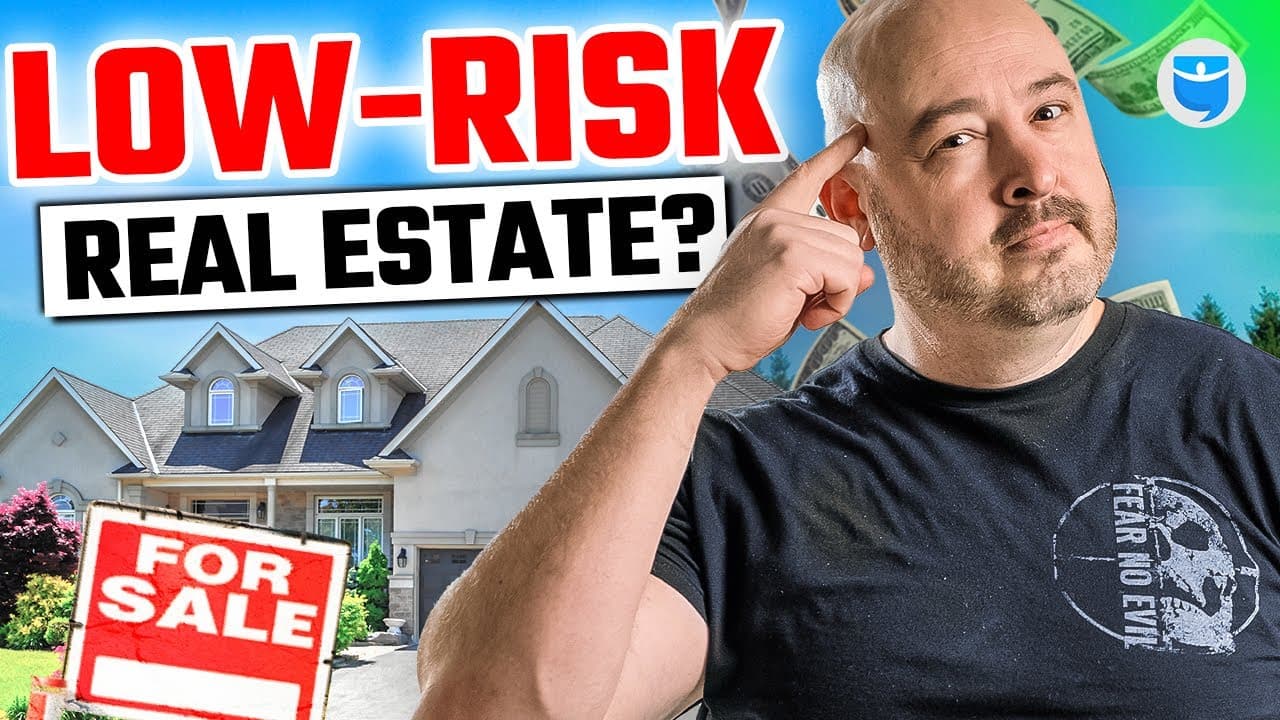
The “Low Risk” Way to Start Real Estate Investing?
TL;DR
Explore low-risk strategies for starting real estate investing.
Transcript
this is the BiggerPockets podcast show 765. we're gonna do this as low risk as possible I want you to look for a short-term rental where people want to visit and I want you to rent the thing out as a short-term rental when you're not using it and then when you are using it like when you travel out there to stay at that property which means you're g... Read More
Key Insights
- Investing in short-term rentals in high-demand areas can offer cash flow while reducing housing expenses.
- House hacking in desirable locations can provide better cash flow compared to low-cost out-of-state properties.
- Consider converting spaces like garages into rental units for significant returns on investment.
- Young investors should consider combining education with real estate pursuits for a balanced approach.
- Using equity from primary residences for investments should be approached with caution, especially in uncertain markets.
- Establishing separate bank accounts for properties can be cumbersome; consider grouping properties under single entities.
- Understand 1031 exchange rules and explore reverse exchanges as a strategy for new construction investments.
- Evaluate whether to hold or sell properties based on potential for ongoing expenses and overall portfolio strategy.
Install to Summarize YouTube Videos and Get Transcripts
Explore YouTube Video Summarizer or Get YouTube Transcript Extractor
Questions & Answers
Q: How can I start investing in real estate with low risk?
Consider investing in short-term rentals in high-demand areas. This strategy allows you to generate cash flow while reducing your housing expenses by renting out your property when not in use. It's essential to choose locations with consistent demand to ensure profitability.
Q: Should I house hack or invest out of state?
House hacking in a desirable location can provide better cash flow and tenant quality than investing in low-cost out-of-state properties. While out-of-state investments may seem cheaper, they often come with tenant issues and maintenance problems that can erode profits.
Q: Is it worth converting my garage into a rental unit?
Converting a garage into a rental unit can offer significant returns, especially if the conversion cost is reasonable. Calculate the potential rental income against the conversion cost to determine if it meets the three percent rule, aiming for a high return on investment.
Q: Should I skip college to start a real estate career?
Consider pursuing both education and real estate. An engineering degree, for example, can provide a steady income while you build your real estate career. Combining education with real estate allows you to gain experience and financial stability, enhancing long-term success.
Q: How many bank accounts should I have for my rental properties?
Instead of having separate accounts for each property, consider grouping properties under single entities like LLCs, with one account per entity. This approach simplifies management and aligns with bookkeeping best practices, reducing the complexity of handling multiple accounts.
Q: Can I 1031 exchange into a new construction property?
Yes, you can 1031 exchange into new construction, but be mindful of the 45-day identification and 180-day closing rules. If construction takes longer, consider a reverse 1031 exchange, where the new property is acquired first through a trust until your current property sells.
Q: When should I sell a property that has cost me a lot?
Sell if the property is in a weak market with ongoing expenses that outweigh benefits. If it's your only capital, consider selling to invest in better opportunities. If you have additional funds, hold and see if it stabilizes while investing elsewhere.
Q: How can I invest in real estate while minimizing risk?
Look for short-term rental opportunities in desirable locations and consider house hacking. Renting your primary residence when traveling can also generate income. Focus on stable markets and properties with potential for both cash flow and appreciation to balance risk.
Summary & Key Takeaways
-
This podcast episode discusses low-risk strategies for starting in real estate, focusing on short-term rentals and house hacking. David Green answers questions from listeners about various investment scenarios, providing tailored advice based on individual circumstances and market conditions.
-
Listeners are advised to consider creative approaches like converting garages into rental units and to be cautious with using home equity for investments. The episode also highlights the importance of understanding 1031 exchanges and the potential benefits of reverse exchanges.
-
David emphasizes the importance of evaluating each investment's potential for cash flow and appreciation, urging investors to consider both local and out-of-state markets. He also advises young investors to pursue education alongside real estate to build a solid foundation.
Read in Other Languages (beta)
Share This Summary 📚
Summarize YouTube Videos and Get Video Transcripts with 1-Click
Try YouTube Summary with ChatGPT & Claude or YouTube Transcript Generator
Explore More Summaries from BiggerPockets 📚



Summarize YouTube Videos and Get Video Transcripts with 1-Click
Try YouTube Summary with ChatGPT & Claude or YouTube Transcript Generator