It’s Time to Make Some Udon Noodles from Scratch #うどん
TL;DR
Cooking and experimenting to create perfect chewy homemade udon noodles.
Transcript
welcome back to part 2 of the udon series and in part one I was just a little frustrated with the actual noodle product and I was gonna go out and sample some and try to you know really wrap my head around it but in part three and four I've got some field trips I'll be cooking for some people and I really need to get good food on noodles so I'm goi... Read More
Key Insights
- 💯 Experimentation in the kitchen is essential to perfecting homemade udon noodles.
- 🖐️ Hydration percentages play a crucial role in determining the density and texture of the noodle dough.
- 🦶 Traditional techniques like foot kneading contribute to the authenticity of the udon noodle-making process.
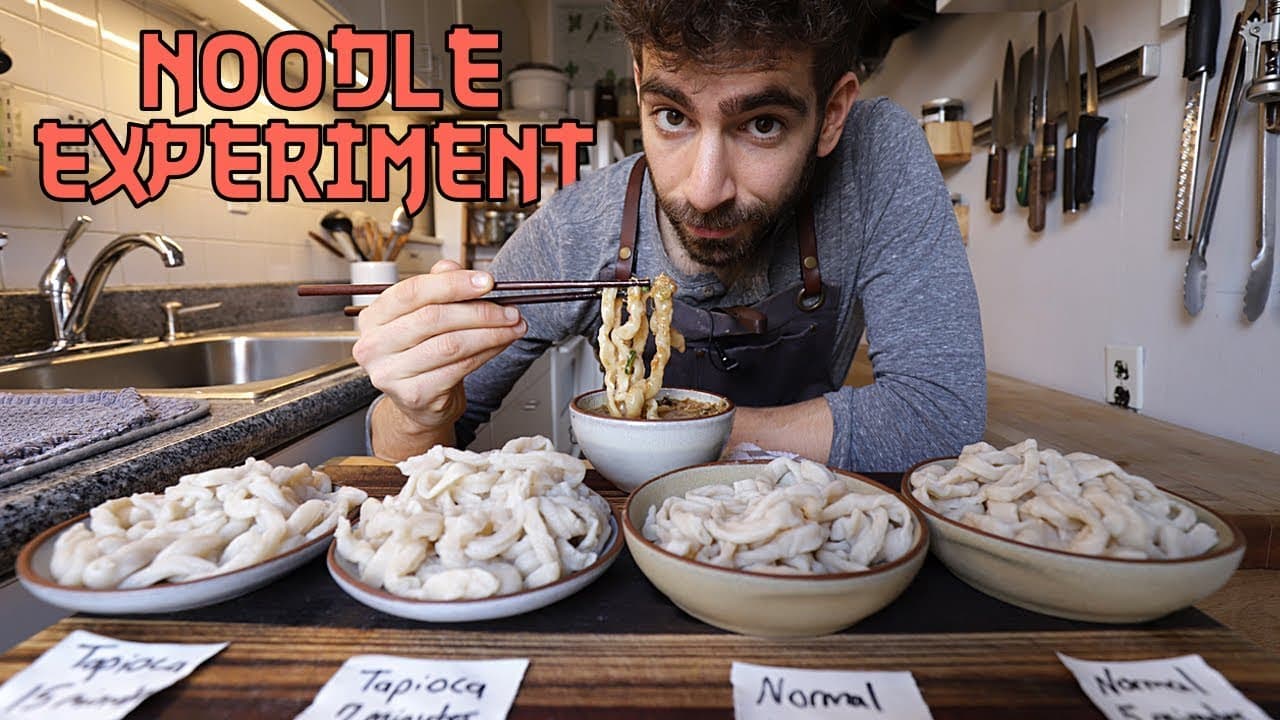
- 🍜 Adding tapioca starch can alter the chewiness and texture of udon noodles significantly.
- 🍜 Proper resting and preparation of the dough are vital for achieving the desired noodle texture.
- 👻 Taste-testing different noodle variations allows for a better understanding of texture preferences.
- 🥵 Homemade dipping sauces enhance the overall udon noodle eating experience.
Install to Summarize YouTube Videos and Get Transcripts
Explore YouTube Video Summarizer or Get YouTube Transcript Extractor
Questions & Answers
Q: What are the key ingredients required to make udon noodles?
The key ingredients are flour, water, and salt. The proportions and quality of these ingredients influence the texture and chewiness of the noodles.
Q: Why is foot kneading used in the traditional method of making udon noodles?
Foot kneading helps develop the gluten in the dough and ensures a strong, elastic texture in the noodles. It's a traditional technique believed to yield better results than hand kneading.
Q: How does adding tapioca starch affect the texture of the udon noodles?
Tapioca starch adds chewiness to the noodles, creating a different texture compared to traditional wheat-only noodles. It can make the noodles more elastic and satisfying to bite into.
Q: What is the purpose of letting the dough rest in the fridge overnight?
Resting the dough allows the gluten bonds to form properly, resulting in stronger noodles with a better texture. It also helps develop the flavors in the dough for a more complex taste.
Summary & Key Takeaways
-
Video focuses on making homemade udon noodles through experimentation in the kitchen.
-
Different dough recipes are explored, including a traditional wheat dough and one with added tapioca starch for chewiness.
-
Taste test reveals the chewiness and texture differences between various noodle variations.
Read in Other Languages (beta)
Share This Summary 📚
Summarize YouTube Videos and Get Video Transcripts with 1-Click
Try YouTube Summary with ChatGPT & Claude or YouTube Transcript Generator
Explore More Summaries from Pro Home Cooks 📚





Summarize YouTube Videos and Get Video Transcripts with 1-Click
Try YouTube Summary with ChatGPT & Claude or YouTube Transcript Generator