Types of Hardness of Hardness
TL;DR
This video discusses the two types of hard water (temporary and permanent) and the different methods used to soften permanent hard water.
Transcript
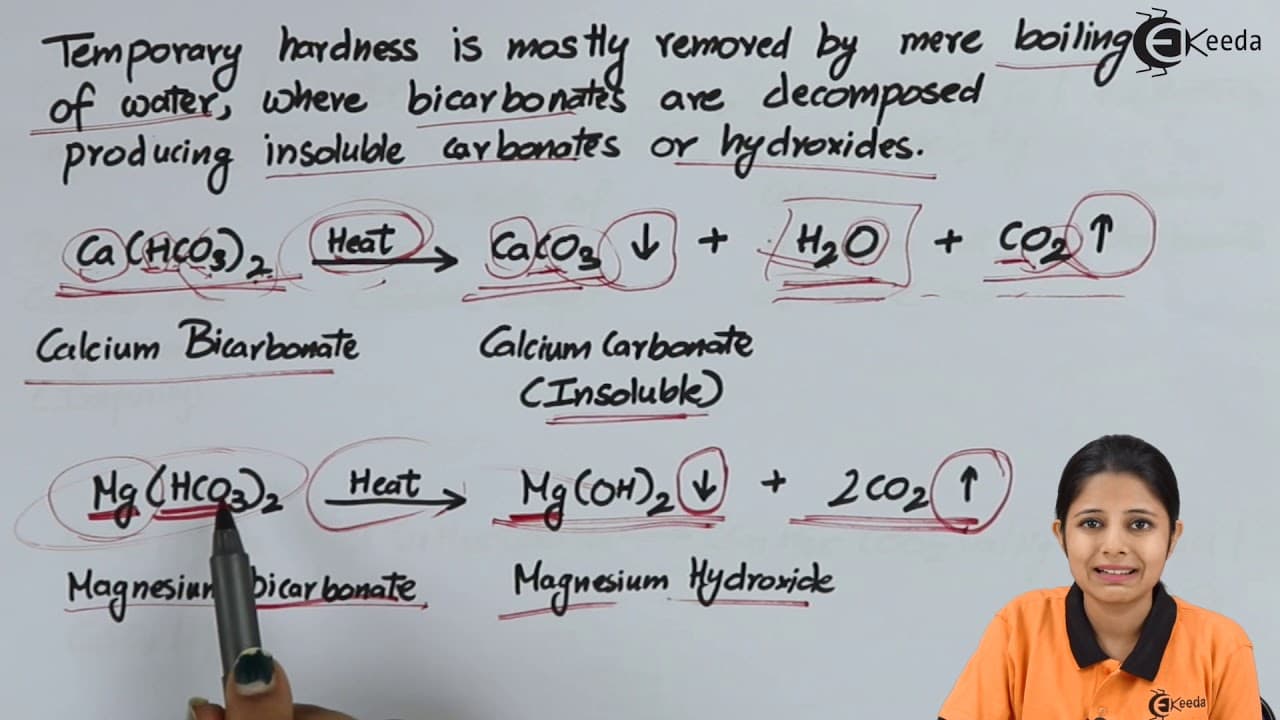
click the Bell icon to get latest videos from akira hello friends in today's session we are going to study the types of hard water whenever we talk about hard water there are two types of hard water the first is temporary hard water and the second is permanent hard water temporary hard water is the water which can be easily softened that means that... Read More
Key Insights
- 💦 There are two types of hard water: temporary hardness and permanent hardness.
- ❓ Temporary hardness can be easily softened by boiling, while permanent hardness requires chemical treatments for softening.
- 🤘 Temporary hardness is caused by carbonates and bicarbonates of calcium and magnesium, while permanent hardness is caused by chlorides, sulfates, nitrates, and other salts of various metals.
- 😑 The methods used to remove permanent hardness include internal conditioning, external conditioning, lime soda method, zeolite method, and ion exchange method.
- 🧂 Internal conditioning and external conditioning involve chemical reactions to remove hardness-causing salts.
Install to Summarize YouTube Videos and Get Transcripts
Explore YouTube Video Summarizer or Get YouTube Transcript Extractor
Questions & Answers
Q: What is the difference between temporary hardness and permanent hardness?
Temporary hardness is caused by carbonates and bicarbonates of calcium and magnesium, while permanent hardness is caused by chlorides, sulfates, nitrates, and other salts of calcium, magnesium, iron, and other metals.
Q: Can temporary hardness be removed by boiling?
Yes, temporary hardness can be easily softened by boiling. Boiling converts the soluble carbonates and bicarbonates into insoluble precipitates, which can be filtered out.
Q: What are the methods used to remove permanent hardness?
The methods used to remove permanent hardness include internal conditioning, external conditioning, lime soda method, zeolite method, and ion exchange method. These methods involve chemical reactions to remove the hardness-causing salts.
Q: How do lime soda, zeolite, and ion exchange methods work to soften hard water?
Lime soda method involves the addition of lime and soda ash to hard water, which reacts with the hardness-causing ions and forms insoluble precipitates. Zeolite method uses a zeolite resin to exchange sodium ions with the hardness-causing ions, resulting in soft water. Ion exchange method involves the use of ion exchange resins that remove the hardness-causing ions by exchanging them with sodium or hydrogen ions.
Summary & Key Takeaways
-
The video explains that hard water can be classified into two types: temporary hardness and permanent hardness.
-
Temporary hardness, also known as carbonate hardness or alkaline hardness, is caused by carbonates and bicarbonates of calcium and magnesium salts. It can be easily softened through physical processes like boiling.
-
Permanent hardness, also known as non-carbonate or non-alkaline hardness, is caused by chlorides, sulfates, nitrates, and other salts of calcium, magnesium, iron, and other metals. Chemical treatments are required to remove permanent hardness.
Read in Other Languages (beta)
Share This Summary 📚
Summarize YouTube Videos and Get Video Transcripts with 1-Click
Try YouTube Summary with ChatGPT & Claude or YouTube Transcript Generator
Explore More Summaries from Ekeeda 📚


Summarize YouTube Videos and Get Video Transcripts with 1-Click
Try YouTube Summary with ChatGPT & Claude or YouTube Transcript Generator