FACS - Fluorescence Activated Cell Sorting - Steffen Schmitt (DKFZ)
TL;DR
FACS enables physical separation and analysis of single cells.
Transcript
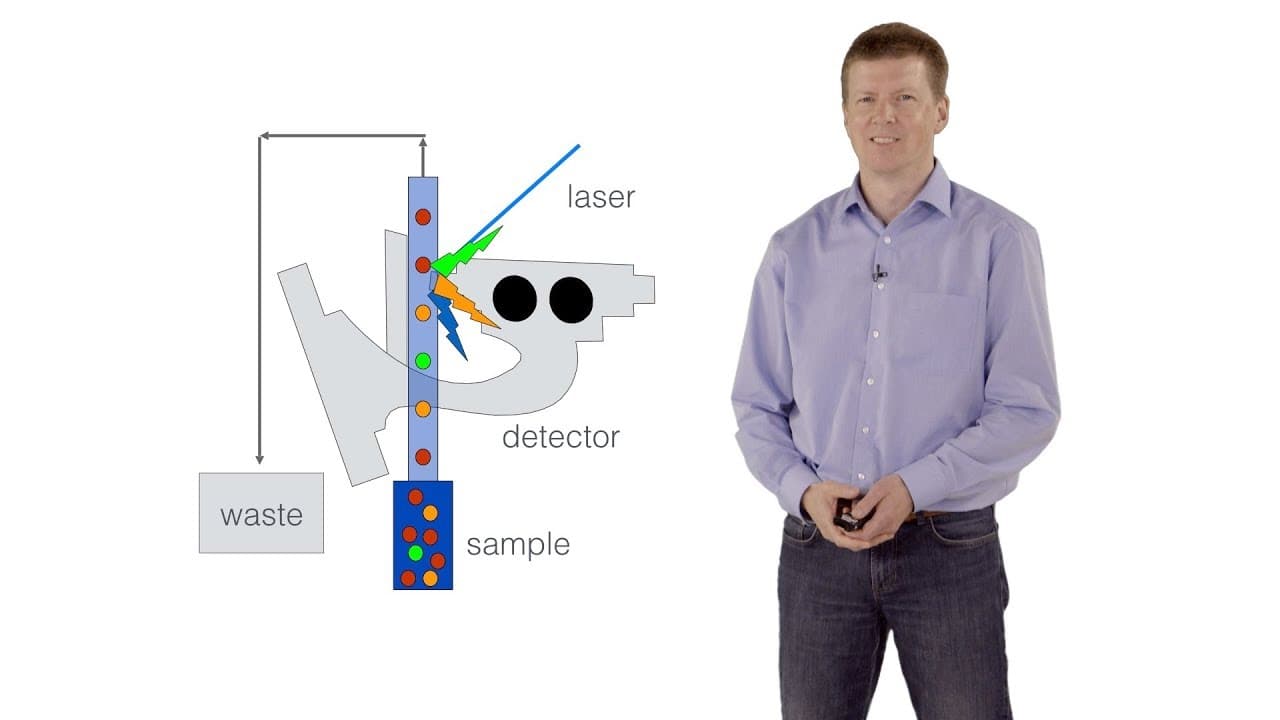
Welcome to iBiology. My name is Steffen Schmitt. And today I want to introduce the technology of cell sorting to you. So, when I'm referring to cell sorting, I mean FACS in its original sense. FACS is the abbreviation for fluorescence activated cell sorting, and many people say FACS when they just mean flow cytometry, as as shown here in the cartoo... Read More
Key Insights
- FACS stands for Fluorescence Activated Cell Sorting and is often confused with flow cytometry, though it involves physical separation of cells.
- FACS technology is crucial for various biomedical applications, including cell cultivation, transplantation, and omics studies.
- Droplet electrostatic cell sorting is a key focus, while magnetic and chip-based methods are not discussed in detail.
- The process involves conventional flow cytometry analysis followed by droplet formation and sorting based on electrical charges.
- Nozzle size and droplet break-off are critical factors influencing sorting speed, cell viability, and the precision of separation.
- Yield, purity, and time are interconnected factors in FACS, requiring compromises based on experimental needs.
- Sort precision modes and sort masks help optimize yield, purity, and recovery, but each has trade-offs.
- Successful FACS requires careful planning of experimental parameters, including cell viability, desired cell numbers, and target collection devices.
Install to Summarize YouTube Videos and Get Transcripts
Explore YouTube Video Summarizer or Get YouTube Transcript Extractor
Questions & Answers
Q: What is the main difference between FACS and flow cytometry?
FACS, or Fluorescence Activated Cell Sorting, differs from conventional flow cytometry in that it involves the physical separation and collection of single cells or cell populations. While flow cytometry analyzes cell characteristics, FACS allows for sorting based on these characteristics, enabling further experimental applications.
Q: Why is nozzle size important in FACS?
Nozzle size is crucial in FACS as it affects the droplet formation, sorting speed, and cell viability. Smaller nozzles allow for faster sorting but may induce higher shear stress, affecting cell viability. The nozzle size must be chosen based on the cell size and experimental requirements to ensure optimal sorting conditions.
Q: How are cells physically separated in FACS?
In FACS, cells are separated by forming droplets containing individual cells, which are then charged and deflected in an electrical field. The charged droplets are directed into collection devices based on the desired cell characteristics, allowing for precise separation and analysis of specific cell populations.
Q: What factors influence the yield, purity, and time in FACS?
Yield, purity, and time in FACS are influenced by factors such as nozzle size, sort precision modes, and the distribution of cells in the stream. These factors are interdependent, requiring compromises to optimize one at the expense of the others. Experimental goals and downstream assays dictate the balance between these factors.
Q: What are sort precision modes in FACS?
Sort precision modes in FACS are predefined settings that prioritize yield, purity, or single-cell sorting. These modes are combinations of sort masks, which determine how droplets are sorted based on cell location within the droplet. Each mode offers trade-offs in terms of recovery, volume, and purity, tailored to specific experimental needs.
Q: How can sort quality be improved in FACS?
Sort quality in FACS can be improved by excluding doublets and dead cells, optimizing the collection medium, and considering pre-enrichment of samples. Proper compensation settings and threshold adjustments also enhance sort quality, ensuring accurate separation and minimizing contamination.
Q: What role does the Accu Drop system play in FACS?
The Accu Drop system in FACS is used to accurately calculate the drop delay, ensuring precise synchronization of the sorting process. It involves using a laser to illuminate deflected drops, allowing for simulation of the sorting process with fluorescent beads. This ensures accurate sorting and minimizes waste.
Q: What considerations are important for planning a FACS experiment?
Planning a FACS experiment requires understanding the downstream assays, desired cell viability, and target cell numbers. Factors such as the percentage of target cells, potential for coincidence, and availability of the instrument should be considered. Pre-enrichment and choice of collection devices also impact experimental success.
Summary & Key Takeaways
-
FACS is a technology that allows for the physical separation of cells, enabling advanced studies like proteomics and genomics. It is vital for applications such as establishing cell lines and studying the cell cycle. Dr. Schmitt explains the components and functions of droplet-based cell sorters.
-
The process of FACS involves two main steps: flow cytometric analysis and droplet sorting. Key components include lasers, nozzles, and deflection plates. The technology requires precise synchronization of various elements to achieve effective cell sorting.
-
Optimizing FACS involves considering factors like nozzle size, sort precision modes, and sort masks. The balance between yield, purity, and time is crucial, and strategies should be tailored to the specific downstream assays planned for the sorted cells.
Read in Other Languages (beta)
Share This Summary 📚
Summarize YouTube Videos and Get Video Transcripts with 1-Click
Try YouTube Summary with ChatGPT & Claude or YouTube Transcript Generator
Explore More Summaries from iBiology Techniques 📚



Summarize YouTube Videos and Get Video Transcripts with 1-Click
Try YouTube Summary with ChatGPT & Claude or YouTube Transcript Generator