Synthetic Biology: Building cell signaling networks - Wendell Lim
TL;DR
Wendell Lim discusses engineering cell signaling networks using synthetic biology.
Transcript
Hi. My name is Wendell Lim. I'm a professor at the University of California San Francisco and an investigator at the Howard Hughes Medical Institute. Today I'd like to tell you about using synthetic biology to build self-signaling networks. One of the most amazing things about living systems is that they are able to monitor their environment and m... Read More
Key Insights
- Synthetic biology enables the creation of cell signaling networks by assembling molecular parts, akin to engineering electronic devices.
- Cells make complex decisions by integrating environmental signals through molecular networks, which can be synthetically rewired for new behaviors.
- The modularity of signaling proteins, with catalytic and interaction domains, allows for the flexible reprogramming of cellular responses.
- Synthetic biology can complement traditional biology by building new systems, offering insights into cellular logic and evolutionary processes.
- Modular domains in proteins can be rearranged to create new signaling pathways, potentially useful in designing therapeutic cells.
- Scaffold proteins organize signaling cascades, ensuring specificity despite shared components, and can be engineered for new pathways.
- Synthetic signaling proteins and networks can mimic natural systems, offering new ways to understand and manipulate cellular behaviors.
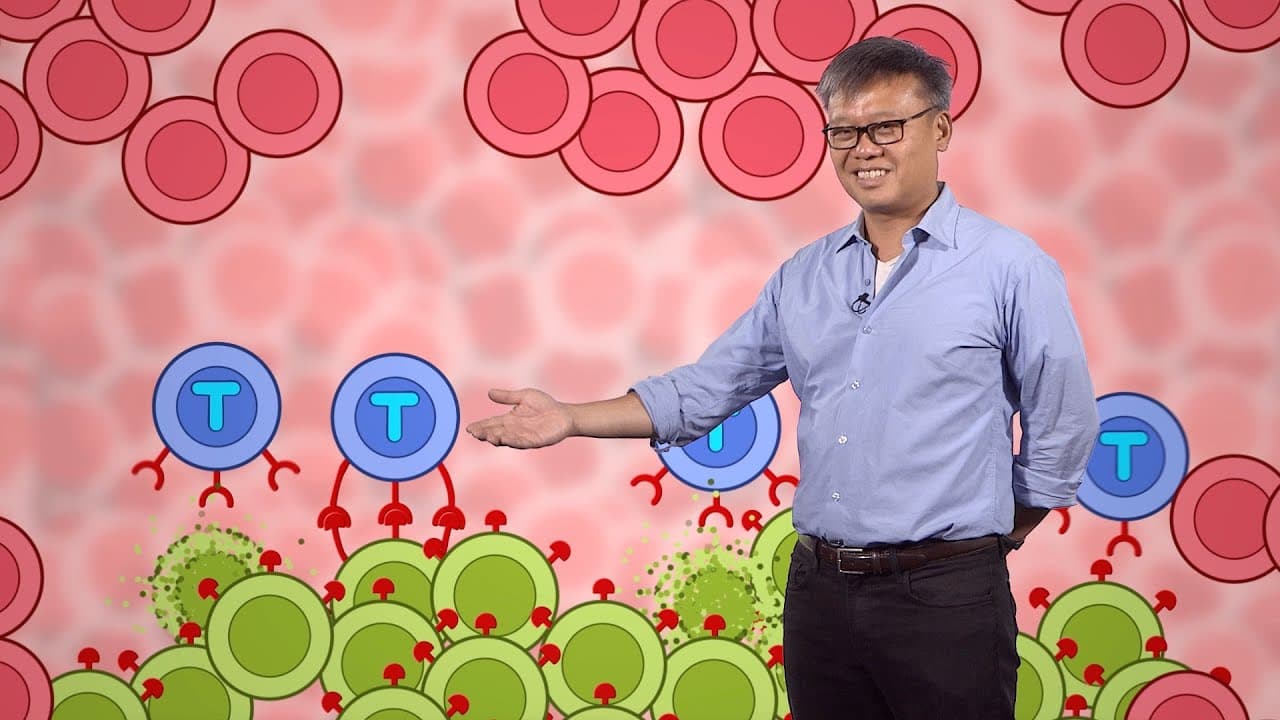
- Engineered T cells with synthetic receptors offer promising therapeutic applications, like targeting cancer cells with controlled activation.
Install to Summarize YouTube Videos and Get Transcripts
Explore YouTube Video Summarizer or Get YouTube Transcript Extractor
Questions & Answers
Q: What is the main focus of Wendell Lim's lecture?
Wendell Lim's lecture focuses on the use of synthetic biology to engineer cell signaling networks. He discusses how molecular parts can be assembled to create new cellular behaviors, similar to how engineers assemble electronic devices. The lecture highlights the potential of synthetic biology to complement traditional biology by offering new insights into cellular logic and evolution.
Q: How do cells make complex decisions according to the lecture?
Cells make complex decisions by integrating multiple environmental signals through networks of molecules. These networks coordinate cellular responses by processing inputs and determining appropriate actions. Lim explains that understanding these molecular networks allows for the possibility of synthetically rewiring them to produce new cellular behaviors, offering insights into cellular decision-making processes.
Q: What role do modular domains play in cell signaling?
Modular domains in signaling proteins are crucial for regulating information flow and transmitting signals within cells. They can be categorized into catalytic domains, which carry out enzymatic activities like phosphorylation, and interaction domains, which control protein-protein interactions. By rearranging these modules, synthetic biologists can reprogram signaling pathways to generate novel cellular behaviors and responses.
Q: How does synthetic biology complement traditional biology?
Synthetic biology complements traditional biology by building new systems and offering insights into cellular logic and evolutionary processes. While traditional biology often involves breaking down complex systems into molecular parts, synthetic biology takes a constructive approach by assembling these parts into new functional systems. This allows for the exploration of what can exist beyond naturally occurring systems.
Q: What potential applications does synthetic biology have in therapeutics?
Synthetic biology holds significant potential in therapeutics, particularly in developing cell-based therapies. By engineering cells with synthetic signaling networks, researchers can create therapeutic cells capable of complex actions, such as targeting and killing cancer cells. These engineered cells can integrate environmental and user-provided signals, offering precise and controlled therapeutic responses.
Q: How can scaffold proteins be used in synthetic biology?
Scaffold proteins organize signaling cascades, ensuring specificity and preventing cross-talk between pathways. In synthetic biology, scaffold proteins can be engineered to create new pathways by assembling different catalytic components. This allows for the creation of novel input-output signaling pathways, mimicking evolutionary processes and enabling the development of customized cellular behaviors.
Q: What is the significance of engineered T cells in cancer therapy?
Engineered T cells, particularly those with chimeric antigen receptors (CARs), represent a significant advancement in cancer therapy. These synthetic receptors allow T cells to recognize and target tumor cells with specific antigens, leading to their activation and destruction. While successful in certain cancers, challenges remain in controlling the strong immune responses these cells can trigger, highlighting the need for further refinement.
Q: What challenges remain in using engineered T cells for therapy?
Despite their promise, engineered T cells can trigger strong immune responses, leading to systemic side effects. Controlling these responses is crucial, as current therapies can be too strong or poorly regulated. Researchers are exploring ways to create T cells with more controlled behavior, such as incorporating drug-activated switches, to enhance safety and efficacy in therapeutic applications.
Summary & Key Takeaways
-
Wendell Lim explores the use of synthetic biology to engineer cell signaling networks by assembling molecular parts. He emphasizes the potential to create new cellular behaviors by rearranging signaling protein modules, akin to electronic engineering. This approach complements traditional biology by offering new insights into cellular logic and evolution.
-
The lecture highlights the modularity of signaling proteins, which can be synthetically rewired to produce novel cellular responses. By understanding and manipulating these modules, Lim's lab aims to develop therapeutic cells capable of complex actions, such as targeting and killing cancer cells with precision and control.
-
Synthetic biology offers a new way to think about biology, not just by studying existing systems but by creating new variants. This approach could lead to the development of customized cells with therapeutic functions, capable of integrating environmental and user-provided signals to execute complex, targeted actions.
Read in Other Languages (beta)
Share This Summary 📚
Summarize YouTube Videos and Get Video Transcripts with 1-Click
Try YouTube Summary with ChatGPT & Claude or YouTube Transcript Generator
Explore More Summaries from iBiology Techniques 📚
Summarize YouTube Videos and Get Video Transcripts with 1-Click
Try YouTube Summary with ChatGPT & Claude or YouTube Transcript Generator