Oxidation of Alcohols
TL;DR
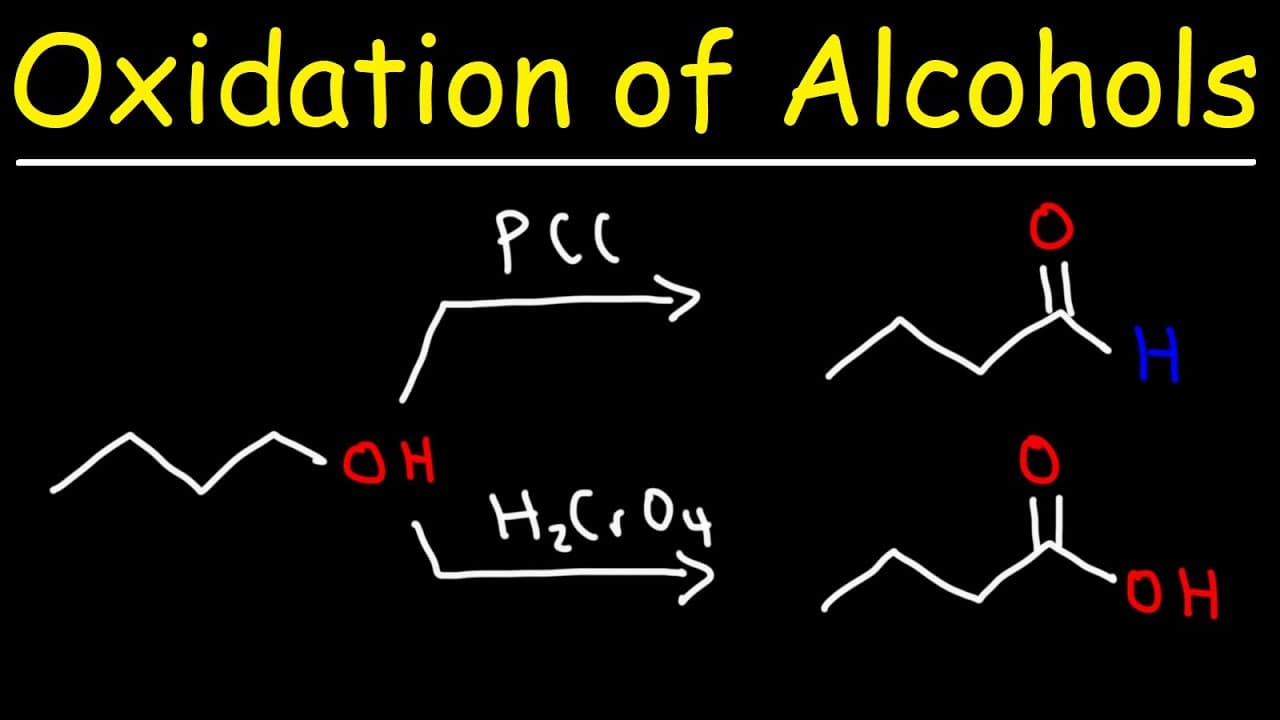
The video explains the process of alcohol oxidation, including the different levels of oxidation for various types of alcohols and the reagents used.
Transcript
in this video we're going to focus on the oxidation of alcohols so let's take some notes here's what you need to know if you start with the methyl alcohol like methanol when you oxidize it initially it's going to turn into an aldehyde if you oxidize it further it's going to go to the carboxylic acid level and upon complete oxidation it can convert ... Read More
Key Insights
- ✋ Oxidation of methanol stops at the aldehyde level when using mild oxidizing agents like PCC.
- 💪 Primary alcohols can be oxidized to carboxylic acids under acidic conditions and with strong oxidizing agents like sodium dichromate.
- 🍳 Secondary alcohols are resistant to oxidation unless carbon-carbon bonds are broken.
- 💼 Tertiary alcohols show no reaction in most cases due to the absence of alpha hydrogens.
- 🎚️ Different reagents, such as PCC, sodium hypochlorite, and potassium permanganate, have varying levels of oxidation strength.
- 😥 The pH and concentration of the acid greatly affect the oxidizing strength of chromium.
- 😋 Phenol, despite not having alpha hydrogens, can still be oxidized due to the presence of an aromatic ring.
Install to Summarize YouTube Videos and Get Transcripts
Explore YouTube Video Summarizer or Get YouTube Transcript Extractor
Questions & Answers
Q: What happens when methanol is oxidized using PCC?
Methanol will only be oxidized to the aldehyde level, producing formaldehyde.
Q: Can primary alcohols be oxidized to carboxylic acids?
Yes, under acidic conditions and with strong oxidizing agents like sodium dichromate, primary alcohols can be fully oxidized to carboxylic acids.
Q: Are secondary alcohols resistant to oxidation?
No, secondary alcohols can be oxidized to the ketone level, but not further without breaking carbon-carbon bonds.
Q: What reagent is used in the Swern oxidation?
The Swern oxidation uses reagents like DMSO, oxalyl chloride, triethylamine, and dichloromethane to convert primary alcohols to aldehydes.
Summary & Key Takeaways
-
Methanol oxidizes into an aldehyde initially, then further into a carboxylic acid, and ultimately into CO2.
-
Primary alcohols can be oxidized to aldehydes or carboxylic acids, while secondary alcohols stop at the ketone level.
-
Tertiary alcohols are resistant to oxidation, unless a reaction can break carbon-carbon bonds.
-
Different reagents, such as PCC and sodium dichromate, are used for various levels of oxidation.
Read in Other Languages (beta)
Share This Summary 📚
Summarize YouTube Videos and Get Video Transcripts with 1-Click
Try YouTube Summary with ChatGPT & Claude or YouTube Transcript Generator
Explore More Summaries from The Organic Chemistry Tutor 📚



Summarize YouTube Videos and Get Video Transcripts with 1-Click
Try YouTube Summary with ChatGPT & Claude or YouTube Transcript Generator