Q&A 122: How Will We Know It's Alien Life? And More...
TL;DR
Investigating space phenomena from black holes to exoplanets, uncovering mysteries and new possibilities.
Transcript
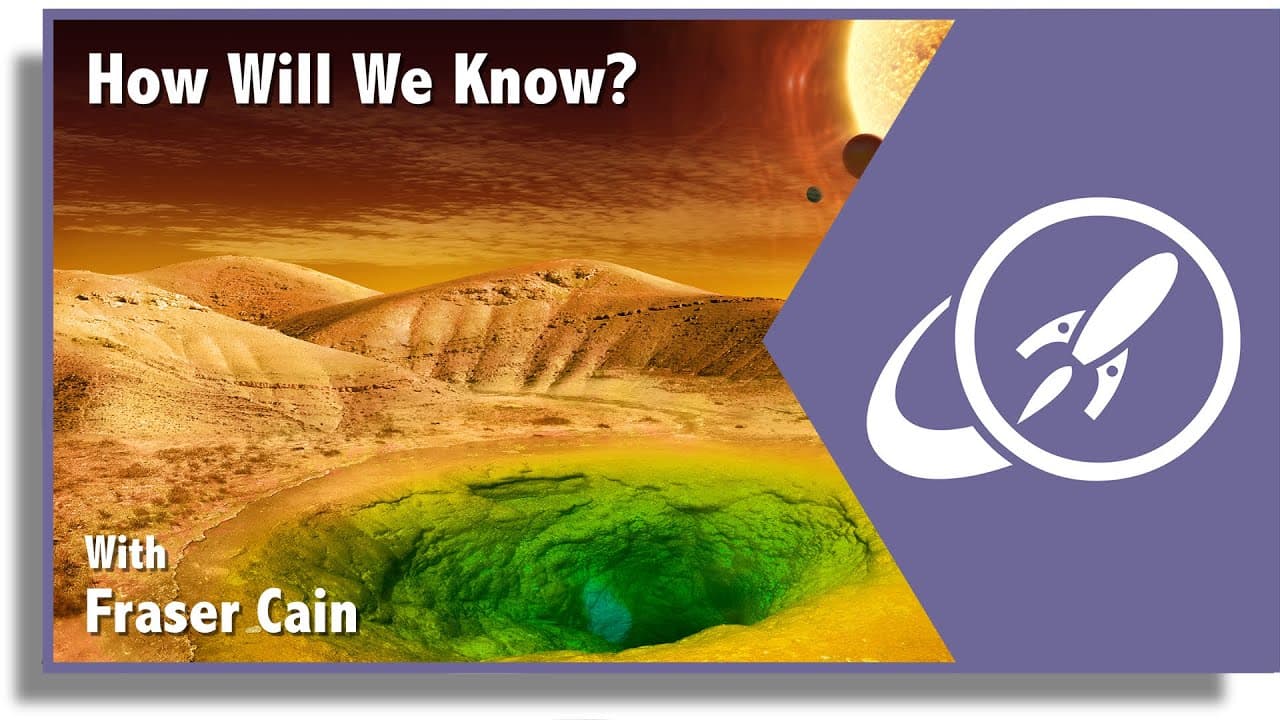
it's question your time your questions my answers as always wherever you are across my channel question pops in your brain just write it down I'll gather them up and I'll answer them here just one is best Oh Frasor if we find microscopic life on another world but it doesn't use DNA how will we recognize it as life and is a great question and obviou... Read More
Key Insights
- 🤘 Identifying signs of life on other planets without DNA poses a challenge for scientists.
- 🫢 Gas giant and brown dwarf formation is influenced by the amount of mass and materials present.
- 👾 The future of servicing space telescopes like Hubble may involve new spacecraft technologies.
- 🛰️ Understanding orbital dynamics is essential to maintaining space station orbits and trajectories.
- 🕵️ Limits in current technology impact the ability to detect exoplanets and explore potential habitable worlds.
- 🖤 Black hole research delves into the theoretical aspects of singularities and event horizons.
- 👾 The evolution of space exploration and technology provides insights into future discoveries.
Install to Summarize YouTube Videos and Get Transcripts
Explore YouTube Video Summarizer or Get YouTube Transcript Extractor
Questions & Answers
Q: How can scientists recognize life forms on other planets without DNA?
Scientists will look for movement and intent in microscopic organisms to define life beyond DNA.
Q: Can a cloud of gas and dust form a gas giant or brown dwarf?
Yes, with sufficient mass, gas, and dust, such formations like Jupiter or brown dwarfs could be possible.
Q: Will there be future spacecraft to service the Hubble Space Telescope?
Currently, there are no plans, but future advancements in space technology may enable newer spacecraft to service Hubble.
Q: How does boosting the International Space Station work in orbital dynamics?
Boosting the ISS involves increasing its velocity along its trajectory to raise its orbit and maintain its position in space.
Summary & Key Takeaways
-
Analyzing the potential for finding life forms without DNA on other planets.
-
Discussing the formation of gas giants and brown dwarfs in space.
-
Exploring the limitations of current technology for servicing space telescopes like Hubble.
Read in Other Languages (beta)
Share This Summary 📚
Summarize YouTube Videos and Get Video Transcripts with 1-Click
Try YouTube Summary with ChatGPT & Claude or YouTube Transcript Generator
Explore More Summaries from Fraser Cain 📚
Summarize YouTube Videos and Get Video Transcripts with 1-Click
Try YouTube Summary with ChatGPT & Claude or YouTube Transcript Generator