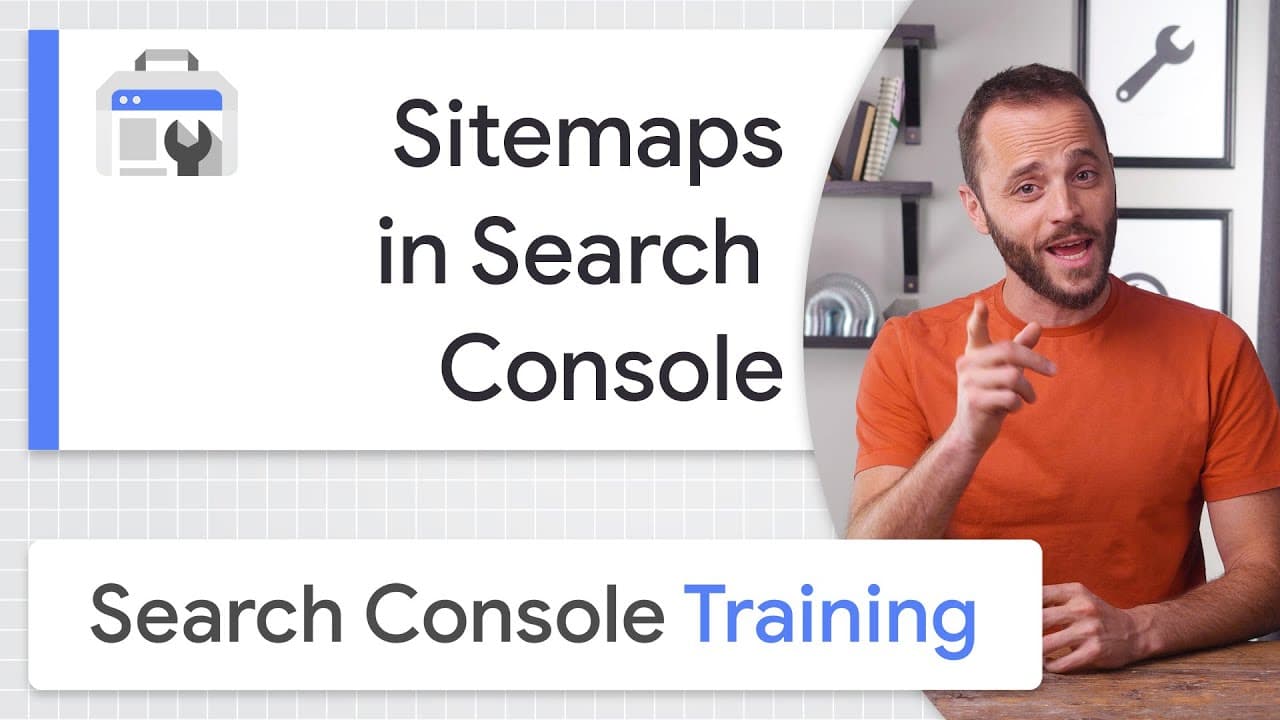
Sitemaps in Search Console - Google Search Console Training
TL;DR
Learn how to manage sitemaps using Google Search Console.
Transcript
Hi, I'm Daniel Waisberg, Search Advocate at Google. And today, I'll talk about how to use the Search Console sitemaps report. By the end of this video, you should be able to understand what a sitemap is, decide whether you need one or not, and learn how to submit a sitemap and track its status using Search Console. ♪ [music] ♪ A sitemap is a signal... Read More
Key Insights
- A sitemap is a tool that signals to Google which URLs to crawl on your site, providing information on recently created or modified URLs.
- Google supports extending URLs with images, videos, alternate languages, or country versions, and specific variations for news sites.
- Small websites with properly linked pages may not need a sitemap, but large or new sites with isolated pages can benefit from one.
- Using a sitemap does not guarantee that all pages will be crawled and indexed, but it generally benefits the site.
- Automatically generating sitemaps is recommended over manual creation; CMS platforms like WordPress and Drupal offer plugins for this purpose.
- Sitemaps can be submitted and tracked in Search Console, which shows details like URL count, type, last submission date, and crawl status.
- Errors in sitemaps can be identified and addressed using the Search Console Help Center, ensuring effective sitemap management.
- Deleting a sitemap from Search Console does not remove it from Google's memory; a 404 response or robots.txt rule is needed for complete removal.
Install to Summarize YouTube Videos and Get Transcripts
Explore YouTube Video Summarizer or Get YouTube Transcript Extractor
Questions & Answers
Q: What is a sitemap and why is it important?
A sitemap is a file that provides information about the pages, videos, and other files on your site, and the relationships between them. Search engines like Google read this file to more intelligently crawl your site. It is important because it helps search engines discover pages on your site that they might not otherwise find.
Q: When should a website use a sitemap?
A website should use a sitemap if it is large, has isolated pages not linked to each other, is new, or has frequently changing content. Sitemaps can help Google prioritize which pages to crawl and ensure that all important content is discovered.
Q: How can sitemaps be automatically generated?
Sitemaps can be automatically generated using plugins or extensions available for content management systems like WordPress or Drupal. These tools create and update sitemap files automatically, ensuring that search engines have the most current information about your site's structure and content.
Q: What information does the Search Console sitemaps report provide?
The Search Console sitemaps report provides details such as the sitemap URL, type or format (e.g., XML, TXT, RSS), last submission date, last read date by Google, crawl status, and the number of URLs discovered in the sitemap. It helps track the status and effectiveness of submitted sitemaps.
Q: Can a sitemap guarantee that all pages will be indexed by Google?
No, a sitemap cannot guarantee that all pages will be indexed by Google. While it helps search engines discover and prioritize pages to crawl, indexing depends on various factors like page quality, relevance, and adherence to Google's guidelines. Sitemaps are a helpful tool but not a guarantee.
Q: How can errors in sitemaps be addressed?
Errors in sitemaps can be addressed by using the Search Console Help Center, which provides a comprehensive list of potential issues and solutions. By reviewing the specific errors listed in the sitemaps report, webmasters can take corrective actions to ensure effective sitemap management.
Q: What happens when a sitemap is deleted from Search Console?
Deleting a sitemap from Search Console removes it from the report but does not make Google forget the sitemap or the URLs listed on it. To fully remove a sitemap from Google's memory, it should be removed from the site and return a 404 status after repeated attempts by Google to access it.
Q: How can Google be stopped from visiting URLs listed in a sitemap?
To stop Google from visiting URLs listed in a sitemap, webmasters can use a robots.txt rule to block the URLs or ensure they return a 404 status. If the goal is to remove URLs from Google's index entirely, using the noindex directive or requiring HTTP authentication for access can be effective.
Summary & Key Takeaways
-
Daniel Waisberg from Google explains the importance of sitemaps, which help signal Google about URLs to crawl on a site. He discusses when a sitemap is necessary and how to submit and track its status using Google Search Console.
-
Sitemaps are especially useful for large, new, or poorly linked sites. They can include additional information like images, videos, and language versions. Automatically generating sitemaps is recommended, and they can be managed using Search Console.
-
Search Console provides detailed reports on submitted sitemaps, including URL count and crawl status. Errors can be addressed using the Help Center. Deleting a sitemap from Search Console requires additional steps to ensure Google stops referencing it.
Read in Other Languages (beta)
Share This Summary 📚
Summarize YouTube Videos and Get Video Transcripts with 1-Click
Try YouTube Summary with ChatGPT & Claude or YouTube Transcript Generator
Explore More Summaries from Google Search Central 📚





Summarize YouTube Videos and Get Video Transcripts with 1-Click
Try YouTube Summary with ChatGPT & Claude or YouTube Transcript Generator