The Oxidation Reduction Question that Tricks Everyone!
TL;DR
This content explains the difference between oxidation-reduction reactions and non-oxidation-reduction reactions.
Transcript
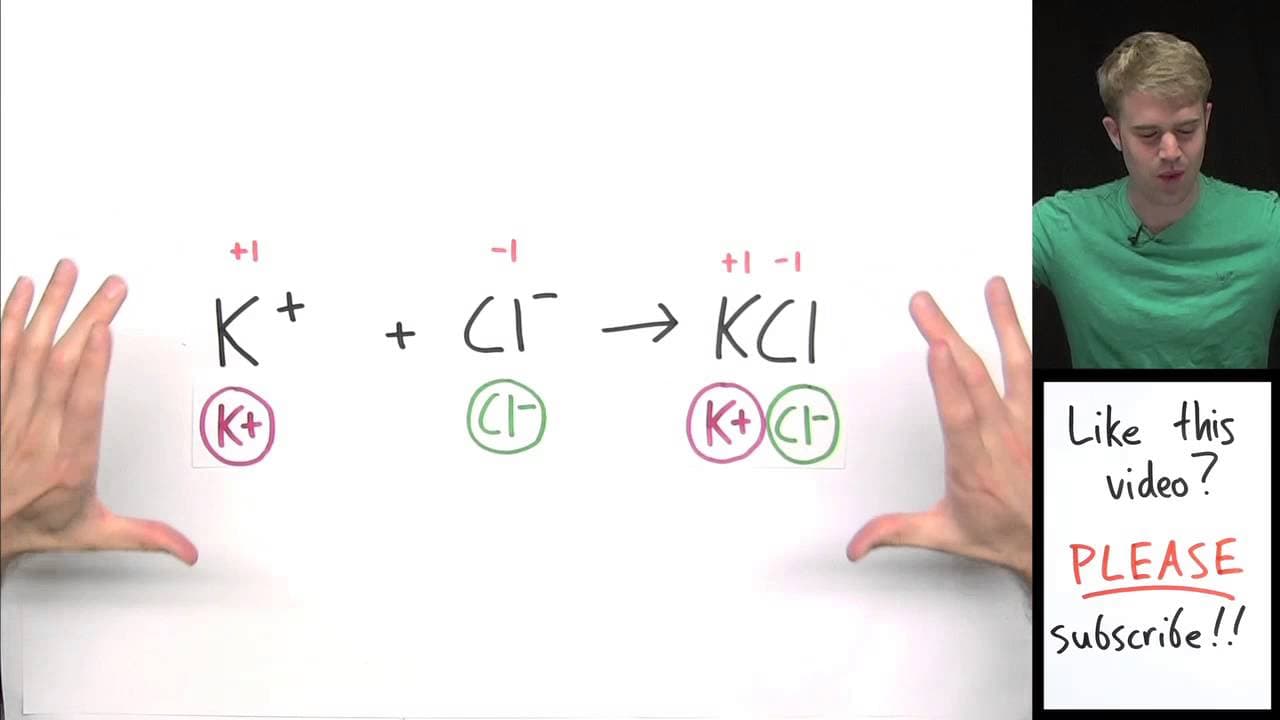
here's an example of a really common question that a lot of students get wrong I want to make sure that you don't this is a great test of how well you understand oxidation and reduction so here's a question does the following chemical equation this chemical equation right here represent an oxidation reduction reaction so is this an oxidation reduct... Read More
Key Insights
- 😑 Charges and ions alone are not sufficient to classify a reaction as an oxidation-reduction reaction.
- 🫀 For oxidation-reduction to occur, electron transfer must take place between atoms.
- 😚 In an oxidation-reduction reaction, atoms can become oxidized (lose electrons) or reduced (gain electrons).
- 🈂️ An equation with charges that remain unchanged throughout is not an oxidation-reduction reaction.
- 🥺 The transfer of electrons leads to changes in the charges of the atoms involved.
- ❓ A transfer of electrons is necessary for a chemical equation to be classified as an oxidation-reduction reaction.
- 😐 The neutral atoms in a chemical equation with charges at the end show that electron transfer has occurred.
Install to Summarize YouTube Videos and Get Transcripts
Explore YouTube Video Summarizer or Get YouTube Transcript Extractor
Questions & Answers
Q: Why is the presence of charges and ions not enough to determine an oxidation-reduction reaction?
Charges and ions can be present in various types of reactions, but for oxidation-reduction to occur, there must be electron transfer between atoms.
Q: What does it mean for an atom to be oxidized?
When an atom loses electrons, it is considered oxidized. This loss of electrons leads to the atom having a positive charge.
Q: What is reduction in the context of oxidation-reduction reactions?
Reduction refers to the gain of electrons by an atom, resulting in a negative charge.
Q: How can we determine if a chemical equation represents an oxidation-reduction reaction?
Look for a change in the charges of the atoms involved. If there is no change, it is not an oxidation-reduction reaction.
Summary & Key Takeaways
-
The presence of charges and ions in a chemical equation does not necessarily make it an oxidation-reduction reaction.
-
For an oxidation-reduction reaction to occur, there must be a transfer of electrons between atoms.
-
An equation with charges that remain the same throughout does not involve electron transfer and is not an oxidation-reduction reaction.
Read in Other Languages (beta)
Share This Summary 📚
Summarize YouTube Videos and Get Video Transcripts with 1-Click
Try YouTube Summary with ChatGPT & Claude or YouTube Transcript Generator
Explore More Summaries from Tyler DeWitt 📚



Summarize YouTube Videos and Get Video Transcripts with 1-Click
Try YouTube Summary with ChatGPT & Claude or YouTube Transcript Generator