Classroom 2050: Unleashing AI, XR, Gaming
TL;DR
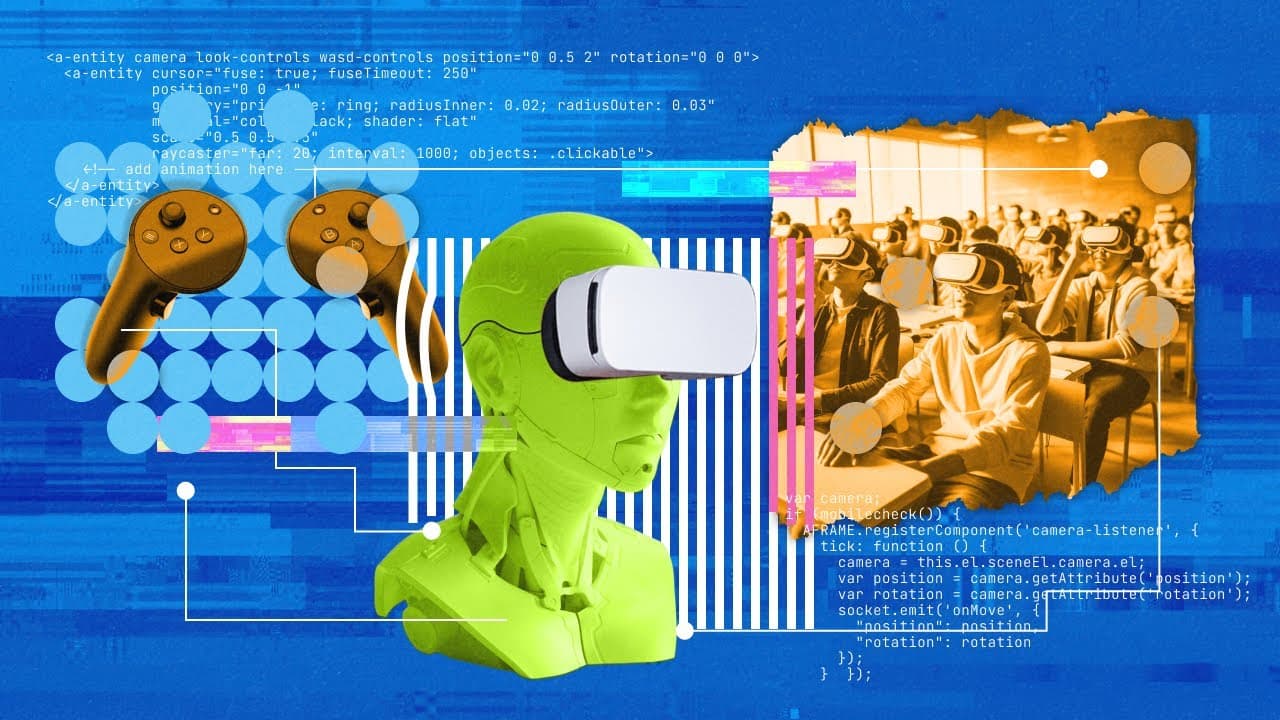
AI, XR, and gaming can upgrade classrooms by personalizing student support, creating immersive learning experiences, and building skills such as coding, collaboration, and spatial reasoning. The panel highlights tools including Khan Academy’s conmigo, Prisms VR, and Minecraft Education while stressing that teachers need pedagogy, training, and support. Read on to see the opportunities, barriers, and priorities shaping Classroom 2050.
Transcript
this is a moment for reimagining learning generative AI kind of jumped us forward 20 years faster there's this assumption that every student is going to use it to cheat the most power happens when the AI works with the student can teachers handle VR can teachers handle AI yeah like absolutely I have a hundred percent of teachers opting in to our pr... Read More
Key Insights
- ❓ The COVID-19 pandemic has highlighted the urgency to reimagine learning and embrace technologies like AI, XR, and gaming.
- 🤩 Personalization, engagement, and addressing inequities are key benefits of integrating these technologies into the classroom.
- 🧑🏫 Teachers are capable of adopting and effectively using these tools with proper training and support.
- 🎓 Collaboration and dialogue among stakeholders are crucial for successful implementation in education.
Install to Summarize YouTube Videos and Get Transcripts
Explore YouTube Video Summarizer or Get YouTube Transcript Extractor
Questions & Answers
Q: How can AI, XR, and gaming improve the classroom of the future?
AI can work directly with students, while XR can create immersive experiences such as visiting ancient Rome and interacting with Caesar or Cleopatra. Gaming can also help young people develop skills including coding and active citizenship.
Q: Why is this a moment for reimagining learning?
The pandemic intensified existing educational inequities and erased substantial progress. Students, families, and educators agree that learning should be reimagined by embracing technology, strengthening classroom relationships, supporting student well-being, and addressing the mental health crisis.
Q: Can teachers handle AI and VR in the classroom?
Yes, the panel argues that teachers can handle both AI and VR. One speaker reports that all teachers offered participation opted into the program, while emphasizing the importance of pedagogy, technology training, and implementation support.
Q: How should generative AI work with students?
The panel challenges the assumption that students will mainly use generative AI to cheat. It argues that the greatest potential comes when AI works with the student, as illustrated by Khan Academy’s AI-powered tutor, conmigo.
Q: What educational role does Prisms VR play?
Prisms VR uses virtual reality to teach math and science concepts through spatial reasoning and abstraction. Its approach connects physical experiences with diagrams, visualizations, charts, tables, equations, language, notation, and mathematical models.
Q: Why are spatial reasoning and abstraction important for STEM education?
The discussion identifies spatial thinking and abstraction as leading indicators of success in post-secondary STEM. Spatial thinking includes mentally rotating three-dimensional objects while maintaining perspective, while abstraction involves building representations and mathematical models from physical experiences.
Q: What skills can Minecraft Education help students develop?
Minecraft Education adapts the game to empower young people and teach skills such as coding and active citizenship. The broader discussion also presents gaming as a way to prepare students for a fast-paced and complex world.
Q: What is preventing these technologies from transforming classrooms?
Students already use AI, XR, and gaming outside school, but these technologies have not broadly reached classrooms in beneficial ways. The panel says the technology, pedagogy, and teacher training are available, so the remaining priority is focused execution.
Summary
In this video, four unique guests discuss the potential of integrating AI, XR, and gaming technologies into the classroom to enhance learning. They address the current state of education, the challenges and opportunities of implementing these technologies, and the role of teachers in this evolving landscape. The guests include Sal Khan, founder of Khan Academy; Aruba Ganguly, founder of prisms VR; Allison Matthews, head of Minecraft education; and Romy Drucker, director of the education program at the Walton Family Foundation.
Questions & Answers
Q: What is the current state of the student experience in education?
The pandemic has been a setback in education, highlighting existing inequities and resulting in a decline in math and literacy achievement levels. However, there is an opportunity to reimagine learning and strengthen relationships in classrooms to better support student well-being.
Q: What does it take to develop the next generation of STEM talent?
Success in post-secondary STEM fields is closely tied to spatial thinking and the ability to abstract. Prisms VR aims to scale the best practices in immersing children in problem-solving experiences through virtual reality, allowing them to learn math and science concepts in a more engaging and meaningful way.
Q: How has Khan Academy incorporated AI into its platform?
Khan Academy has been using AI to provide personalized practice and close fluency gaps in students' foundational knowledge. Recently, they have been working with OpenAI's chat GPT4 model to create Khan Migo, an AI-powered tutor that can act as both a tutor and a teaching assistant. This AI tutor can help students with their assignments, provide feedback, and engage in Socratic questioning to deepen learning.
Q: How is Minecraft being used in education, and what opportunities does it present?
Minecraft Education has transformed the popular game into a powerful teaching and learning platform. By integrating safety, security, and privacy features, it provides a space for students to engage in immersive learning experiences related to coding, math, history, literacy, and more. The game also fosters intrinsic motivation, encourages collaboration, communication, and critical thinking, and allows for conversations about digital citizenship.
Q: What are some misconceptions about introducing these technologies into the classroom?
One common misconception is that technology will replace pedagogy, when, in fact, technology should support and scale effective teaching practices. It is important to focus on the learning design and pedagogy rather than solely on the technology itself. Another misconception is underestimating teachers' abilities to handle these technologies. Teachers are smart and capable of incorporating VR and AI into their classrooms when provided with proper training and support.
Q: How can stakeholders and individuals from different backgrounds get involved in bringing these technologies to the classroom?
Stakeholders can play a role in reimagining learning by incorporating feedback from educators and families in the development of educational products. Early involvement in the research and development process is crucial to creating inclusive and effective solutions. Additionally, it is essential to empower teachers with training and support in pedagogy to help them integrate these technologies into their classrooms.
Q: How can VR be implemented in schools considering the cost of hardware?
Prisms VR recognizes that VR is not meant for everyday use and has focused on using it as a powerful tool for foundational learning experiences. By deploying VR devices at a 15 to 1 ratio or even higher, schools can take advantage of the immersive and visceral experiences VR offers, while minimizing costs. The goal is to engage students with real-world applications and build their mathematical construct.
Q: What is the potential of generative AI in education?
Generative AI, like OpenAI's chat GPT4, has the potential to revolutionize education, acting as a tutor and teaching assistant. It can provide personalized feedback, help with essay writing, generate lesson plans, and support students in their learning journey. By working alongside the AI, teachers can gain insights into the learning process and provide targeted feedback, leading to improved outcomes.
Q: How can teachers handle the integration of AI, VR, and gaming technologies into their classrooms?
Teachers play a critical role in leveraging these technologies effectively. Rather than focusing solely on the technology, they should prioritize learning design and pedagogy, ensuring that the technology enhances teaching practices and engages students. Proper training, support, and ongoing professional development are essential for teachers to fully utilize and benefit from these technologies.
Q: Why is now the right time for integrating AI, XR, and gaming into education?
The current state of education, with low math proficiency rates and the need for personalized learning, calls for innovative solutions. The COVID-19 pandemic has created an urgency to reimagine education and embrace technology. AI, XR, and gaming technologies offer new opportunities for personalized and immersive learning experiences that can bridge gaps and accelerate learning. The convergence of these technologies and the readiness of students and teachers make now the right time to integrate them into education.
Takeaways
The state of education has faced setbacks and deep inequities, but it is also a moment for reimagining learning. Technologies like AI, XR, and gaming can enhance education by providing personalized learning experiences, fostering critical skills, and addressing students' diverse needs. It is crucial to focus on pedagogy and the learning design rather than the technology itself. Teachers play a vital role in integrating these technologies, and with proper training and support, they can empower students to excel in an ever-changing and complex world. By engaging stakeholders, incorporating feedback, and being mindful of equity, we can create an inclusive and effective classroom of the future.
Summary & Key Takeaways
-
The COVID-19 pandemic highlighted the need for reimagining learning and embracing technologies like AI, XR, and gaming.
-
These technologies can personalize learning, improve student engagement, and address deep inequities in education.
-
Teachers must be trained in the pedagogy behind these technologies, and collaboration between stakeholders is crucial for successful implementation.
Read in Other Languages (beta)
Share This Summary 📚
Summarize YouTube Videos and Get Video Transcripts with 1-Click
Try YouTube Summary with ChatGPT & Claude or YouTube Transcript Generator
Explore More Summaries from The a16z Podcast 📚



Summarize YouTube Videos and Get Video Transcripts with 1-Click
Try YouTube Summary with ChatGPT & Claude or YouTube Transcript Generator