Products
Features
YouTube Video Summarizer
Summarize YouTube videos
Web & PDF Highlighter
Highlight web pages & PDFs
Chat with PDF
Ask any PDF questions with AI
Ask AI Clone
Chat with your highlights & memories
Audio Transcriber
Transcribe audio files to text
Glasp Reader
Read and highlight articles
Kindle Highlight Export
Export your Kindle highlights
Idea Hatch
Hatch ideas from your highlights
Integrations
Obsidian Plugin
Notion Integration
Pocket Integration
Instapaper Integration
Medium Integration
Readwise Integration
Snipd Integration
Hypothesis Integration
Apps & Extensions
Chrome Extension
Safari Extension
Edge Add-ons
Firefox Add-ons
iOS App
Android App
Discover
Discover
Ideas
Discover new ideas and insights
Articles
Curated articles and insights
Books
Book recommendations by great minds
Posts
Essays and notes from readers
Quotes
Inspiring quotes collection
Videos
Curated videos and summaries
Explore Glasp
Glasp Newsletter
Weekly insights and updates
Glasp Talk
Interview series with great minds
Glasp Blog
Latest news and articles
Glasp Use Cases
Learn how others use Glasp
Build & Support
Glasp API
Access Glasp's API for developers
MCP Connector
Connect Glasp to Claude & ChatGPT
Community
Glasp Reddit Community
Students
Student discount and benefits
FAQs
Frequently Asked Questions
AboutPricing
DashboardLog inSign up

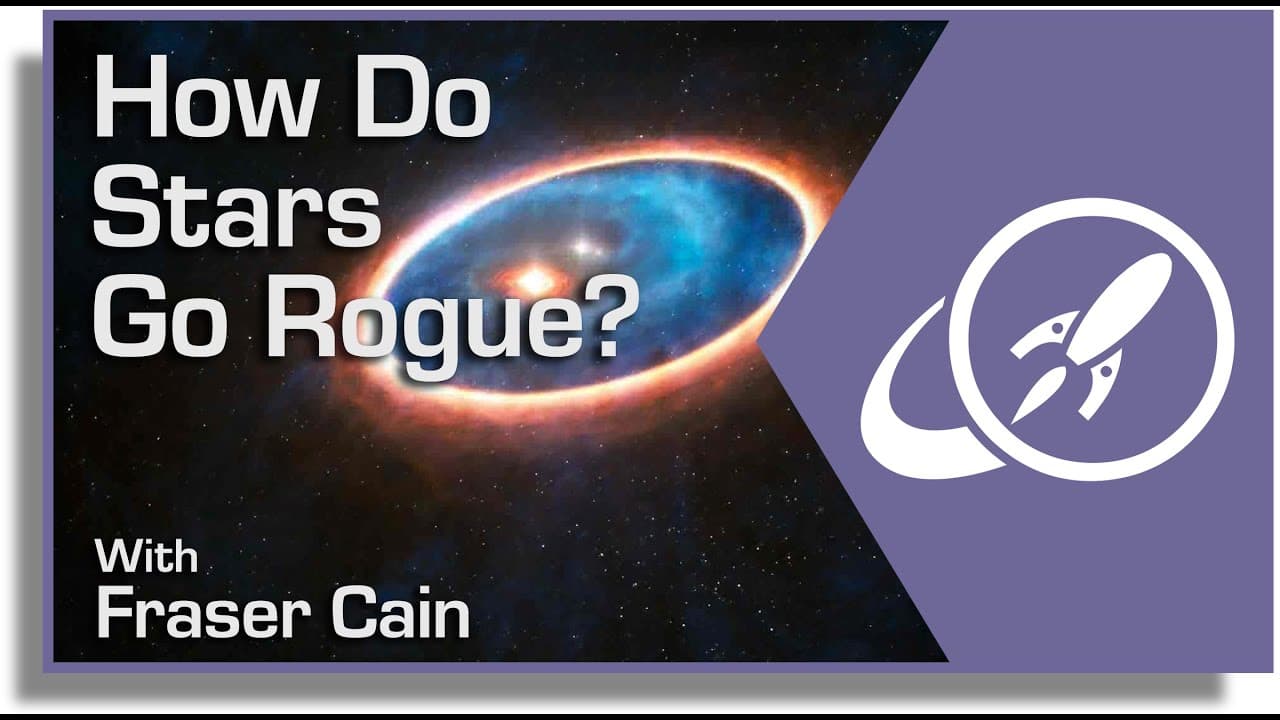
How Do Stars Go Rogue?
16.5K views
•
August 24, 2015
by
Fraser Cain
YouTube video player
How Do Stars Go Rogue?

TL;DR

Stars can be flung out of galaxies via catastrophic events like supernovae, black holes, and galactic collisions.

Transcript

stars are built with the lightest elements in the universe hydrogen and helium but they contain an incomprehensible amount of mass our Sun is made of 2 times 10 to the 30 kilograms of stuff that's a two followed by 30 zeros that's 330 thousand times more stuff than the earth so you'd think it'd be a bit of a challenge to throw something around that... Read More

Key Insights

  • 🙂 Stars are primarily composed of light elements but contain massive amounts of mass compared to planets like Earth.
  • 🤩 Supernovae can propel companion stars out of galaxies at speeds exceeding 1,200 kilometers per second.
  • ✴️ Supermassive black holes at galactic centers can eject stars traveling at speeds up to 900 kilometers per second.
  • 🤩 Galactic collisions can result in stars being flung out of their galaxies due to gravitational interactions.

Install to Summarize YouTube Videos and Get Transcripts

Explore YouTube Video Summarizer or Get YouTube Transcript Extractor

Questions & Answers

Q: How can a supernova event lead to a star being flung out of a galaxy?

When a star in a binary system undergoes a supernova explosion, its companion star can be ejected at high speeds, enough to escape the galaxy's gravitational pull.

Q: What role do supermassive black holes play in ejecting stars from galaxies?

Stars that come too close to supermassive black holes can be consumed, with their partners being flung out of the galaxy due to gravitational forces.

Q: How do galactic collisions contribute to stars being kicked out of their galaxies?

During galactic collisions, stars can be flung out of their host galaxies due to the gravitational interactions between the colliding galaxies.

Q: What are rogue stars, and how do they differ from stars within galaxies?

Rogue stars are stars that have been ejected from their galaxies, either through catastrophic events or during galactic collisions, making them independent wanderers in intergalactic space.

Summary & Key Takeaways

  • Stars, despite being made of light elements, contain massive amounts of mass compared to planets like Earth.

  • Catastrophic events like supernovae, supermassive black holes, and galactic collisions can propel stars out of galaxies.

  • Rogue or hypervelocity stars travel at extreme speeds, leaving their galaxies forever.


Read in Other Languages (beta)

English

Share This Summary 📚

Summarize YouTube Videos and Get Video Transcripts with 1-Click

Download browser extensions on:

Try YouTube Summary with ChatGPT & Claude or YouTube Transcript Generator

Explore More Summaries from Fraser Cain 📚
Exploring Space Lava Tubes: How To Prepare For It thumbnail
Exploring Space Lava Tubes: How To Prepare For It
Fraser Cain / Universe Today Podcast
What's On The Far Side Of The Moon? thumbnail
What's On The Far Side Of The Moon?
Fraser Cain
Why Did Mars Lose Its Atmosphere? And How Can We Get It Back? thumbnail
Why Did Mars Lose Its Atmosphere? And How Can We Get It Back?
Fraser Cain
Are We Living in a Simulation? Understanding the Simulation Hypothesis thumbnail
Are We Living in a Simulation? Understanding the Simulation Hypothesis
Fraser Cain
Why Isn't the Asteroid Belt a Planet? thumbnail
Why Isn't the Asteroid Belt a Planet?
Fraser Cain

Summarize YouTube Videos and Get Video Transcripts with 1-Click

Download browser extensions on:

Try YouTube Summary with ChatGPT & Claude or YouTube Transcript Generator

Apps & Extensions

  • Chrome Extension
  • Safari Extension
  • Edge Add-ons
  • Firefox Add-ons
  • iOS App
  • Android App

Key Features

  • YouTube Video Summarizer
  • Web & PDF Summarizer
  • Web & PDF Highlighter
  • Chat with PDF
  • Ask AI Clone
  • Audio Transcriber
  • Glasp Reader
  • Kindle Highlight Export
  • Idea Hatch

Integrations

  • Obsidian Plugin
  • Notion Integration
  • Pocket Integration
  • Instapaper Integration
  • Medium Integration
  • Readwise Integration
  • Snipd Integration
  • Hypothesis Integration

More Features

  • APIs
  • MCP Connector
  • Blog & Post
  • Embed Links
  • Image Highlight
  • Personality Test
  • Quote Shots

Company

  • About us
  • Blog
  • Community
  • FAQs
  • Job Board
  • Newsletter
  • Pricing
Terms

•

Privacy

•

Guidelines

© 2026 Glasp Inc. All rights reserved.