10 Strange Moons of the Solar System
TL;DR
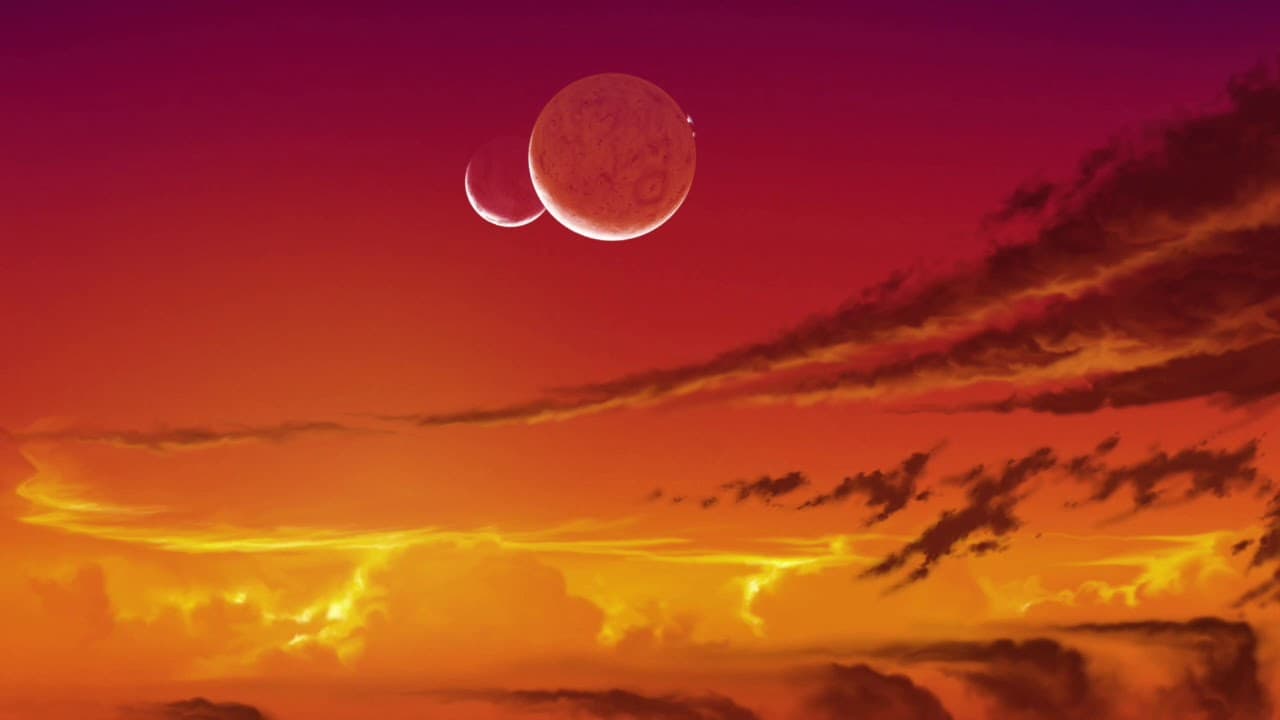
This video explores 10 unique and lesser-known moons in the solar system, highlighting their bizarre characteristics.
Transcript
this video is brought to you today by the great courses plus an in-depth online learning platform that lets you access courses taught by top academics and even institutions like National Geographic and the Smithsonian you can learn at your own pace with no schedules or testing yet gain every bit of the knowledge you'd get from a university course m... Read More
Key Insights
- 🥮 Io has liquid lava on its surface, making it one of the most volcanically active moons in the solar system.
- 🛰️ Myriad has a highly eccentric orbit and varying brightness patterns, contributing to its uniqueness.
- 🙂 Iapetus's dark and light sides and its huge ridge make it a mysterious moon with unknown origins.
- 💥 Phobos's potential collision with Mars or its destruction by tidal forces adds to the intrigue of this moon.
- 🤨 Ganymede, Jupiter's largest moon, has a magnetic field and a thick layer of liquid water, raising questions about its potential for life.
- 🥮 Charon, Pluto's moon, has a reddish patch caused by Pluto's periodically transferring its organic atmosphere to its surface.
- 🥮 The moons Phobos and Deimos may have a different fate as Mars becomes colonized and potentially terraformed in the distant future.
- 👾 Dactyl, a moon of the asteroid Ida, has similar composition, but Ida has experienced more weathering in space.
Install to Summarize YouTube Videos and Get Transcripts
Explore YouTube Video Summarizer or Get YouTube Transcript Extractor
Questions & Answers
Q: Why is Io so volcanically active?
Io's proximity to Jupiter and its constant exposure to radiation causes it to remain hot and volcanically active.
Q: What is the mystery surrounding Myriad's varying brightness?
Some observations show that Myriad varies in brightness over time, but the cause of this is still unknown.
Q: How did Iapetus get its dark and light sides?
The dark side of Iapetus is believed to be made of carbonaceous deposits, while the light side has accumulated bright ice.
Q: What will happen to Phobos in the future?
Phobos may either collide with Mars, creating a massive crater, or be torn apart by tidal forces.
Summary & Key Takeaways
-
Io, a moon of Jupiter, has liquid lava on its surface and is considered a longshot candidate for life.
-
Myriad, a moon of Neptune, has a highly eccentric orbit and varying brightness patterns.
-
Iapetus, a moon of Saturn, has a dark side and a light side, and its formation is still a mystery.
-
Phobos, a moon of Mars, may collide with the planet in the future or be torn apart by tidal forces.
Read in Other Languages (beta)
Share This Summary 📚
Summarize YouTube Videos and Get Video Transcripts with 1-Click
Try YouTube Summary with ChatGPT & Claude or YouTube Transcript Generator
Explore More Summaries from John Michael Godier 📚

Summarize YouTube Videos and Get Video Transcripts with 1-Click
Try YouTube Summary with ChatGPT & Claude or YouTube Transcript Generator