English Google Webmaster Central office-hours hangout

TL;DR
Discussion on website indexing, internal linking, and SEO strategies.
Transcript
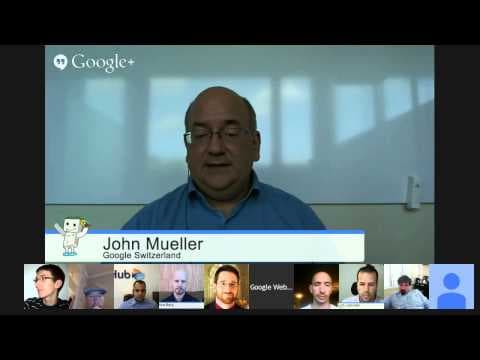
JOHN MUELLER: All right, welcome, everyone, to today's Webmaster Central Office Hours Hangout. My name is John Mueller. I'm a webmaster trends analyst here at Google in Switzerland. And part of what we do are these Office Hours Hangouts, where folks can join in and bring their questions, all-around search and websites. And hopefully we can help a l... Read More
Key Insights
- Removing internal navigation can negatively impact a website's crawlability and user experience, leading to potential downsides in search visibility.
- Redirecting old domain URLs to new ones is crucial when rebranding to retain accumulated value and improve search rankings.
- Google does not use domain authority as a ranking signal; it's a third-party metric not directly influencing Google's search algorithms.
- No-index pages with internal links may eventually have those links ignored by Google if the pages remain no-indexed for a long time.
- Improving website quality through user feedback and addressing technical issues can enhance search performance.
- Focusing on creating unique, compelling content is more beneficial than trying to game search algorithms with artificial metrics.
- Using the Indexing API for job listings can help ensure timely updates in search results, even if Google for Jobs isn't launched in all regions.
- Google's algorithms consider multiple factors beyond links for ranking, and the importance of each factor can vary based on context.
Install to Summarize YouTube Videos and Get Transcripts
Explore YouTube Video Summarizer or Get YouTube Transcript Extractor
Questions & Answers
Q: What is the impact of removing internal navigation on a website?
Removing internal navigation can significantly hinder a website's crawlability and user experience. Without internal links, Google finds it challenging to crawl and index the site effectively. This can lead to decreased search visibility and a poor user experience, as users may struggle to navigate the site efficiently.
Q: How should a website handle rebranding and domain changes?
When rebranding or changing domains, it's crucial to set up redirects from the old URLs to the new ones. This ensures that the accumulated value and signals from the old domain are passed on to the new one, helping maintain search rankings. Without redirects, the new site starts fresh, losing any established authority.
Q: Does Google use domain authority as a ranking signal?
No, Google does not use domain authority as a ranking signal. Domain authority is a metric created by third-party companies and is not part of Google's search algorithms. While it can be useful for analyzing a site, it doesn't directly influence Google's search rankings. Focus should be on website quality and user experience.
Q: What happens to internal links on no-index pages over time?
Over time, Google may stop processing internal links on no-index pages, especially if the pages remain no-indexed for a prolonged period. Initially, Google may follow these links, but as it assumes the pages don't need processing, the links may eventually be ignored, affecting the site's internal link structure.
Q: How can a website improve its search performance after a redesign?
Improving search performance after a redesign involves ensuring technical issues are addressed, such as setting up proper redirects and maintaining internal links. Additionally, gathering user feedback through studies can help identify areas for improvement. Enhancing content quality and user experience is key to long-term search success.
Q: Is focusing on tf-idf keywords beneficial for SEO?
Focusing solely on tf-idf keywords is not beneficial for SEO. While tf-idf is a metric used in information retrieval, it's an older metric, and Google's algorithms have evolved. Instead of artificially adding keywords, websites should focus on creating valuable, unique content that appeals to users and aligns with modern search algorithms.
Q: Can the Indexing API be used for job listings in regions without Google for Jobs?
Yes, the Indexing API can be used for job listings even in regions where Google for Jobs hasn't launched. It helps ensure timely updates in search results by allowing websites to submit new or updated job URLs. However, visibility in Google for Jobs depends on its availability in the specific region.
Q: Does Google rely solely on links for ranking websites?
No, Google does not rely solely on links for ranking websites. While links are a factor, Google's algorithms consider various signals, and their importance can vary based on context. Factors like content relevance, user experience, and technical aspects also play significant roles in how websites are ranked in search results.
Summary & Key Takeaways
-
The hangout covered various SEO topics, including the impact of internal navigation on website indexing and user experience. John Mueller emphasized the importance of maintaining internal links for better crawlability. He also discussed the significance of setting up redirects when rebranding to retain accumulated value.
-
Participants asked about the relevance of third-party metrics like domain authority, which Google does not consider in its ranking algorithms. Mueller advised focusing on website quality and user experience rather than trying to manipulate such metrics.
-
The session also addressed the use of Google's Indexing API for job listings, highlighting its potential benefits even if Google for Jobs isn't available in all regions. Additionally, Mueller explained Google's approach to handling no-index pages with internal links and the importance of focusing on unique content creation.
Read in Other Languages (beta)
Share This Summary 📚
Summarize YouTube Videos and Get Video Transcripts with 1-Click
Try YouTube Summary with ChatGPT & Claude or YouTube Transcript Generator
Explore More Summaries from Google Search Central 📚



Summarize YouTube Videos and Get Video Transcripts with 1-Click
Try YouTube Summary with ChatGPT & Claude or YouTube Transcript Generator