What Are Yoruba Orishas in African Mythology?
TL;DR
The Yoruba Orishas are a pantheon of deities from Western Africa, each with unique powers and roles. Unlike other mythologies, Orishas gained their powers through a fair distribution by Orunmila, highlighting themes of equality and diversity. This mythology reflects the cultural heritage and resilience of the Yoruba people despite external religious influences.
Transcript
Hey there I'm Mike Rugnetta, this is Crash Course Mythology, and today, we're going to finish up our look at pantheons with African Gods. Now some Crash Course fans are already scratching their heads because they know that it's very hard to speak of African anything without drastically oversimplifying. It's enormous and filled with diverse peoples.... Read More
Key Insights
- The Yoruba Orishas are a diverse pantheon of deities from Western Africa, each with unique roles.
- Orunmila, the god of Wisdom, distributed powers to Orishas, emphasizing fairness and equality.
- Yoruba mythology traveled across the Atlantic due to the African slave trade, influencing cultures in the Caribbean and Americas.
- Orishas have maintained their cultural significance despite the introduction of Christianity and Islam.
- The Orisha pantheon includes gods like Olorun, the Great Sky Father, and Eshu, the Trickster.
- Orunmila's fair distribution of powers to Orishas contrasts with the inherent powers of Greek gods.
- The myth of Orunmila and the Orishas highlights themes of equality and diversity in human societies.
- Animals play significant roles in Yoruba myths, symbolizing connections between divine and earthly realms.
Install to Summarize YouTube Videos and Get Transcripts
Explore YouTube Video Summarizer or Get YouTube Transcript Extractor
Questions & Answers
Q: What are Yoruba Orishas?
Yoruba Orishas are a pantheon of deities from the Yoruba people of Western Africa. Each Orisha has unique powers and roles, gained through a fair distribution by Orunmila, the god of Wisdom. They represent various aspects of life and natural phenomena, reflecting the cultural heritage and beliefs of the Yoruba people.
Q: How did the Orishas receive their powers?
The Orishas received their powers through a fair distribution orchestrated by Orunmila, the god of Wisdom. He decided to pour the powers onto Earth, allowing each Orisha to catch what they could. This method emphasized equality and diversity, as not all Orishas ended up with the same powers or strengths.
Q: What role does Orunmila play in Yoruba mythology?
Orunmila is the god of Wisdom and divination in Yoruba mythology. He plays a crucial role in distributing powers to the Orishas, emphasizing fairness and equality. Orunmila's actions and decisions highlight themes of justice and the interconnectedness of divine and earthly realms in Yoruba beliefs.
Q: How has Yoruba mythology influenced other cultures?
Yoruba mythology has influenced other cultures, particularly in the Caribbean and Americas, due to the transatlantic slave trade. As Yoruba people were displaced, they carried their beliefs and stories, which evolved and integrated into local traditions, such as Vodou in Haiti, reflecting cultural exchange and adaptation.
Q: What is the significance of animals in Yoruba mythology?
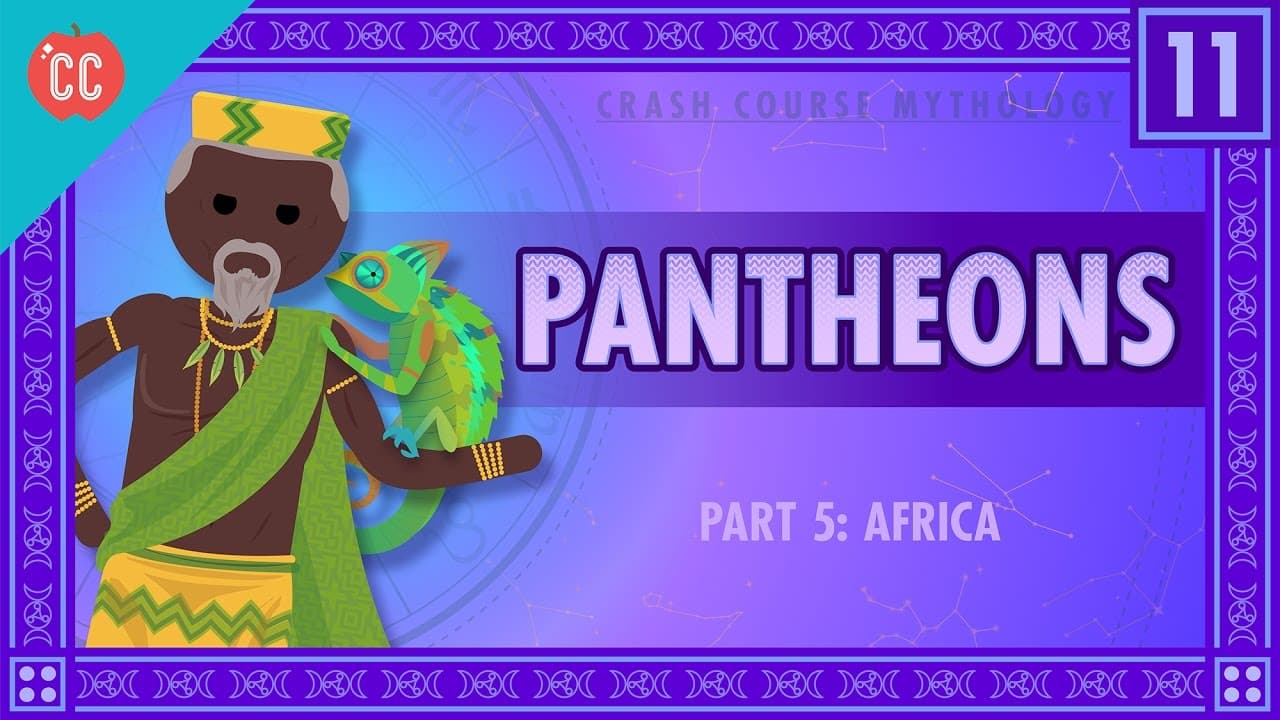
Animals hold significant roles in Yoruba mythology, symbolizing the connection between divine and earthly realms. They often act as messengers or advisors to the gods, as seen with the wise chameleon Agemo, who helped Orunmila solve a problem. This highlights the belief in a harmonious relationship between all living beings.
Q: Why do Orishas have overlapping roles?
Orishas have overlapping roles due to the oral tradition of Yoruba mythology and the vast geographic diversity of the region. As stories were passed down and adapted, variations emerged, leading to multiple deities sharing similar domains. This reflects the dynamic and evolving nature of oral storytelling traditions.
Q: How does Yoruba mythology address themes of equality and diversity?
Yoruba mythology addresses themes of equality and diversity through stories like the distribution of powers by Orunmila. By allowing Orishas to catch their powers, the mythology emphasizes fair opportunities and the acceptance of diverse strengths. This mirrors human societies' challenges and the value of diversity in community development.
Q: What challenges have Yoruba beliefs faced over time?
Yoruba beliefs have faced challenges from external religious influences, such as Christianity and Islam, introduced through colonization and globalization. Despite these pressures, the Yoruba people have maintained their cultural heritage, preserving Orisha stories as a testament to their resilience and the enduring significance of their traditions.
Summary & Key Takeaways
-
Yoruba Orishas are deities from Western Africa, each with distinct roles and powers. Orunmila, the god of Wisdom, distributed these powers fairly among the Orishas, emphasizing equality. This mythology reflects the cultural resilience of the Yoruba people, who have maintained these stories despite external religious influences.
-
The Yoruba pantheon includes diverse deities like Olorun, the Great Sky Father, and Eshu, the Trickster. The distribution of powers among Orishas by Orunmila highlights themes of equality and diversity, contrasting with other mythologies where gods are born with inherent powers.
-
Yoruba mythology traveled across the Atlantic due to the African slave trade, influencing cultures in the Caribbean and Americas. Despite the introduction of Christianity and Islam, the Orishas have maintained their cultural significance, showcasing the enduring heritage of the Yoruba people.
Read in Other Languages (beta)
Share This Summary 📚
Summarize YouTube Videos and Get Video Transcripts with 1-Click
Try YouTube Summary with ChatGPT & Claude or YouTube Transcript Generator
Explore More Summaries from CrashCourse 📚



Summarize YouTube Videos and Get Video Transcripts with 1-Click
Try YouTube Summary with ChatGPT & Claude or YouTube Transcript Generator