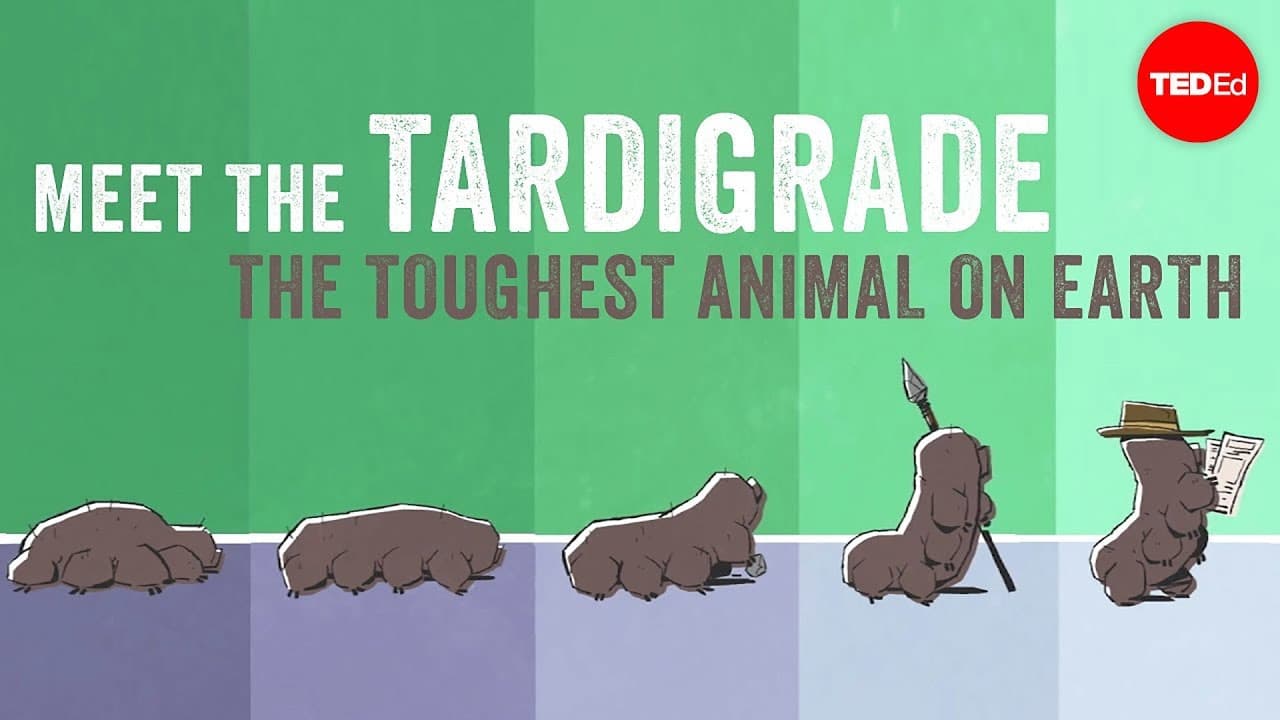
Meet the tardigrade, the toughest animal on Earth - Thomas Boothby
TL;DR
Tardigrades, known as water bears, can endure extreme conditions through anhydrobiosis, surviving without water for decades.
Transcript
Without water, a human can only survive for about 100 hours. But there's a creature so resilient that it can go without it for decades. This one millimeter animal can survive both the hottest and coldest environments on Earth, and can even withstand high levels of radiation. This is the tardigrade, and it's one of the toughest creatures on Earth, e... Read More
Key Insights
- 🥵 Tardigrades survive extreme conditions like heat, radiation, and lack of water through anhydrobiosis and their tun state.
- ⌛ They have evolved over time on Earth and come in over 1100 known species, found globally.
- 👾 Their resilience sparks scientific interest for potential applications in vaccine stabilization and space exploration.
Install to Summarize YouTube Videos and Get Transcripts
Explore YouTube Video Summarizer or Get YouTube Transcript Extractor
Questions & Answers
Q: How do tardigrades survive without water for long periods?
Tardigrades enter a tun state where they curl up and produce special molecules to replace water, protecting sensitive biological components. This allows them to wait until water returns, resuming normal functions upon rehydration.
Q: In what extreme environments can tardigrades be found?
Tardigrades exist in diverse biomes globally, including deserts, forests, oceans, and even Antarctica. They can be found in the most ordinary places like moss and lichen, showcasing their adaptability.
Q: What potential applications can studying tardigrades have for human technologies?
Understanding how tardigrades stabilize their molecules can aid in stabilizing vaccines and developing stress-resistant crops. Additionally, studying their survival in outer space can inform life limits and astronaut safety.
Summary & Key Takeaways
-
Tardigrades, small creatures, defy the need for water through anhydrobiosis.
-
Their tun state allows them to survive drying up by forming a protective matrix.
-
Tardigrades can endure freezing, high radiation, and even outer space conditions, sparking scientific interest.
Read in Other Languages (beta)
Share This Summary 📚
Summarize YouTube Videos and Get Video Transcripts with 1-Click
Try YouTube Summary with ChatGPT & Claude or YouTube Transcript Generator
Explore More Summaries from TED-Ed 📚






Summarize YouTube Videos and Get Video Transcripts with 1-Click
Try YouTube Summary with ChatGPT & Claude or YouTube Transcript Generator