Cosmic Dawn: An Interview with Dr. Hamsa Padmanabhan
TL;DR
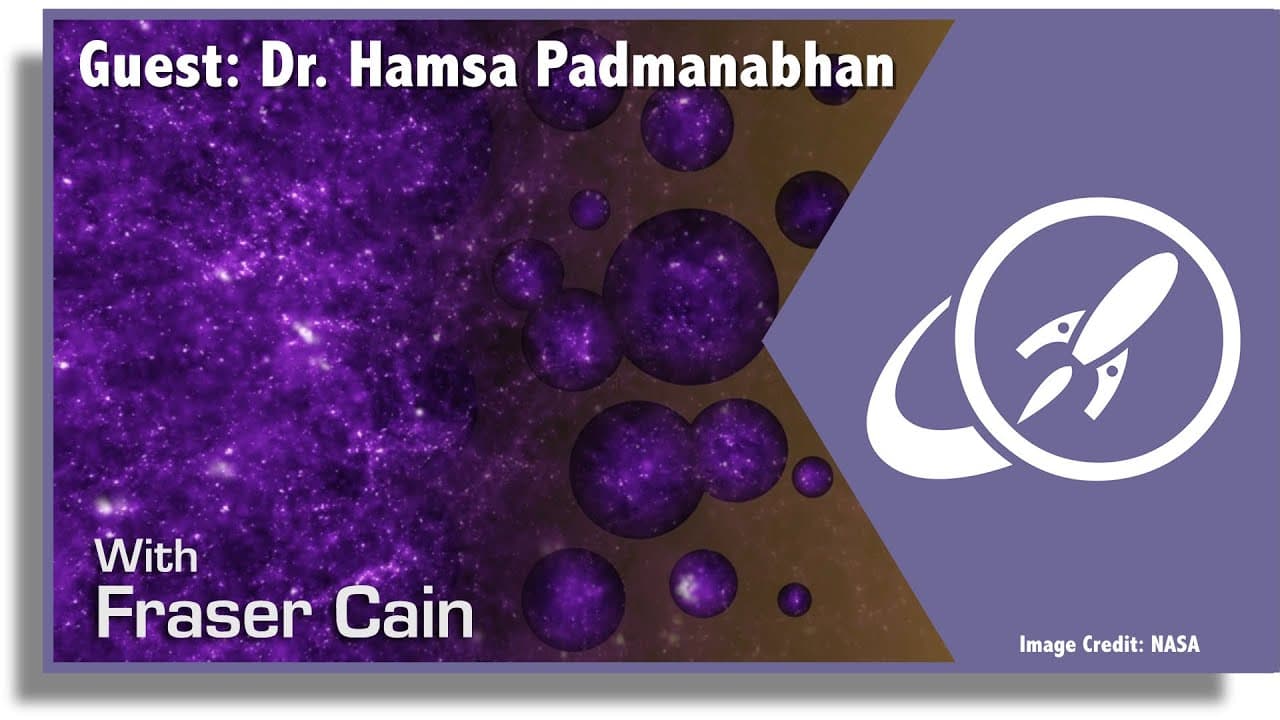
Cosmic dawn was the phase when the first stars and early galaxies illuminated the previously dark universe. Dr. Hamsa Padmanabhan traces the 13.7-billion-year cosmic timeline from inflation and the cosmic microwave background through the dark ages, when neutral hydrogen existed but no new light sources had formed. Read on to understand how matter, radiation, and early luminous sources shaped this transition.
Transcript
here we go okay in theory everything's working we should be live uh make sure i've got all of my tools available where's my what there it is okay my chat okay excellent uh how's it going great thank you um so the question i always ask people uh who are you what do you do hey i'm hamsa padmanapan i'm an astrophysicist and cosmologist at the universi... Read More
Key Insights
- 📽️ The Square Kilometer Array project unlocks cosmic mysteries by mapping hydrogen emissions across the early universe.
- 😘 Low-frequency radio emissions provide detailed insights into the cosmic dawn, dark ages, reionization, and beyond.
- ☠️ Multi-messenger astronomy, combining gravitational wave observations and electromagnetic surveys, can resolve dark matter and expansion rate discrepancies.
- 🥹 Large-scale hydrogen maps during cosmic dawn era hold the potential to constrain physical parameters and answer fundamental cosmological questions.
- 🖐️ Theoretical breakthroughs in quantum gravity are crucial, with observational data playing a supporting role in testing and refining new theories.
- 🥺 Collaboration between theoretical and observational efforts can lead to a holistic understanding of the early universe and fundamental forces.
Install to Summarize YouTube Videos and Get Transcripts
Explore YouTube Video Summarizer or Get YouTube Transcript Extractor
Questions & Answers
Q: What was cosmic dawn?
Cosmic dawn was the phase when the first luminous sources began lighting up the universe. Gas fell into dark matter halos and formed stars, creating early points of light across what had previously been a dark universe.
Q: Who is Dr. Hamsa Padmanabhan?
Dr. Hamsa Padmanabhan is an astrophysicist and cosmologist at the University of Geneva’s Department of Theoretical Physics. She holds an independent grant to lead a project covering topics in cosmology and astrophysics.
Q: What does Dr. Hamsa Padmanabhan research?
Her work includes cosmic dawn, the cosmic microwave background, reionization, and the universe’s later evolution toward its present state. She focuses on how these periods can be probed through cosmology and astrophysics.
Q: What happened immediately after the Big Bang?
The precise beginning is unknown because explaining it requires bringing together gravity and quantum theory. The interview says that after the beginning, the universe is believed to have undergone a rapid expansion called inflation.
Q: How old is the universe according to the interview?
Dr. Padmanabhan describes the universe across a 13.7-billion-year timescale. She says established laws of physics describe its evolution from a few billionths of a second after the beginning onward.
Q: How did the cosmic microwave background form?
As the expanding universe cooled, protons and electrons combined to form hydrogen. Matter then decoupled from radiation, allowing the light to travel independently; that light is now observed as the cosmic microwave background.
Q: Why is the period after the cosmic microwave background called the dark ages?
It is called the dark ages because no new sources of light had yet formed. There were no first stars or galaxies, leaving mainly neutral hydrogen, some helium, and the earlier light associated with the cosmic microwave background.
Q: What role did dark matter play before cosmic dawn?
Dark matter became part of the matter-dominated universe even though it does not emit visible light and interacts very weakly with radiation. During cosmic dawn, gas fell into dark matter halos and formed stars, helping produce the first luminous sources.
Summary & Key Takeaways
-
Astrophysicist Hamsa Padmanapan discusses his research in cosmology and astrophysics at the University of Geneva.
-
Details the evolution of the universe from the Big Bang, through inflation, to cosmic dawn and reionization.
-
Highlights the importance of upcoming telescopes like the Square Kilometer Array in unlocking cosmic mysteries.
Read in Other Languages (beta)
Share This Summary 📚
Summarize YouTube Videos and Get Video Transcripts with 1-Click
Try YouTube Summary with ChatGPT & Claude or YouTube Transcript Generator
Explore More Summaries from Fraser Cain 📚
Summarize YouTube Videos and Get Video Transcripts with 1-Click
Try YouTube Summary with ChatGPT & Claude or YouTube Transcript Generator